Georgia Historical Society Logo
  • News
  • Events
  • US250 Resources
  • Search
  • About
        • Mission
        • Board of Curators
        • Office of the President
          • Past Presidents
        • Staff
        • Jobs/Internships
        • Preferred Vendors
        • History
          • GHS Research Center
          • Jepson House Education Center
        • Annual Reports
        • GHS Awards and Honors
        • News/Media
        • Contact
  • Research
    • Search Our Collection
    • Plan Your Visit
    • Reference and Research Services
    • Image Reproduction Services
    • Research Resources
    • Collection Highlights
  • Teachers + Students
        • Resources for Teachers
          • Search All Education Resources
          • Teaching with Primary Resources
          • Biographical Resources
          • Economic History Resources
          • Eighth-Grade WebQuest
          • Women's History Resources
          • Online Exhibits
          • Field Trips and In-School Programs
          • Professional Development
        • Resources for Students
        • Today in Georgia History
        • Off the Deaton Path
        • Georgia Historical Society Education Newsletter
  • Learn + Explore
        • Programs and Initiatives
        • Community Archives Initiative
        • Georgia Commemorates America at 250
        • Georgia History Festival
        • Georgia Trustees
        • Trustees Gala
        • Recognizing an Imperfect Past
        • Georgia's Business History
        • Affiliate Chapter Program
        • Online Exhibits
        • Upcoming Events
        • Historical Markers
          • Explore Georgia Historical Markers
          • Applying for a New Historical Marker
          • Maintaining Historical Markers
          • FAQs
          • Report a Missing or Damaged Marker
          • Civil War Historical Marker Initiative
          • Georgia Civil Rights Trail
        • Vincent J. Dooley Distinguished Fellows Program
          • Distinguished Teaching Fellows
          • Distinguished Research Fellows
        • Publications
          • Georgia History Today
          • Georgia Historical Quarterly
          • Bell and Inscoe Awards
  • Support
    • Give
    • Become a Member
    • Endowment
    • Donate Collections/Papers
    • Our Supporters
    • Shop

Voting in Georgia

August 3, 2026 by

Primary Source Set

Voting in Georgia
The History of Voting in Georgia through the Voting Rights Act of 1965

Voting in the United States has never followed a single, uniform path. In the 18th and 19th centuries, voting rights and eligibility varied widely. Wealthy White[GU1.1] men who owned property were usually the most consistently protected voters, while other groups, including landless White men, African Americans, and women, sometimes gained access to the ballot only to lose it later through political change.

States created most voting rules, and local election officials were responsible for carrying them out. These rules often included requirements about residency, registration, taxes, citizenship, criminal convictions, property ownership, race, gender, and other qualifications. Federal voting protections were more limited and came mainly through constitutional amendments and broad national laws that protected citizens’ rights and set basic requirements all states had to follow. Even after those federal protections were adopted, some states, including Georgia, used local rules, taxes, registration systems, intimidation, and other barriers to follow the letter of federal law while still preventing Black citizens from voting.

As a result, voting access expanded and contracted at different times and in diverse ways depending on the state, region, and historical period. The history of voting in the United States is not a simple story of steady progress. It is a story of conflict, political power, and changing definitions of who was allowed to participate in democracy.

Voting in Early America

During the colonial period, voting was limited to White men over age 21 who owned property and who were members of the established (Anglican or Congregationalist) church. Many leaders at the time believed that property owners had a stronger “stake” in political decisions because laws often affected land, taxes, and wealth. People without property were often viewed as less independent and more likely to be influenced by employers, landlords, merchants, or other powerful figures. This concern was especially strong because voting usually took place in public, without a secret ballot, making it easier for others to pressure or monitor voters.

By the early 19th century, on the heels of the American Revolution, there was a growing call for expanded suffrage and a greater voice in government affairs. Many Americans pushed to remove property ownership as a requirement for voting, arguing that political participation should not be limited only to wealthy or landowning men. Over time, most states eliminated property requirements. However, it did not create equal voting rights for all. While reducing property ownership requirements, states added or maintained other restrictions, including tax requirements, residency rules, and laws that excluded people receiving public assistance, people with criminal convictions, and those who had recently moved from other states, increasingly limiting voting rights to White men, excluding women, African Americans, Native Americans, and other groups from full political participation.

Voting in Georgia

Georgia’s early voting history reflected this broader pattern, but it also included some unusual experiments and restrictions. For example, Georgia attempted to establish compulsory voting in Article XII of the 1777 Constitution of Georgia.

Every person absenting himself from an election, and shall neglect to give in his or their ballot at such election, shall be subject to a penalty not exceeding five pounds; the mode of recovery and also the appropriation thereof, to be pointed out and directed by act of the legislature: Provided, nevertheless, That a reasonable excuse shall be admitted.

Under this system, eligible voters could be fined five pounds for failing to vote. However, this requirement was dropped in Georgia’s 1789 state constitution along with Georgia’s property requirement for voting.

In May 1782, Georgia’s legislature passed the Georgia Confiscation and Banishment Act in which 270 Loyalist (those who supported the British during the Revolution) were found guilty of treason to the state. They were banished as citizens, “declared to be disqualified and rendered incapable to serve on a jury, or vote in any election for members of the Assembly or to serve on the same.” Later, their property was seized and sold at public action. This sales advertisement from 1788 shows that this was still being enforced six years later.

Primary Source Investigation

Advertisement from The Georgia State Gazette, or, Independent Register. (Augusta, Ga.) 1786-1789, January 12, 1788.

https://gahistoricnewspapers.galileo.usg.edu/lccn/sn84020084/1788-01-12/ed-1/seq-3/

  • Based on this advertisement, what can you infer about John Thomas?
  • Why would the legislature create a law specifically naming and removing citizenship from Loyalist Georgians?
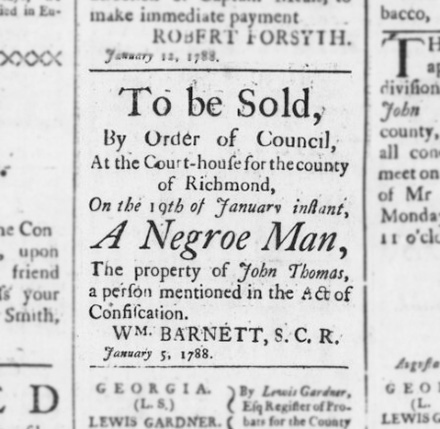
to-be-sold

In 1798, Georgia established a new requirement that connected political participation to a voter’s ability to pay taxes and that White voters be current on all taxes owed to the state before being allowed to vote.

In 1860, Georgia reintroduced the land ownership requirement to disenfranchise landless White men, a decision connected to concerns about the rapidly growing Irish population in Augusta and Savannah. Unable to compete with enslaved labor, these immigrants tried to gain political power to push for legal restrictions about where slave labor could be used and protect Irish immigrant’s political interest. Georgia’s leaders saw this as an attack on slavery and removed the new immigrants’ voting rights.

After the Civil War, Reconstruction brought major changes to voting rights in Georgia. In 1867, Black men were allowed to vote in state elections. Between 1867 and 1872, 69 African-American men were elected to Georgia’s state constitutional convention or state legislature. Their election marked a major expansion of political participation in the state. However, this progress was quickly challenged. In September 1868, White Republicans and Democrats voted to expel 33 African-American [GU2.1][BM2.2]members from the Georgia legislature.

In protest, Black Georgians and their white Republican allies marched from Albany to Camilla, Georgia, for a political rally. The march can be understood as one of Georgia’s first civil rights protests because participants were publicly demanding the right of Black citizens to vote, hold office, assemble peacefully, and take part in political life. When the group reached Camilla, armed White residents and local officials attacked them, killing about a dozen freedmen and wounding many others. The event, known as the Camilla Massacre, showed that civil rights were not protected by law alone. Even when Black men gained the legal right to vote and hold office, intimidation, mob violence, and local resistance were used to keep them from exercising those rights.
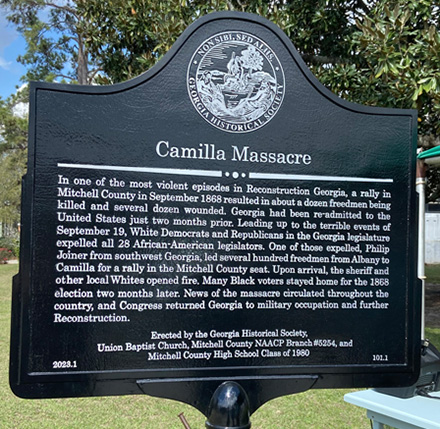
Georgia historical marker for Camilla Massacre

Primary Source Investigation

Affidavit of Philip Joiner: Albany, Georgia, 1868 Sept. 23

https://dlg.usg.edu/record/dlg_zlcu_cam022?canvas=0&x=278&y=1986&w=3028

  • How does Philip introduce himself?
  • What does Philip know about the potential of violence before the group enters Camilla?

Affidavit of Lewis Smith: Albany, Georgia, 1868 Sept. 24

https://dlg.usg.edu/record/dlg_zlcu_cam031#text

  • How does Philip introduce himself?
  • What does Lewis say about previous interactions in Camilla

Read more about the Camilla Massacre:

  • Historical Marker
  • Off the Deaton Path: Dr. Stan Deaton discusses the affidavits that were hidden away in the Freeman’s Bureau archives, below are two examples. One is from the organizer of the protest, Philip Joiner.
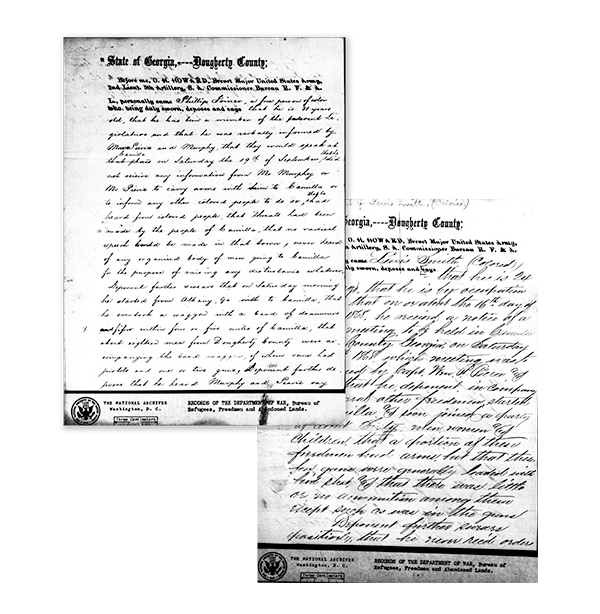
affidavits-Albany

In 1870, the 15th Amendment was ratified, the last of the three Civil War Amendments, which made the denial of voting based on race illegal. This expanded voting rights by allowing former slaves to cast ballots and have a voice in the national, state, and local elections. Considering these changes, Georgia reinstated poll taxes, and local officials often made it difficult for African Americans to pay those taxes by making them payable to the sheriff’s department and creating an intimidation factor to register to vote. These tactics limited voting without directly saying that Black men could not vote. By the 1880s, many African-American voters understood that even when they were allowed to cast ballots, their votes were not always fairly counted. In 1883, one African-American man testified before the U.S. Senate that even in places where Black voters were the majority, their votes seemed to disappear before they could affect the outcome. His testimony reflected the use of fraud, intimidation, and manipulation to suppress African-American political participation.

By 1900, Black voters in Georgia were banned from voting in Democratic primaries, creating what became known as “White Primaries.” This was especially important because Georgia was effectively a one-party state. If African-American voters could not participate in Democratic primaries, they had little real influence over who would hold political power.

In 1908, Georgia passed the Felder-Williams Act, which further restricted voting. The law included requirements connected to military service, ancestry, property ownership, literacy, and “good character.” These rules created exceptions that allowed many White voters to remain eligible, while literacy tests and poll taxes eliminated almost all Black voting in the state. By 1910, only about 4 percent of Black men in Georgia were registered to vote. While the Felder-Williams Act was designed to limit Black voting, it also limited some illiterate Whites from voting. Despite having other avenues to qualify as a voter, like military service, not completing the literacy test was acknowledging publicly that the person was illiterate. As a result, all Blacks and many lower-class Whites were no longer eligible to vote. In fact, between 1920-1944 elections in Georgia rarely had more than one-third of the eligible White voters show up to the polls.

Women also faced exclusion from the political process. In 1916, as the push for women’s suffrage hit a fever pitch in the United States, the Georgia State Senate scheduled a hearing on women’s suffrage for the day after the legislature adjourned, effectively avoiding serious debate on the issue. This reflected the resistance many women and African Americans faced as they fought for the right to vote.

In 1917, Georgia adopted the county unit system through the Neill Primary Act. This system worked like the Electoral College, giving political power to counties rather than counting every vote equally statewide. As a result, smaller rural counties received outsized influence compared to large urban counties. By 1960, the small counties of Echols, Glascock, and Quitman, with a combined population of 6,980 people, had the same voting power as Fulton County, which had a population of 556,326. This gave rural counties and their more conservative views far more influence in statewide elections than their population justified.

Despite the pushback from Southern states, like Georgia, the 19th Amendment was ratified in 1920. It prohibited the denial of voting based on sex. This expanded political participation to women of all races. However, Black women faced the same literacy test and poll taxes that Black men had faced since the 1870s. They had a desire to vote and the legal standing to do so, but now the rules and regulations of the local voter registration were the final hurdle before they could cast a ballot. Despite being officially ratified in 1920, Georgia did not officially ratify the amendment until 1970, after initially rejecting it in 1919.

Primary Source Investigation

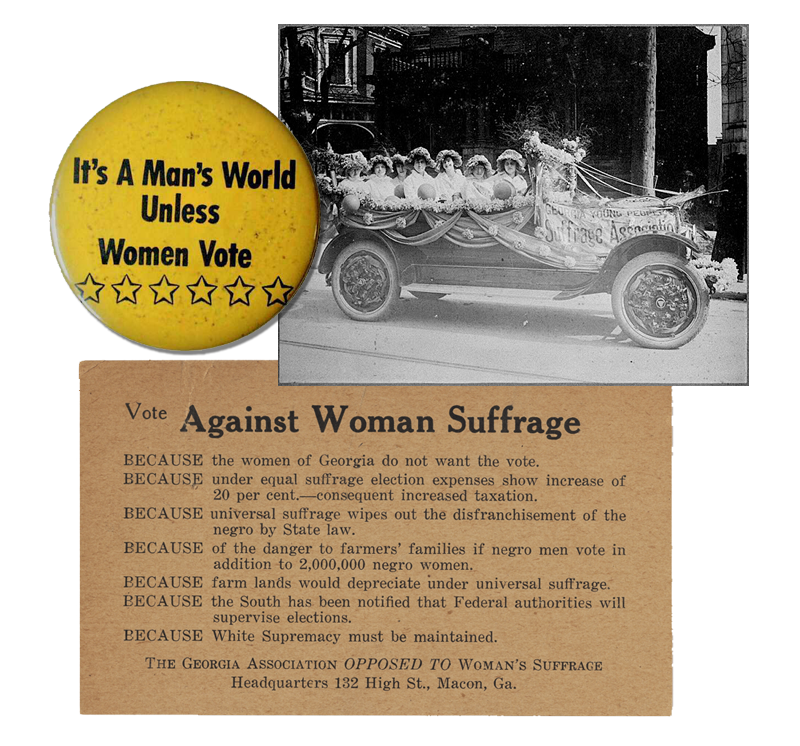
Postcard from the Georgia Association Opposed to Woman’s Suffrage

https://catalog.archives.gov/id/119222090

  • What does this postcard suggest about reasons groups were against women’s suffrage?

Woman Suffrage Button

https://dlg.usg.edu/record/nge_ngen_m-782

  • What does this button’s language suggest about the importance of women getting the right to vote?

Photograph of representatives of Georgia Young People Suffrage Association in parade with Margaret Koch driving vehicle, Georgia, not after 1920 Aug. 26

https://dlg.usg.edu/record/dlg_vang_geo088

  • Along with advocating for women’s suffrage, this photo shows a woman driving a car. Why would that be an important image in 1915?

Woman’s Suffrage Act of Georgia

https://vault.georgiaarchives.org/digital/collection/adhoc/id/309

  • After the ratification of the 19th Amendment, Georgia changed its laws so that women could vote.
  • Section 1 lists the limitations of Section 2167 of the Civil Code of Georgia of 1910. According to this code, what were women allowed to do before the 19th Amendment?
  • Section 2 alters the 1910 civil code to allow women to vote and hold civic office; however, what are the roles that are still off limits to women under the new provisions?

Resources on Women’s Suffrage in Georgia
  • The 19th Amendment at 100
  • The Women’s Suffrage Movement in Georgia
Women's Suffrage materials

In 1944, the U.S. Supreme Court ruled in Smith v. Allwright that political parties could not exclude Black voters from primaries. Although the case came from Texas, the ruling affected White primaries across the South, including Georgia.

In addition to eliminating the White primary, Georgia eliminated the poll tax in 1945. An early state-level repeal eliminated the tax decades before the U.S. Constitution banned it nationwide for federal elections in 1964 with the 24th Amendment.

Georgia also became an early example of lowering the voting age. During World War II, Georgia lowered the voting age to eighteen, based on the argument that if young people could be drafted and sent to war, they should also be able to vote for the government making those decisions. Decades later, this same argument helped support the national ratification of the 26th Amendment in 1971.

In 1945, King v. Chapman further challenged Georgia’s White primary system. Primus King, an African-American man in Muscogee County, was turned away when he tried to vote in a Democratic primary. The U.S. District Court for the Middle District of Georgia ruled that Georgia’s attempt to treat primaries as a “private affair” was illegal because primaries were an integral part of the state’s electoral process. The court found that King’s rights under the 14th, 15th, and 17th Amendments had been violated.

After these legal victories, Black voter registration in Georgia increased. By 1946, 118,387 Black Georgians had registered to vote. This marked an important shift, but voting rights were still not fully protected or equally accessible.

In 1963, the U.S. Supreme Court outlawed Georgia’s county unit system in Gray v. Sanders. The Court’s decision helped establish the principle of “one person, one vote,” meaning that political representation should be based more fairly on population. In 1964, Georgia moved to a majority-vote system, requiring candidates to receive 50 percent plus one vote to win. If no candidate received a majority, the election moved to a runoff between the top two vote-getters.

On January 23, 1964, the 24th Amendment was ratified, making it illegal to require poll taxes in federal elections. Later, in 1966, Harper v. Virginia State Board of Elections made all poll taxes unconstitutional because they violated the equal protection clause of the 14th Amendment. Georgia never ratified the 24th Amendment.

The Voting Rights Act of 1965 created another major turning point. It outlawed literacy tests and enforced the 15th Amendment to guarantee the right to vote to all US Citizens.

Since 1965, two sections of the law have been altered by the Supreme Court. Section 2 of the Voting Rights Act allowed states to create majority minority districts, a process the US Supreme Court upheld in 1993 in Shaw V. Reno. However, the Supreme Court reversed itself in Louisiana V. Calais (2026), finding that creating majority-minority districts was unconstitutional. Additionally, Section 5 of the law required certain states and local governments with histories of voting discrimination, including Georgia, to receive federal approval before making changes to voting laws. This process, known as preclearance, was designed to prevent new voting rules from being used to discriminate against voters. This perversion was ruled unconstitutional by the U.S. Supreme Court in Shelby County V. Holder (2013).

The history of voting in the United States, and especially in Georgia, is a history of both expansion and restriction. Voting rights widened over time, but those gains were met with new barriers designed to limit political power. Many groups, including African Americans, women, poor and uneducated citizens, young people, and others, had to fight for generations to secure, use, and protect their voting rights.

Primary Source Investigation

Interview with Primus King, 1979, pages 21-31.

https://csuepress.columbusstate.edu/cgi/viewcontent.cgi?article=1065&context=muscogiana

On page 22 (27 of the PDF) King describes what happened to him when he went to vote.

  • Why was this a test case?
  • How was he selected as the one to try and vote?
  • After Primus King was denied the right to vote, what did he do?
  • When he testified in court, what did King say about voting?
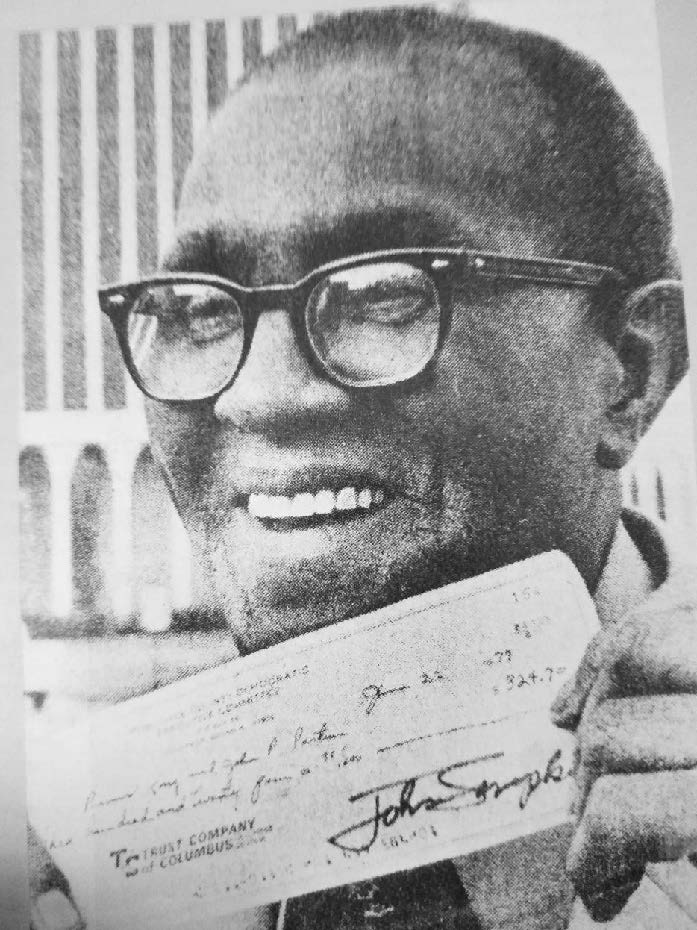
Photo of Primus King holding a check

Photo of Primus King

https://csuepress.columbusstate.edu/cgi/viewcontent.cgi?article=1065&context=muscogiana

King was awarded $100 plus 7% interest when he won his case in the US District court for Middle Georgia in 1945. It took almost 30 years for King to be paid.

  • What year did King receive his payment?
  • How much money did King receive?

Read more about Primus King here.

  • Historical Marker
  • Today in Georgia History
  • Classroom Lesson

Pulling it all together

Thinking about what you have learned, answer one of the questions below.

  1. Why is the history of voting in Georgia better described as a story of expansion and restriction rather than a story of steady progress?
  2. After the 15th Amendment, Black men had the legal right to vote, but Georgia created new barriers such as poll taxes, literacy tests, and intimidation. What does this show about the difference between having a right on paper and being able to exercise that right in real life?
  3. Which event or law in the reading do you think created the most meaningful change in voting rights in Georgia? Defend your answer by explaining both what changed and what barriers still remained afterward.
Decoding Histories Inquiry Kit

October 20, 2025 by

Teaching with Primary Sources

Decoding Histories Inquiry Kit

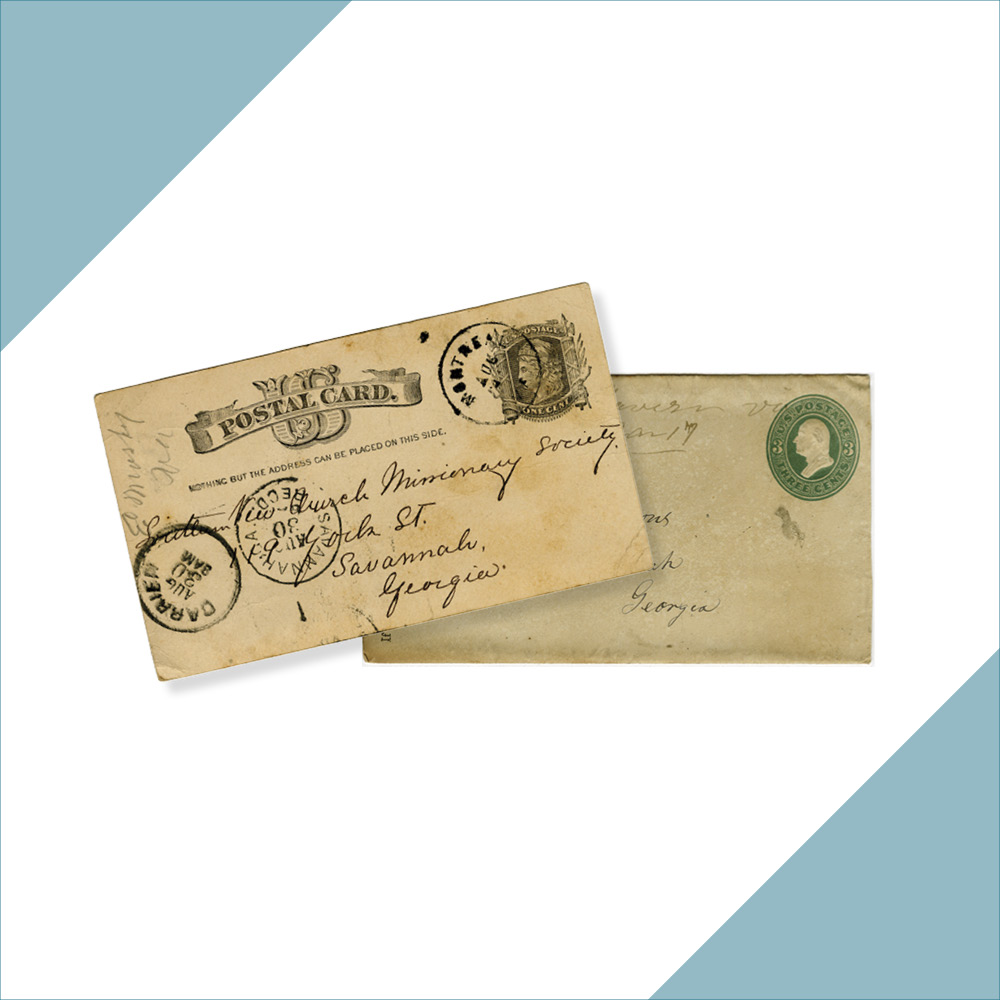
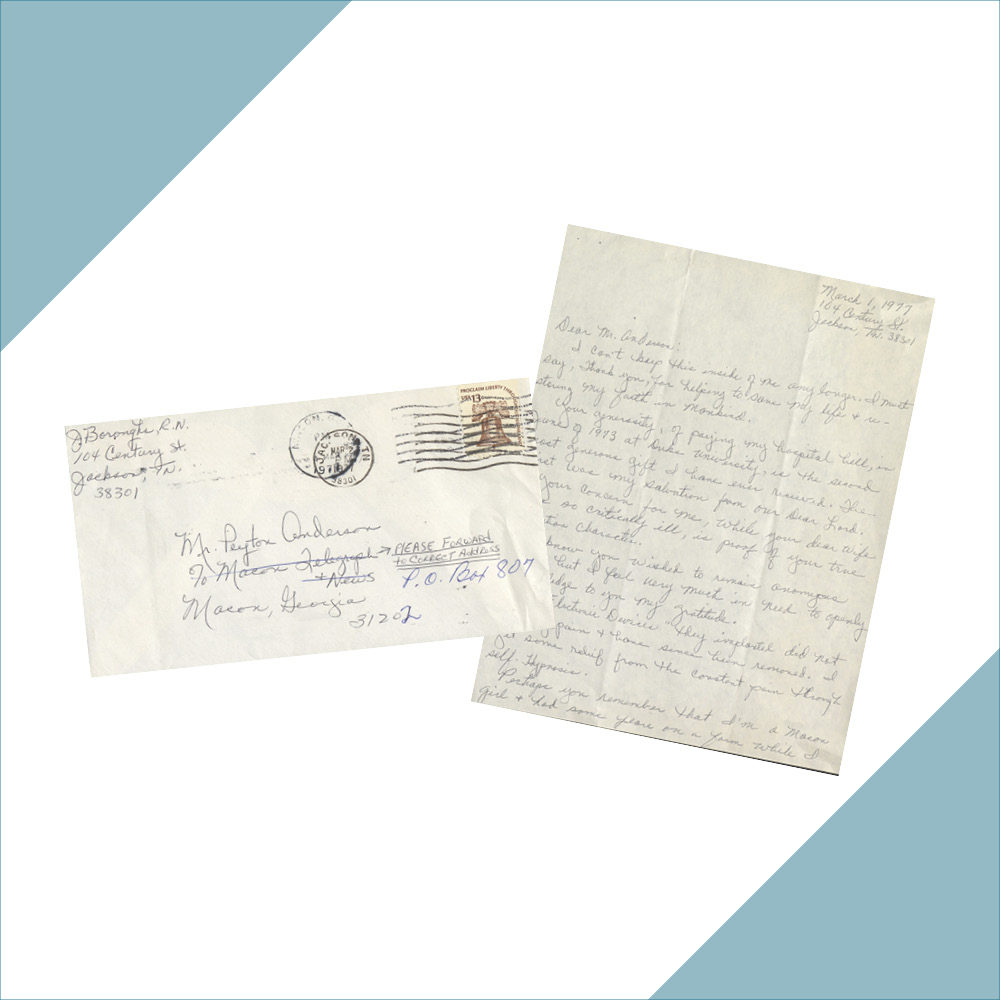
Decoding Histories engages K-12 educators and students in exploring the importance of reading and writing in cursive in order to understand written materials from the past. Through close examination of cursive writing, students develop literacy skills and critical thinking skills while uncovering stories embedded in primary sources.

The Georgia Historical Society is excited to offer this “Decoding Histories” Inquiry Kit. This inquiry-based resource includes activities designed to meet Georgia's K-12 English Language Arts Standards and the Georgia Social Studies Standards of Excellence. Supporting the importance of reading and writing in cursive, this resource highlights how the use of archival materials deepens historical inquiry and strengthens literacy skills.

The contents of the Inquiry Kit are a series of Teaching with Primary Sources (TPS) inquiry-based strategies and activities designed to help teachers guide students in reading and writing in cursive, exploring a curated set of primary and secondary sources.

Through the Inquiry Kit students connect with the past through direct interaction with primary sources. When students slow down to read cursive and explore authentic sources, they begin to see history not just as dates and facts, but as lived experiences of real people.

Download the Decoding Histories teacher guide and activities below.

Learn More about the Community Archives Initiative.

decoding-histories-icons

Decoding Histories Inquiry Kit: Teacher Guide

https://www.georgiahistory.com/wp-content/uploads/2025/10/Decoding-Histories-Teacher-Guide-LR.pdf

Decoding Histories Inquiry Kit: Write Like a Historian

decoding-histories-icons3

Decoding Histories Inquiry Kit: Letters Through Time

decoding-histories-icons4

Decoding Histories Inquiry Kit: Recipes Rediscovered

decoding-histories-icons5

Decoding Histories Inquiry Kit: Transcribe Like an Archivist

With support from

Georgia-Pacific

Georgia Uncovered: Investigating Our State’s Legends – De Soto

September 10, 2025 by

Georgia Uncovered:

Investigating Our State’s Legends

Hernando De Soto

A presentation of

Teaching Challenging Histories logo
journal

Detective's Journal

Are you ready to uncover the secrets of Georgia’s past? Legends, like those surrounding conquistador Hernando de Soto’s expedition in southeastern North America, have been passed down for generations. But are these stories fact, fiction, or a little bit of both? It’s time to investigate the subject and explore our past like historians. With primary sources, videos, and activities, you’ll research the history behind these legends.

To guide you through this journey, you will download a Detective’s Journal. This tool will assist you in reflecting on your journey through the mysteries of Georgia’s past. This interactive PDF is designed to help you think critically, ask questions, and document your findings. Each section of the exhibit corresponds to a part of the journal, with prompts to reflect on what you’ve learned, analyze primary sources, and connect the legends to Georgia’s statewide impact.

Download your journal, and let’s get started!

Row wavy Shape Decorative svg added to top

Objectives

By the end of Georgia Uncovered: Investigating Our State’s Legends, you will learn:

  1. Legends are interesting but need to be investigated.
  2. Primary sources help us separate fact from fiction.
  3. The role of exploration in shaping Albany’s past.

Detective's Journal

  • Why is it important to know the facts?
  • What might happen if people believe in a legend without checking the facts?

What Are Legends?

Legends are a mix of history and imagination. They are stories based on a real person or event from the past that have been passed down for generations. Legends usually have cultural significance with exaggerated elements. They are fun to tell, but the truth can get lost along the way. Your job as a historian is to figure out what is real and what is made up. As you investigate the legends of Georgia, it is imperative that you understand the importance of utilizing tools to help you along your journey.

Detective's Journal

  • Why do you think people exaggerate stories?
  • How might learning the real facts about a legend change the way people see Georgia’s history?
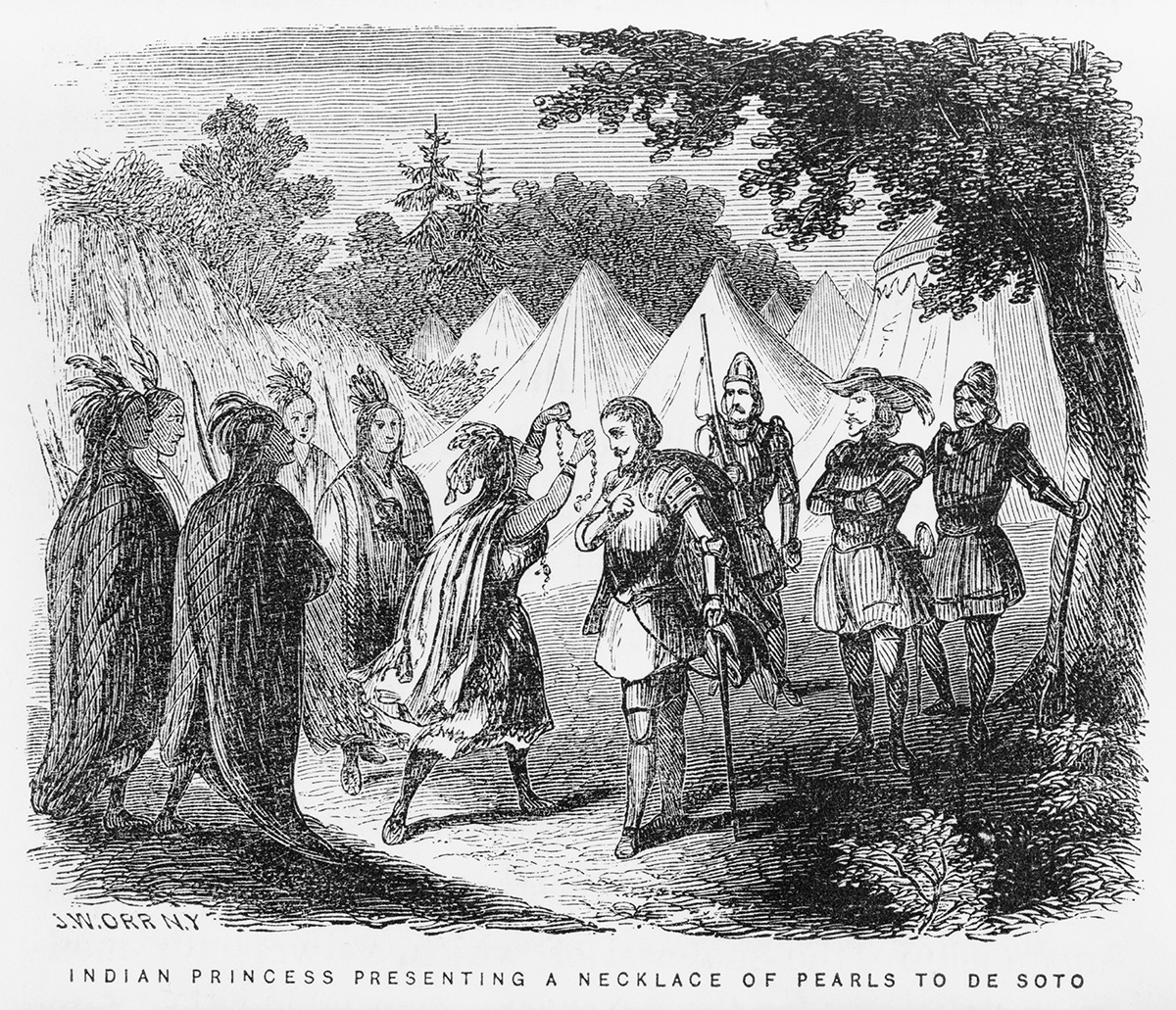
master-pnp-cph-3c00000-3c04000-3c04300-3c04378u

Here are a few key terms to help as you investigate Georgia’s legends:

  • Albany: founded in 1836 and located in southwest Georgia, the city of Albany is the county seat of Dougherty County.
  • Historian: like a detective of the past, someone who researches in primary and secondary sources and constructs a narrative about things that happened long ago, such as wars, famous people, and how people lived.
  • History: The study of the past, which can change based on the available evidence such as primary sources and the archaeological record.
  • Legend: a story, often passed down through generations, that is believed to be based on real events or people, which may include fictional or exaggerated elements.
  • Fact: something that is true and can be proven.
  • Fiction: a made-up story, though sometimes based on real things.
  • Past: Events, places, or people that occurred or existed before today. The past does not change.
  • Primary Sources: original documents or accounts created at the time of the event or person being studied
  • Secondary Sources: stories or articles about those original accounts written by someone who was not there.
  • Tall Tale: a story, sometimes based in fact, with exaggerated, made-up elements that are often told for entertainment.
Row wavy Shape Decorative svg added to top
Row wavy Shape Decorative svg added to bottom

Legend has it that...

“Sarasota, Florida, was named for Sara de Soto, Hernado’s fictional daughter.”

“De Soto’s men secretly weighted and buried his body in the Mississippi River.”

“Albany, Georgia, was the site of de Soto’s 1540 encampment.”

Common Legends of De Soto

From beginning to end, Hernando de Soto’s expedition is shrouded in mystery as over half of his men died on their quest, including de Soto himself, leaving the events and the exact path of his expedition unknown.

Here are a few legends surrounding de Soto:

  1. Sarasota, Florida, was named for Sara de Soto, Hernado’s fictional daughter, whose tragic romance with a Seminole man is believed to protect the city from hurricanes.
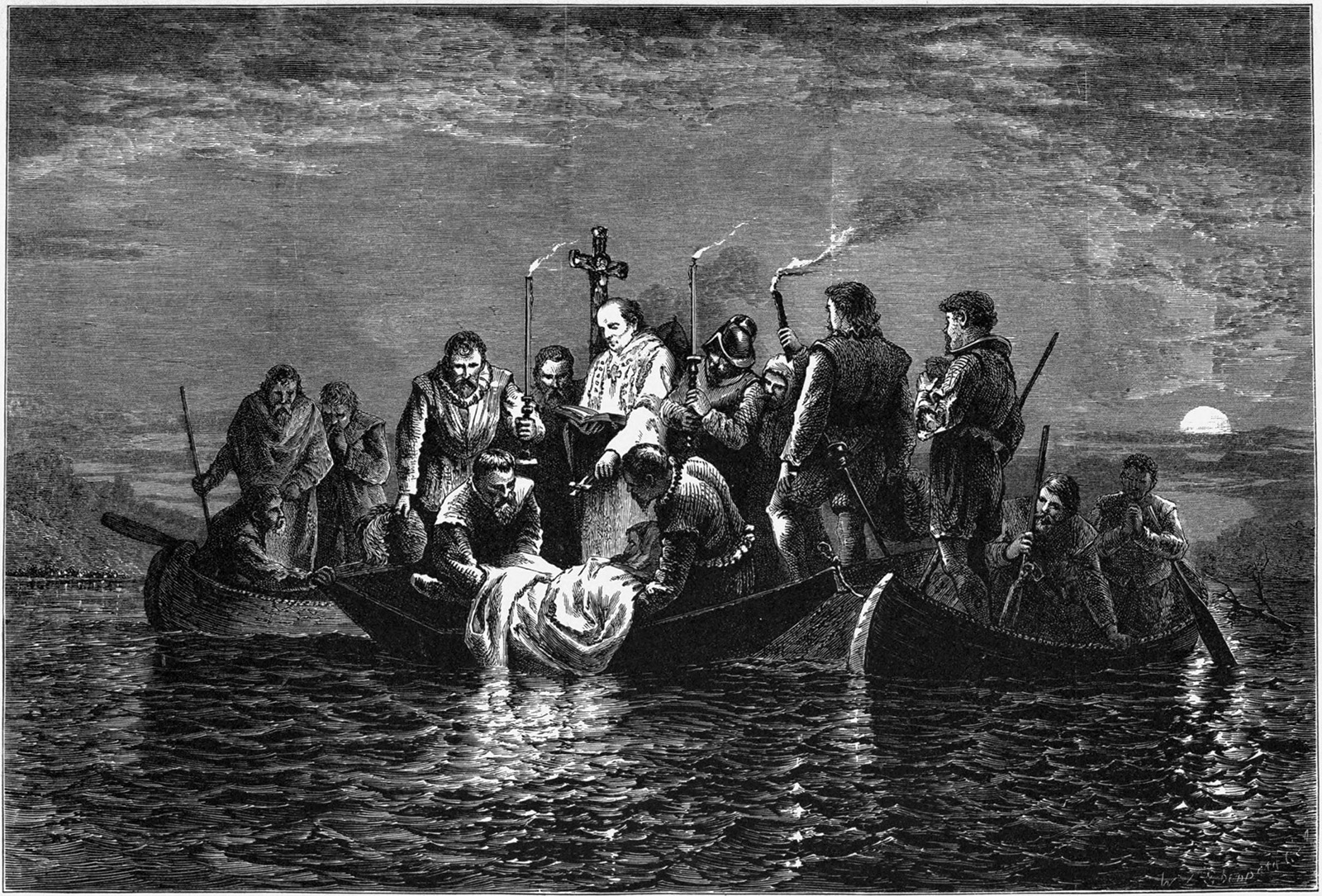
  2. De Soto’s men secretly weighted and buried his body in the Mississippi River in 1542 to convince Native Americans he was a god.
  3. Members of the expedition spread the story that de Soto himself was a divine figure who could unleash his wrath on anyone who opposed them.
  4. Albany, Georgia, was the site of de Soto’s 1540 encampment, through historians continue to debate this claim.

Depending on who you ask in Sarasota, Florida, some might say the city was named for the fictional Sara de Soto, the daughter of Hernando whose tragic love story with a Seminole man now protects the city from hurricanes. Legends or tall tales about de Soto began even before the end of his expedition. At de Soto’s death in 1542, it is believed that his men weighted his body and buried it in the Mississippi River to hide it from the Native Americans. By covering up his death, the expedition could continue their ruse that de Soto was a god, and they could threaten his wrath on those who stood in their way as they traveled toward Mexico.

What is known today about the events of their journey comes from journals kept by members of the expedition, historical records, and modern-day archaeological investigations. For decades, historians relied on the journals and historical records to make their arguments. However, unlike the past, history—the study of the past--changes as information is uncovered. Modern-day archeological discoveries have provided evidence left behind by people of the past, adding to the available sources and changing our present-day understanding of de Soto’s expedition.

Just like historians, we are going to examine legends surrounding de Soto using the correct tools and resources to make an informed decision. Understanding the past and connecting the past to its impact on the present will guide us through each section of the exhibit. Signs of a great historian include:

  • Using both primary and secondary sources to reconstruct the past.
  • Critically evaluating sources, identifying biases, and drawing logical conclusions based on evidence.

Detective's Journal

  • Do any of the stories here sound like tall tales?
  • What kinds of evidence would you look for to confirm or disprove the legends about de Soto?
Depiction of the burial of Hernando de Soto. By William A. Crafts (1876). Wikipedia.

The Life of de Soto

Hernando de Soto was a Spanish explorer and conquistador born around 1500. Raised in a society with a distinct class of warriors called conquistadors, de Soto was inspired by Christopher Columbus’s discoveries. During the 1500s, conquistadors were Spanish or Portuguese military leaders who explored, conquered, and colonized vast territories in the Americas and Asia. As a young man, de Soto participated in the conquests of Panama, Nicaragua, and Peru.

In 1537, King Charles V supported de Soto in his expedition of La Florida, part of which is now the state of Florida. His goal was to explore, settle, and govern the area. De Soto also hoped to find riches like those he had discovered in past conquests. De Soto and the Spanish believed that there was as much gold in southeastern North America as they had found in South America.

De Soto sailed for Cuba in April 1538 with 600 men, and in May 1539, he landed in present-day Tampa Bay. From there, he moved northward. His journeys took him through Tallahassee, in the territory of the chiefdom of Apalachee. By 1540, de Soto made it to the southern border of present-day Georgia and is believed to be the first European to explore the interior of the state. As de Soto and European men moved through Georgia, they brought disease, danger, and death for Native American tribes living in the area. His exploration is often cited as the beginning of the negative relationship between Native American tribes in the southeast and European settlers. After years of travel, de Soto died in 1542 from a fever.

Detective's Journal

  • How did de Soto’s upbringing and culture affect his expedition?
  • What clues from de Soto’s actions and decisions might help us separate historical facts from legends about his expedition?
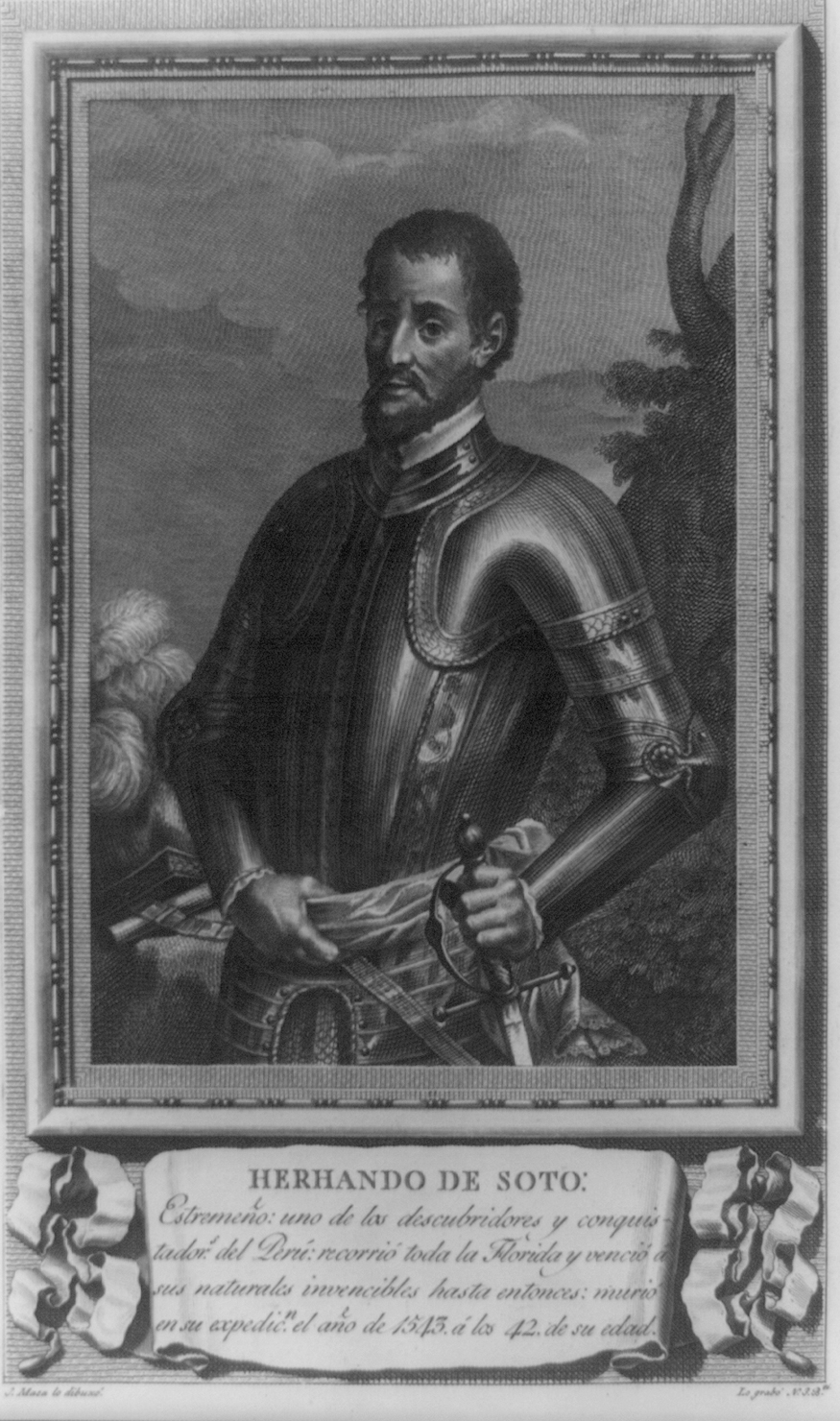
Hernando De Soto. Engraving by J. Maca. Library of Congress.

The Significance of Albany

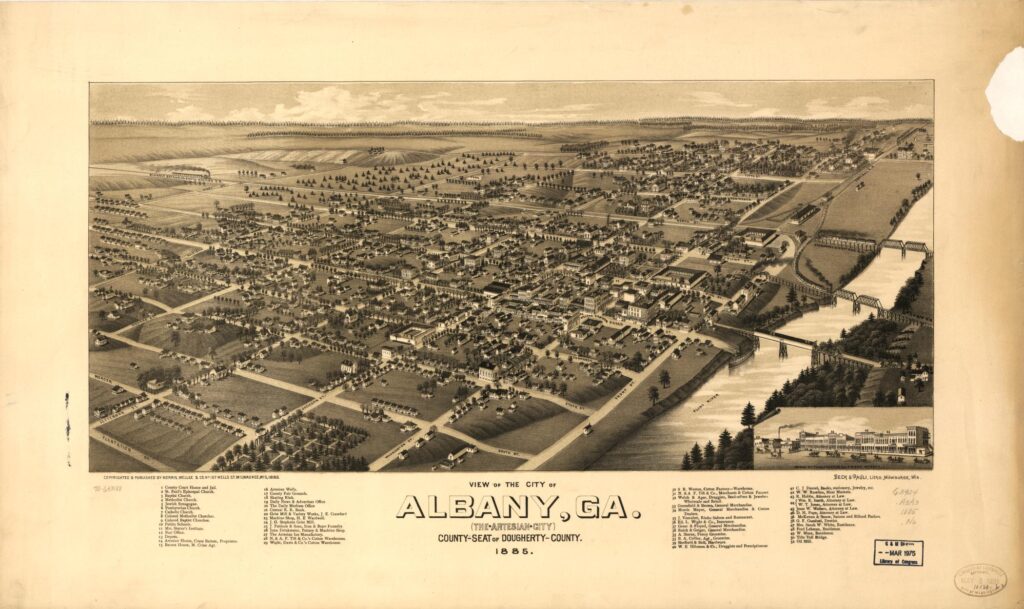
Albany, the county seat of Dougherty County, is believed to be the site of de Soto’s encampment from March 5 until March 10, 1540. The founding of Albany, Georgia, is new compared to the events of de Soto’s expedition. The city was founded in 1836 by speculator and merchant Nelson Tift and named for Albany, New York. Nearly 300 years separate the two events.

The land where Albany now sits was historically inhabited by Muscogee Indians. Near the navigational head of the Flint River, the Muscogee lived along its banks. In March 1540, de Soto and his men encountered the Flint River. They built a boat to ferry across and continue their expedition.

After the state of Georgia acquired the land through Native American cessions, Albany became a market hub for cotton farmers who flooded southwest Georgia, as Nelson Tift intended.

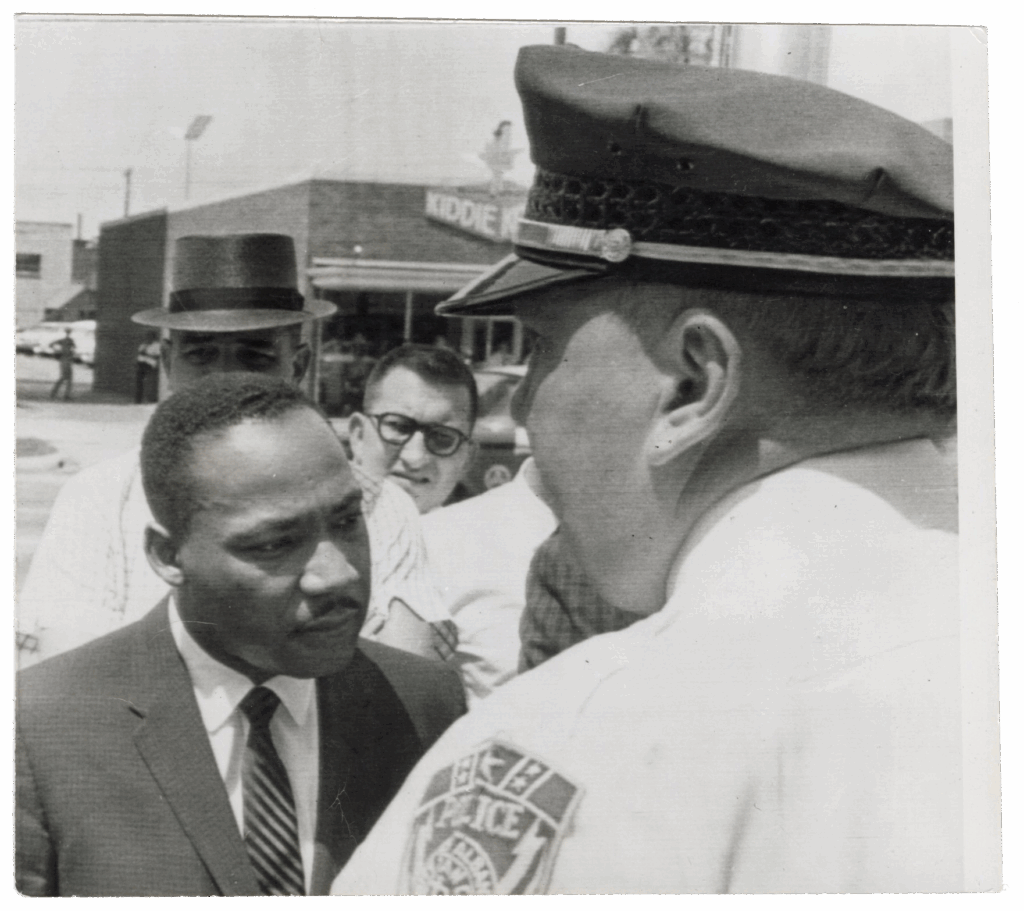
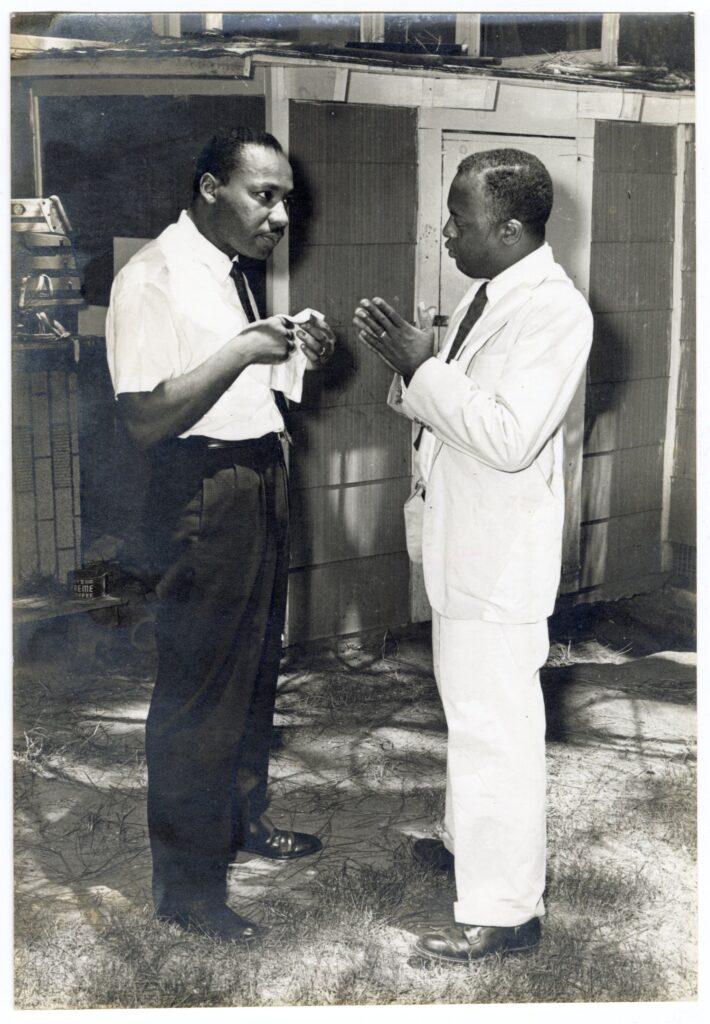
Today, Albany is home to several significant cultural institutions, including the Albany Museum of Art, which houses one of the largest collections of African art in the southeastern U.S., Thronateska Heritage Center, and the Civil Rights Institute, which commemorates the efforts of those who fought for civil and human rights in the Albany Movement. The Georgia Historical Society has erected several markers that share more about the Civil Rights Movement in the area.

Detective's Journal

  • How does Albany’s story connect to De Soto’s expedition?
  • What evidence would you look for to determine if de Soto really camped in the area that is now Albany?
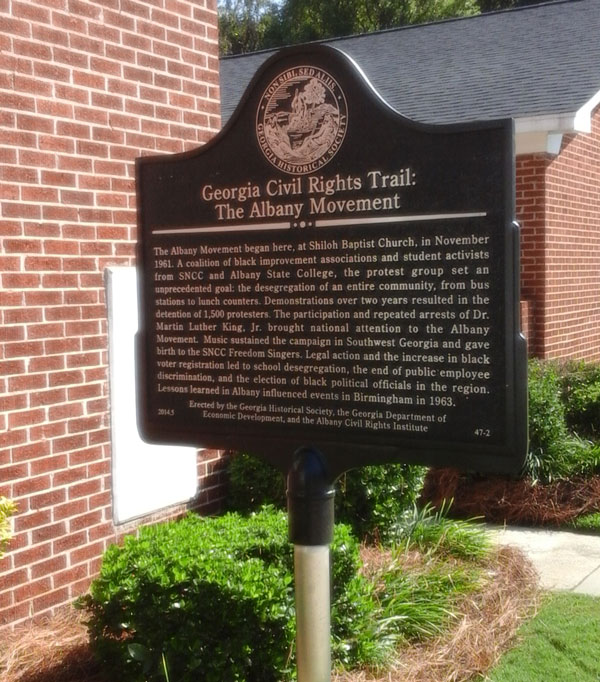
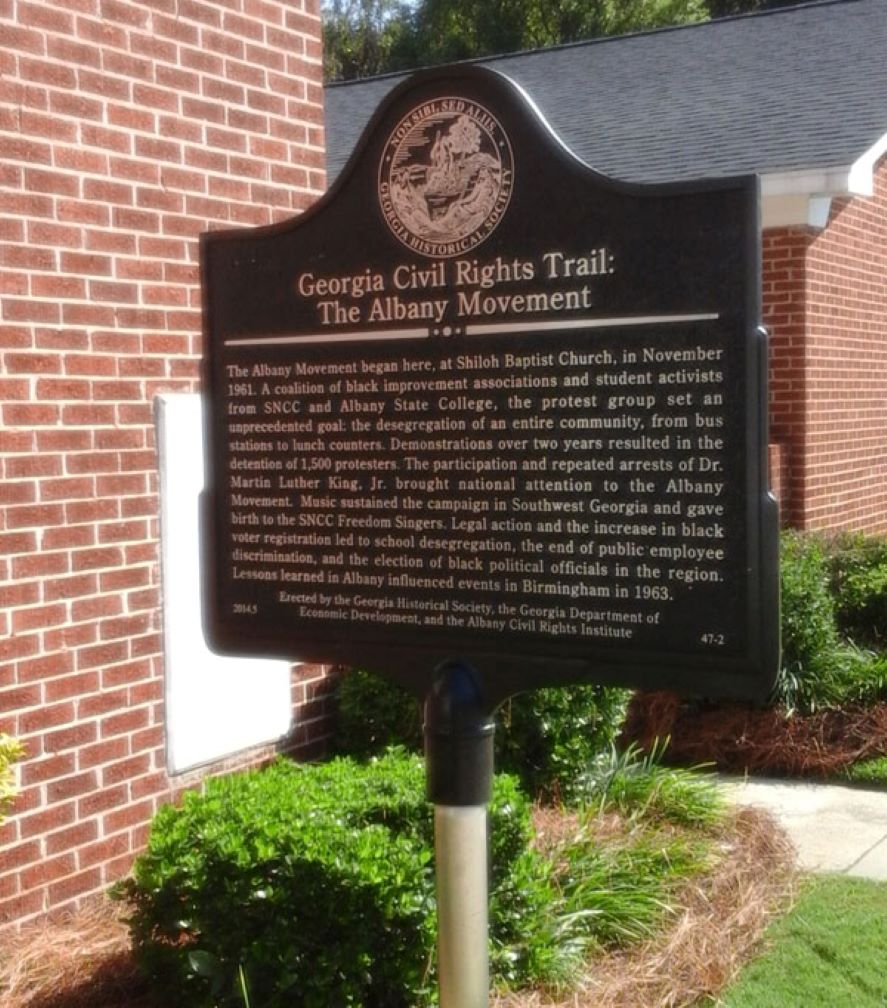
Georgia Civil Rights Trail: The Albany Movement historical marker
View of the city of Albany, Ga. (the Artesian City) county-seat of Dougherty-County. 1885. | Library of Congress.
Photo: "July 1962 Albany Ga MLK Arrested."
"Real, unpublished photo of MLK at the Albany Movement."

The Facts of De Soto

Historians continue to debate the events of de Soto’s expedition and its exact route, and history continues to change as more information is uncovered. Archaeologists may continue to find evidence about de Soto’s expedition through Albany.

De Soto’s expedition permanently changed North America’s people and environment. De Soto and his men brought supplies with them that did not exist in North America before, including tools, weaponry, and non-native horses, dogs, and pigs. The explorers exposed Native Americans to diseases that proved fatal, including influenza and smallpox.

Having learned how to lead expeditions from other conquistadors, de Soto adopted their tendency toward violence. At times when he did not find the riches for which he was looking, he believed that the Native Americans were deceiving him. De Soto used many tactics, including trade, holding important tribal members hostage, attacking tribal communities, enslaving natives, and more. His expedition also raided Indian settlements, leaving them without necessary food and supplies.

As a result, Native-American cultures changed. Powerful chiefdoms began to collapse. Survivors joined or formed new societies such as the Cherokee and Muscogee in what is now Georgia. De Soto’s actions also contributed to creating lasting hostile relationships between Native American tribes and Europeans.

Later explorers saw firsthand the effects of de Soto’s expedition. Using the information gleaned from de Soto’s trip, the Spanish launched more expeditions to the southeast, eventually creating permanent colonies and missions, such as St. Augustine (founded 1565), Florida. In competition with Spain, France and Britain dispatched expeditions to North America. Later, the British created thirteen colonies along the Atlantic coast, the last being Georgia.

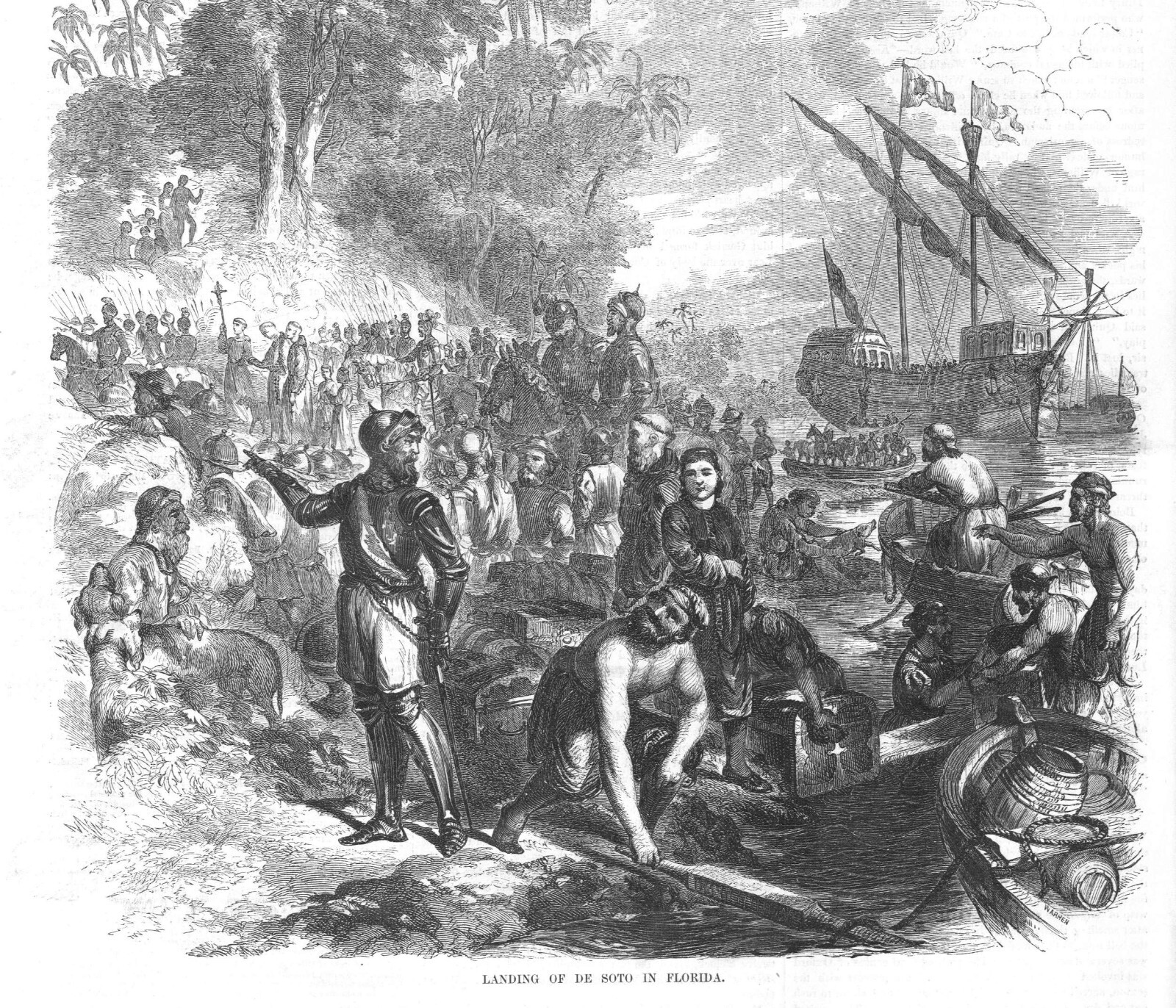
Landing of De Soto in Florida / Warren. Florida: 1855. From the Library of Congress Print and Photography Division.

Detective's Journal

  • How did de Soto’s expedition affect North America? Can we see those effects today?
  • What kind of evidence would help historians understand the true impact of de Soto’s expedition on Native American communities?

Tools for Exploration

Legend has it that Hernando de Soto’s life and expedition inspired many stories that blend fact and fiction. From the fictional tale of his daughter Sara in Sarasota, Florida, to the secret burial of his body in the Mississippi River, people have long imagined de Soto as a powerful, almost divine figure. The uncertainty of his expedition route has fueled speculation. These legends show how stories about de Soto have grown over time, mixing history with imagination. Let’s look a little deeper using tools that will aid in connecting the past to the present. Just like a historian, remember to:

  • Explore primary and secondary sources.
  • Challenge your own assumptions.
  • Use evidence to support your arguments.

Be sure to keep the Detective’s Journal near as you further analyze resources, reflect on what you’ve learned, and form your own conclusions. Good luck with your investigation!

Start with:

  • De Soto in Georgia Interactive Storymap

And keep scrolling for these resources:

  • Off the Deaton Path Video: Tracking Hernando De Soto Through Georgia
  • Elementary Activity Sheet (pdf)
  • Secondary Activity Sheet (pdf)
  • History Snapshot (pdf)

And then:

  • Test Your Knowledge! (Quiz)
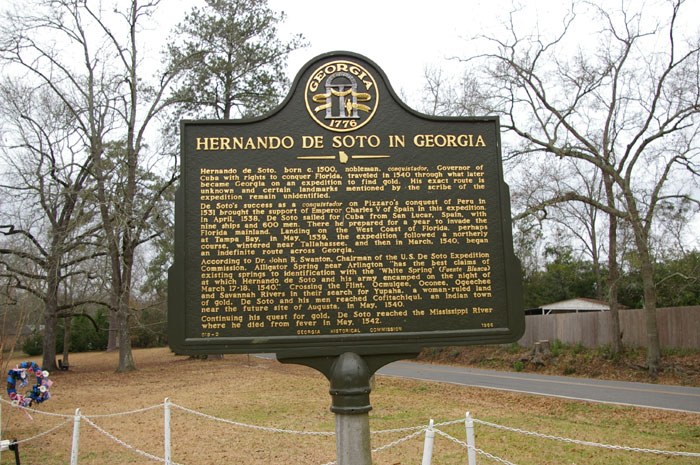
DeSoto-Marker-High-res-David-Seibert

Dispatches from Off the Deaton Path

Elementary Activity: Hernando De Soto

Download Activity

Secondary Activity: Hernando De Soto

Download Activity

History Snapshot: Hernando De Soto

Download Activity

Test Your Knowledge

Dive into the quiz below and discover what you have learned about Native American and Georgia history. See how many you can get right and what you can learn more about!

Start the Quiz
True or False: Historians use only documents and first-hand accounts to study the past.
Select the option that incorrectly finishes the sentence: History is...
True or False: Historians know the exact route De Soto took in the 1500s when he explored what we know today as the southeastern United States.
Legends sometimes have fictional or exaggerated elements, but tall tales are always true stories with exaggerated, made-up elements. Select the option that has a tall tale.
Why are the written documents from De Soto’s journey important to the study of Native Americans?
How did you do? While we know that history is made up of stories of fact and/or legend, it can take some investigation to determine where our information comes from. As we learned by uncovering the histories behind De Soto, stories can become tall tales. And, unlike the past, history changes. Our best tools are often considering new evidence, reflecting on what we thought we knew with fresh eyes, asking good questions, and thinking critically.

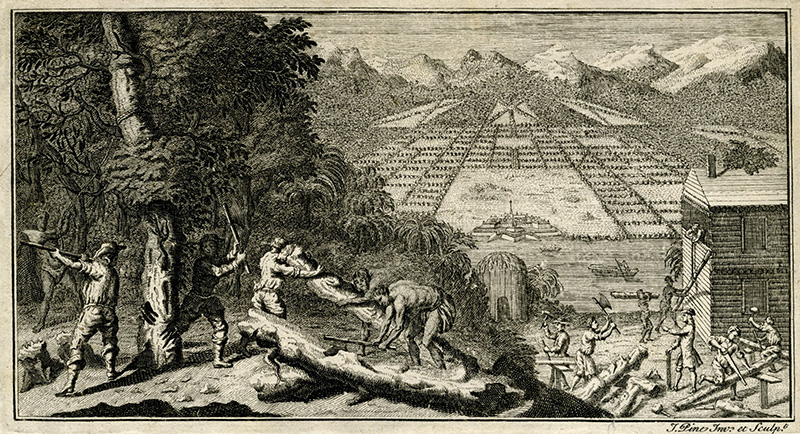
24a_Colonist-Clearing-on-Hutchinson-Island

Mapping Activity

Tall tales are stories, sometimes based on truth, that have been embellished or exaggerated. Some famous tall tales include ones about Paul Bunyan and Johnny Appleseed. Can you think of any tall tales in your hometown? Add your story to the map and include a primary source of the person, place, or event from the GHS archive or another repository like the Library of Congress to support your tale! If you know the "truth" behind the tall tale, you can add that too.

Add Your Story

Bonus Resources

Picture Books Expand

Daly, Catherine. What Was the Age of Exploration? https://a.co/d/fOy2KhA

Books Expand

Smith, Marvin T. Coosa: The Rise and Fall of a Southeastern Mississippian Chiefdom (Gainesville: University Press of Florida, 2000).

Jones, Charles C, Georgia Historical Society, and John Boyd Thacher Collection. Hernando de Soto: the adventures encountered and the route pursued by the adelantado during his march through the territory embraced within the present geographical limits of the state of Georgia. [Savannah, Ga.: Printed for the author by J.H. Estill, 1880] Pdf. https://www.loc.gov/item/02022163/.


Articles Expand

Andrews, Daniel Marshall. De Soto's route from Cofitachequi, in Georgia, to Cosa, in Alabama. Lancaster, Pa., The New era printing company, 1917. Pdf. https://www.loc.gov/item/17021144/.

Burrison, John. "Storytelling Traditions." New Georgia Encyclopedia, last modified Apr 8, 2019. https://www.georgiaencyclopedia.org/articles/arts-culture/storytelling-traditions/

Harris, Joel Chandler. Stories of Georgia. [New York, Chicago etc. American book company, 1896] Pdf. https://www.loc.gov/item/01011989/.

“Hernando de Soto and the Impact of Spanish Exploration in Georgia.” Georgia Historical Society. https://www.georgiahistory.com/resource/hernando-de-soto-and-the-impact-of-spanish-exploration-in-georgia/.

“Hernando de Soto.” Ocmulgee Mounds: National Historical Park, last modified July 26, 2023. https://www.nps.gov/ocmu/learn/historyculture/hernando-de-soto.htm

“Marker Monday: Hernando de Soto in Georgia.” Georgia Historical Society. https://www.georgiahistory.com/marker-monday-hernando-de-soto-in-georgia/.

Sineath, Sophia. “Unexpected Discoveries: Hernando De Soto in Georgia.” Georgia History Today, Vol 8, No. 3 & 4. 2014. https://www.georgiahistory.com/wp-content/uploads/2015/01/ght-fall-winter-2014.pdf

http://www.georgiaencyclopedia.org/articles/history-archaeology/hernando-de-soto-georgia.html.

Worth, John. "Spanish Exploration." New Georgia Encyclopedia, last modified Sep 29, 2020. https://www.georgiaencyclopedia.org/articles/history-archaeology/spanish-exploration/.

De Soto National Memorial, National Parks Service, https://www.nps.gov/articles/desoto.htm.

“De Soto Expedition - 1539 - 1542 CE.” National Park Service. https://www.nps.gov/liri/learn/historyculture/de-soto-expedition-1539-1542.htm.

“1492: An Ongoing Voyage.” Library of Congress. https://www.loc.gov/exhibits/1492/eurocla.html.

Smith, Marvin. "Late Prehistoric/Early Historic Chiefdoms." New Georgia Encyclopedia, last modified Sep 9, 2019. https://www.georgiaencyclopedia.org/articles/history-archaeology/late-prehistoric-early-historic-chiefdoms-ca-a-d-1300-1850/.

King, Adam. "Mississippian Period." New Georgia Encyclopedia, last modified Jan 6, 2021. https://www.georgiaencyclopedia.org/articles/history-archaeology/mississippian-period-overview/.

“Southeast Native American Groups.” National Geographic. https://education.nationalgeographic.org/resource/southeast-native-american-groups/.

Nystrom, Elsa. "Hernando de Soto in Georgia." New Georgia Encyclopedia, last modified Jan 3, 2019. https://www.georgiaencyclopedia.org/articles/history-archaeology/hernando-de-soto-in-georgia/

Sepulvado, John. “The Conquistador Stopped at a Georgia Swamp.” Georgia Public Broadcasting, last modified July 16, 2020. https://www.gpb.org/news/2009/11/05/the-conquistador-stopped-at-georgia-swamp

Smith, Janet. “Redrawing Soto’s map?” James Madison University, last modified April 22, 2024. https://www.jmu.edu/news/2016/03/29-soto-redrawing-map.shtml

Videos Expand

Blanton, Dennis. “Tracking the Legacy of Hernando de Soto Through the Indigenous Southeast,” Blue Ridge Archaeology Guild. https://www.youtube.com/watch?v=3WHByFAh-mo.

First Encounter. https://www.chickasawfilms.com/Projects/Documentaries/First-Encounter.aspx.

Interactions Between AMERICAN INDIANS and EUROPEANS [APUSH Review Unit 2 Topic 5] 2.5. https://www.youtube.com/watch?v=Fd20x--zvvA.

Detective's Journal

  • How did the tools help you explore Georgia’s legends?
1361-PC-04-0259

Sponsored in part by

coca-cola-company-e1678388514671

Grade 8 Georgia Studies – The Executive Branch Inquiry

July 18, 2025 by

Inquiry-based Resource

Grade 8 Georgia Studies – The Executive Branch Inquiry

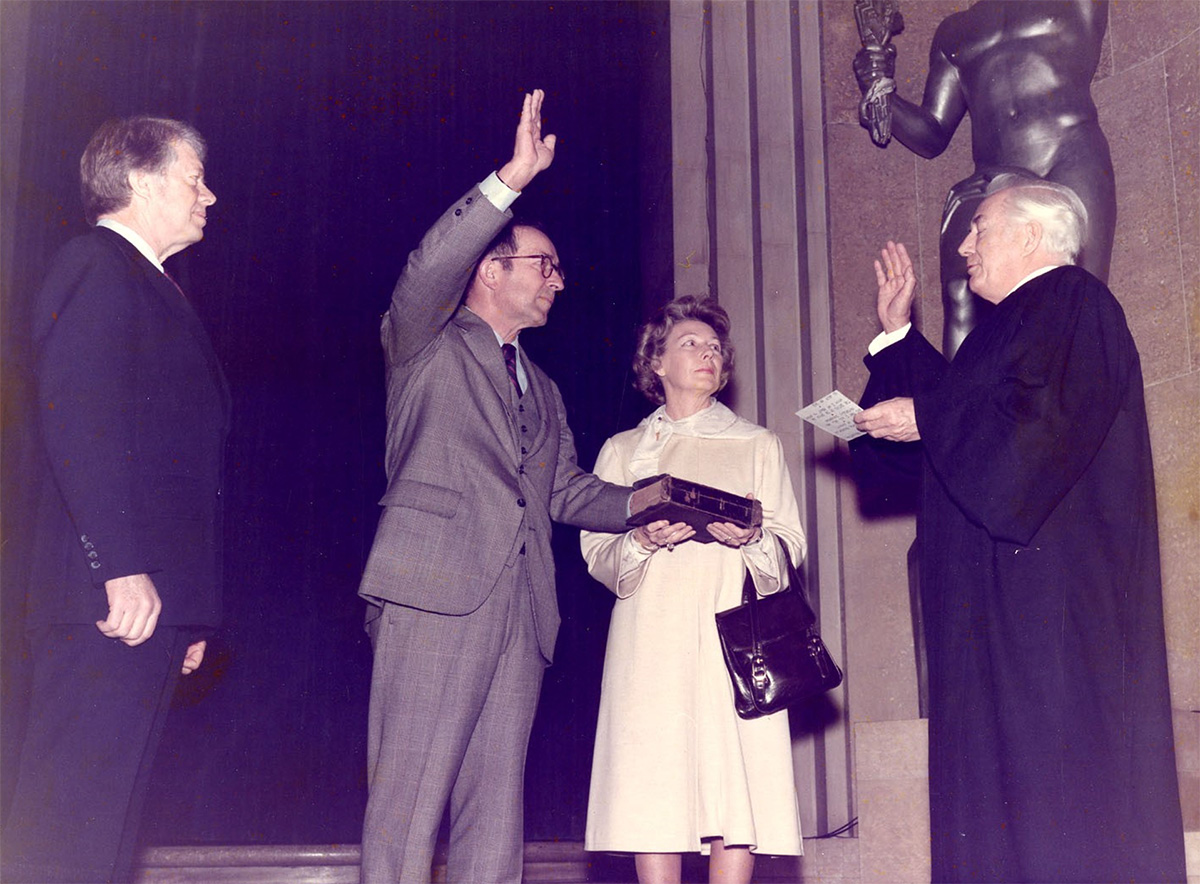
Bell Receiving the Attorney General Oath of Office from Chief Justice Warren E. Burger in January 1977. 
Griffin Bell Papers, Georgia Historical Society, Washington D.C.
Bell Receiving the Attorney General Oath of Office from Chief Justice Warren E. Burger in January 1977. Griffin Bell Papers, Georgia Historical Society, Washington D.C.

How Far Does the President's Power Reach?

This 8th grade annotated inquiry asks students to examine primary sources to infer the powers of the president. Students then assess policies and actions of the Jimmy Carter administration to decide if the president can expand their power beyond what the Constitution gives the executive. Finally, students will analyze the processes in which the legislative and judicial branches check and balance the power of the executive branch. As an extension activity students are challenged to analyze the constitutionality of Executive Orders.

The Executive Branch Inquiry

Grade 8 Georgia Studies – The Fourteenth Amendment and School Desegregation Inquiry

July 18, 2025 by

Inquiry-based Resource

Grade 8 Georgia Studies – The Fourteenth Amendment and School Desegregation Inquiry

[Ford Farm School photograph], Foltz Photography Studio (Savannah, Ga.) photographs, previous MS 1360 
Georgia Historical Society, Savannah, Georgia.
[Ford Farm School photograph], Foltz Photography Studio (Savannah, Ga.) photographs, previous MS 1360 Georgia Historical Society, Savannah, Georgia.

What was Georgia's Response to School Desegregation?

This 8th grade annotated inquiry asks students to evaluate Georgia's response to the Supreme Court decision in Brown v. Board of Education in 1954. Students will examine the Fourteenth Amendment, Plessy v. Ferguson, the decisions made in both Brown v. Board of Education and Brown II, and the results of the Sibley Commission to build an evidence-based argument.

The Fourteenth Amendment and School Desegregation Inquiry

Grade 8 Georgia Studies – The Legislative Branch Inquiry

July 18, 2025 by

Inquiry-based Resource

Grade 8 Georgia Studies – The Legislative Branch Inquiry

Bryant, R. (n.d.). Baldwin Draft of the U.S. Constitution [Photograph]. Abraham Baldwin Papers, 
Georgia Historical Society, Savannah.
Bryant, R. (n.d.). Baldwin Draft of the U.S. Constitution [Photograph]. Abraham Baldwin Papers, Georgia Historical Society, Savannah.

Was the Great Compromise of 1787 fair?

This 8th grade annotated inquiry asks students to examine the actions of the Founders during the Constitutional Convention. Students will practice their comparison skills to assess the similarities and differences between members of the Constitutional Convention, specifically those who played a part in The Great Compromise. This inquiry also requires students to consider the benefit and outcome of the practice of compromise during the Convention.

The Legislative Branch Inquiry

Grade 8 Georgia Studies – The Judicial Branch Inquiry

July 18, 2025 by

Inquiry-based Resource

Grade 8 Georgia Studies – The Judicial Branch Inquiry

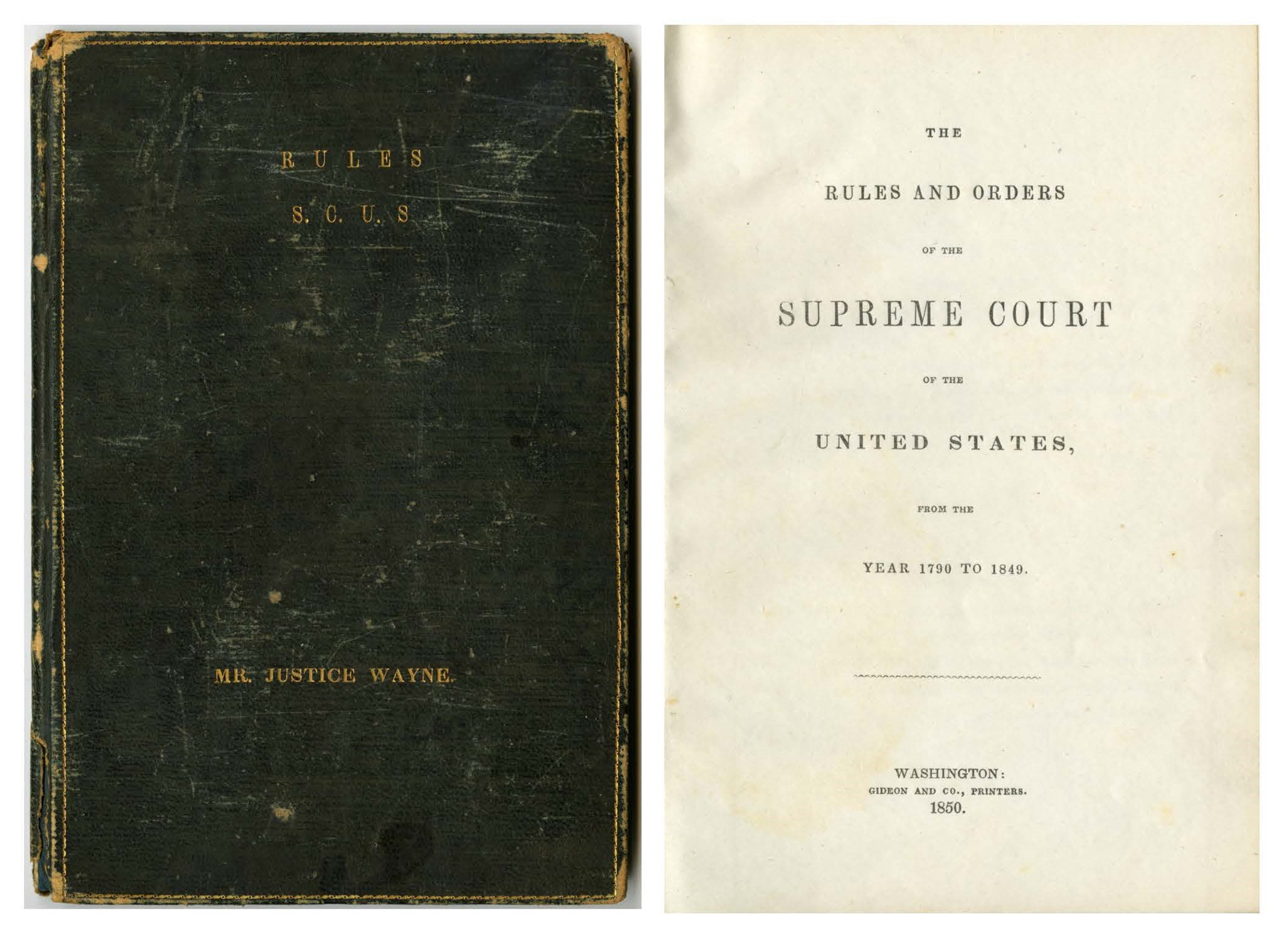
Supreme Court of the United States Rule Book, James Moore Wayne papers, MS 845 next hit, Georgia Historical Society, Savannah, Georgia.

Why do the Courts Matter?

This 8th grade inquiry focuses on the role of the Supreme Court in relation to court cases that have had an indelible impact on the state of Georgia. Students are challenged to assess three landmark cases to help them understand the role of the Supreme Court of the United States as one of the three branches of government.

The Judicial Branch Inquiry

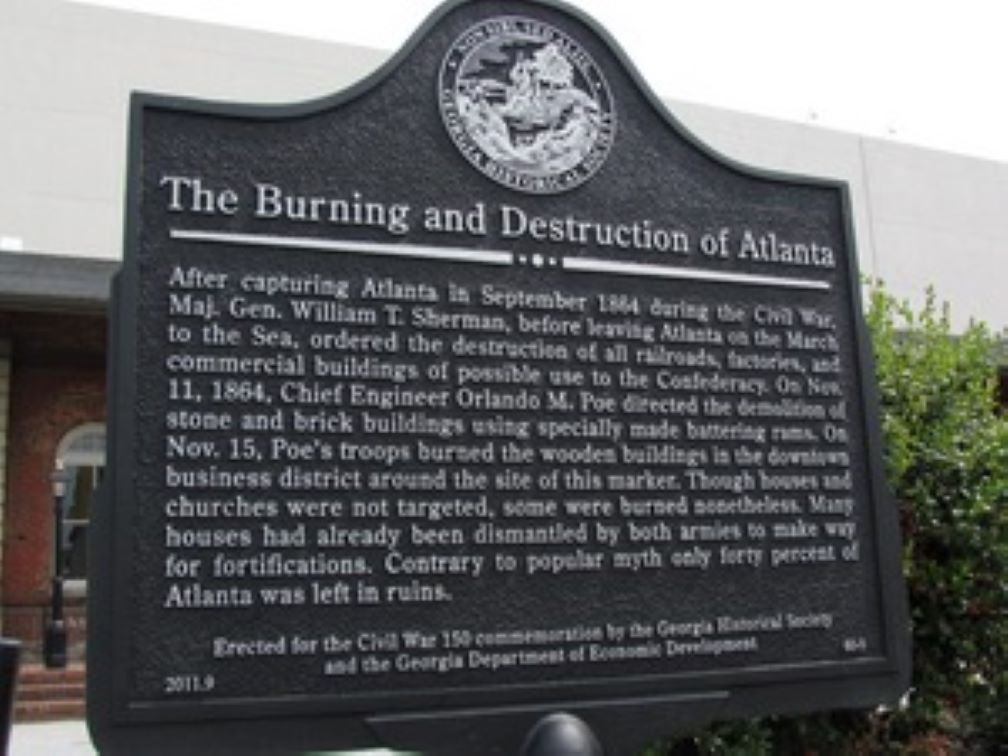
Historical Marker Lesson Plan: The Burning and Destruction of Atlanta

May 7, 2025 by

Historical Marker Lesson Plan: The Burning and Destruction of Atlanta

Burning-of-Atlanta-For-Post

Download this lesson plan.

This lesson plan was created as part of the Teaching with the Georgia Historical Marker Program. This course equips educators to teach Georgia and American history more effectively by utilizing the statewide Georgia Historical Marker Program, promoting the use of primary sources from GHS and the Library of Congress, and sharing successful inquiry-based classroom strategies. To learn more about the course, follow this link.

This course is sponsored by Diane vS. and Robert M. Levy, with additional support from the Library of Congress Teaching with Primary Sources Eastern Region Program, coordinated by Waynesburg University.

Historical Marker Lesson Plan: The Albany Movement

May 7, 2025 by

Historical Marker Lesson Plan: The Albany Movement

albany-movement-for-post

Download this lesson plan.

This lesson plan was created as part of the Teaching with the Georgia Historical Marker Program. This course equips educators to teach Georgia and American history more effectively by utilizing the statewide Georgia Historical Marker Program, promoting the use of primary sources from GHS and the Library of Congress, and sharing successful inquiry-based classroom strategies. To learn more about the course, follow this link.

This course is sponsored by Diane vS. and Robert M. Levy, with additional support from the Library of Congress Teaching with Primary Sources Eastern Region Program, coordinated by Waynesburg University.

Historical Marker Lesson Plan: Fort Buffington

May 7, 2025 by

Historical Marker Lesson Plan: Fort Buffington

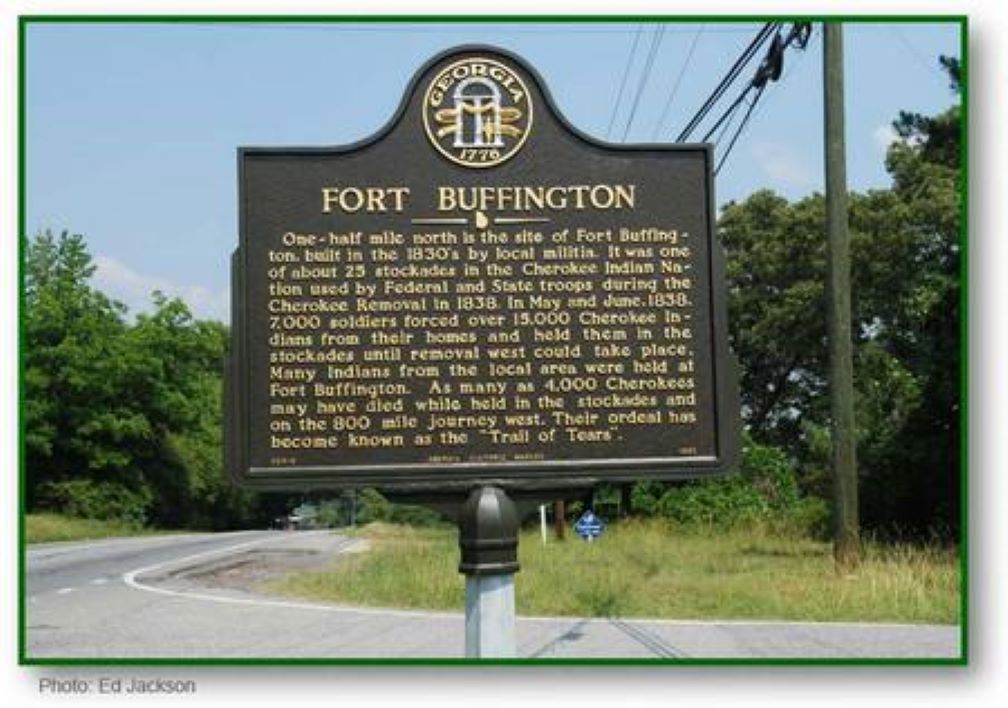
Fort-Buffington-For-Post

Students will investigate the Fort Buffington Marker and the Cherokee County Marker as a starting place to learn more about their county’s importance in Georgia and Native American (Specifically Cherokee Indian) history.

Download this lesson plan.

This lesson plan was created as part of the Teaching with the Georgia Historical Marker Program. This course equips educators to teach Georgia and American history more effectively by utilizing the statewide Georgia Historical Marker Program, promoting the use of primary sources from GHS and the Library of Congress, and sharing successful inquiry-based classroom strategies. To learn more about the course, follow this link.

This course is sponsored by Diane vS. and Robert M. Levy, with additional support from the Library of Congress Teaching with Primary Sources Eastern Region Program, coordinated by Waynesburg University.

  • 1
  • 2
  • 3
  • Next Page »
georgia history footer logo
Facebook Twitter Instagram Youtube LinkedIn
Charity Navigator Four Star Rating Badge

The Georgia Historical Society has been awarded its 17th consecutive 4-Star Rating from Charity Navigator, the largest charity evaluator in America, for sound fiscal management and commitment to accountability and transparency, a distinction that places The Society among an elite 1% of non-profit organizations in America.

2025 Annual Report
Privacy Policy
Financial Statements
Accessibility Statement

Give
Contact us
Staff
Board of Curators
About us
Shop
GET TIGH WIDGET

Newsletter

Want to keep up with the latest news from The Georgia Historical Society? Sign up to receive our newsletter!

Jepson House Education Center*

104 W. Gaston Street
Savannah, GA 31401

912-651-2125

Open: Monday–Friday
9:00 a.m. - 5:30 p.m.
*BY APPOINTMENT ONLY

Research Center

501 Whitaker Street
Savannah, GA 31401

912-651-2128

Open: Wednesday – Friday: 12:00 p.m. to 5:00 p.m.

First and third Saturdays: 10:00 a.m. to 5:00 p.m.

Learn more

Atlanta office*

One Baltimore Place NW
Suite G300
Atlanta, GA 30308

404-382-5410

Open: Monday–Friday
9:00 a.m. - 5:30 p.m.
*BY APPOINTMENT ONLY

georgia history footer logo
Facebook Twitter Instagram Youtube LinkedIn

Give
Contact us
Staff
Board of Curators
About us

Newsletter

Want to keep up with the latest news from The Georgia Historical Society? Sign up to receive our newsletter!

Jepson House Education Center*

104 W. Gaston Street
Savannah, GA 31401
912-651-2125

Open: Monday–Friday
9:00 a.m. - 5:30 p.m.
*BY APPOINTMENT ONLY

Research Center

501 Whitaker Street
Savannah, GA 31401
912-651-2128

Open: Wednesday–Friday
12:00 p.m. - 5:00 p.m.
First and third Saturdays
10:00 a.m. - 5:00 p.m.

Atlanta office*

One Baltimore Place NW, Suite G300
Atlanta, GA 30308
404-382-5410

Open: Monday–Friday
9:00 a.m. - 5:30 p.m.
*BY APPOINTMENT ONLY

Charity Navigator

The Georgia Historical Society has been awarded its seventeenth consecutive 4-Star Rating from Charity Navigator, the largest charity evaluator in America, for sound fiscal management and commitment to accountability and transparency, a distinction that places The Society among an elite 1% of non-profit organizations in America.

Privacy Policy
Financial Statements

  • About
    • Mission
    • Board of Curators
    • Office of the President
      • Past Presidents
      • Back
    • Staff
    • History
      • GHS Research Center
      • Jepson House Education Center
      • Back
    • Annual Reports
    • GHS Awards and Honors
    • Jobs/Internships
    • Preferred Vendors
    • News/Media
    • Contact
    • Back
  • Research
    • Search Our Collection
    • Plan Your Visit
    • Reference and Research Services
    • Image Reproduction Services
    • Research Resources
    • Collection Highlights
    • Back
  • Teachers + Students
    • Resources for Teachers
      • Search All Education Resources
      • Teaching with Primary Resources
      • Biographical Resources
      • Economic History Resources
      • Eighth-Grade WebQuest
      • Women’s History Resources
      • Online Exhibits
      • Field Trips and In-School Programs
      • Professional Development
      • Back
    • Resources for Students
    • Today in Georgia History
    • Off the Deaton Path
    • Georgia Historical Society Education Newsletter
    • Back
  • Learn + Explore
    • Programs and Initiatives
    • Community Archives Initiative
    • Georgia Commemorates America at 250
    • Historical Markers
      • Explore Georgia Historical Markers
      • Applying for a New Historical Marker
      • Maintaining Historical Markers
      • FAQs
      • Report a Missing or Damaged Marker
      • Civil War Historical Marker Initiative
      • Georgia Civil Rights Trail
      • Back
    • Georgia History Festival
    • Georgia Trustees
    • Trustees Gala
    • Vincent J. Dooley Distinguished Fellows Program
      • Distinguished Teaching Fellows
      • Distinguished Research Fellows
      • Back
    • Recognizing an Imperfect Past
    • Georgia’s Business History
    • Affiliate Chapter Program
    • Publications
      • Georgia History Today
      • Georgia Historical Quarterly
      • Bell and Inscoe Awards
      • Back
    • Online Exhibits
    • Upcoming Events
    • Back
  • Support
    • Give
    • Become a Member
    • Endowment
    • Donate Collections/Papers
    • Our Supporters
    • Shop
    • Back