Georgia Historical Society Logo
  • News
  • Events
  • Search
  • About
        • Mission
        • Board of Curators
        • Office of the President
          • Past Presidents
        • Staff
        • Jobs/Internships
        • Preferred Vendors
        • History
          • GHS Research Center
          • Jepson House Education Center
        • Annual Reports
        • GHS Awards and Honors
        • News/Media
        • Contact
  • Research
    • Search Our Collection
    • Plan Your Visit
    • Reference and Research Services
    • Image Reproduction Services
    • Research Resources
    • Collection Highlights
  • Teachers + Students
        • Resources for Teachers
          • Search All Education Resources
          • Teaching with Primary Resources
          • Biographical Resources
          • Economic History Resources
          • Eighth-Grade WebQuest
          • Women's History Resources
          • Online Exhibits
          • Field Trips and In-School Programs
          • Professional Development
        • Resources for Students
        • Today in Georgia History
        • Off the Deaton Path
        • Georgia Historical Society Education Newsletter
  • Learn + Explore
        • Programs and Initiatives
        • Community Archives Initiative
        • Georgia Commemorates America at 250
        • Georgia History Festival
        • Georgia Trustees
        • Trustees Gala
        • Recognizing an Imperfect Past
        • Georgia's Business History
        • Affiliate Chapter Program
        • Online Exhibits
        • Upcoming Events
        • Historical Markers
          • Explore Georgia Historical Markers
          • Applying for a New Historical Marker
          • Maintaining Historical Markers
          • FAQs
          • Report a Missing or Damaged Marker
          • Civil War Historical Marker Initiative
          • Georgia Civil Rights Trail
        • Vincent J. Dooley Distinguished Fellows Program
          • Distinguished Teaching Fellows
          • Distinguished Research Fellows
        • Publications
          • Georgia History Today
          • Georgia Historical Quarterly
          • Bell and Inscoe Awards
  • Support
    • Give
    • Become a Member
    • Endowment
    • Donate Collections/Papers
    • Our Supporters
    • Shop

Georgia Uncovered: Investigating Our State’s Legends – Andersonville Prison

March 4, 2026 by

Georgia Uncovered:

Investigating Our State’s Legends

Andersonville Prison

A presentation of

Teaching Challenging Histories logo
journal

Detective's Journal

Are you ready to uncover the secrets of Georgia’s past? Legends, like those surrounding Andersonville Prison, have been passed down for generations. But are these stories fact, fiction, or a little bit of both? It’s time to investigate the subject and explore our past like historians. With primary sources, videos, and activities, you’ll research the history behind these legends.

To guide you through this journey, you will download a Detective’s Journal. This tool will assist you in reflecting on your journey through the mysteries of Georgia’s past. This interactive PDF is designed to help you think critically, ask questions, and document your findings. Each section of the exhibit corresponds to a part of the journal, with prompts to reflect on what you’ve learned, analyze primary sources, and connect the legends to Georgia’s statewide impact.

Download your journal, and let’s get started!

Row wavy Shape Decorative svg added to top

Objectives

By the end of Georgia Uncovered: Investigating Our State’s Legends, you will learn:

  1. Legends are interesting but need to be investigated.
  2. Primary sources help us separate fact from fiction.
  3. The conditions of Prisoners of War in Andersonville Prison.

Detective's Journal

  • What do you think causes legends to form around real events?
  • Why is it important to understand the difference between legend and fact?

What Are Legends?

Legends are a mix of history and imagination. They are stories based on a real person or event from the past that have been passed down for generations. Legends usually have cultural significance with exaggerated elements. They are fun to tell, but the truth can get lost along the way. Your job as a historian is to figure out what is real and what is made up. As you investigate the legends of Georgia, it is imperative that you understand the importance of utilizing tools to help you along your journey.

Detective's Journal

  • What makes Andersonville as a subject for legends different from a subject like Roanoke?
  • Why do you think people would exaggerate about Andersonville?
"Andersonville Prison." Photograph. Savannah: undated. From Georgia Historical Society: GHS 1361-PH-21-13-4296, Georgia Historical Society collection of photographs
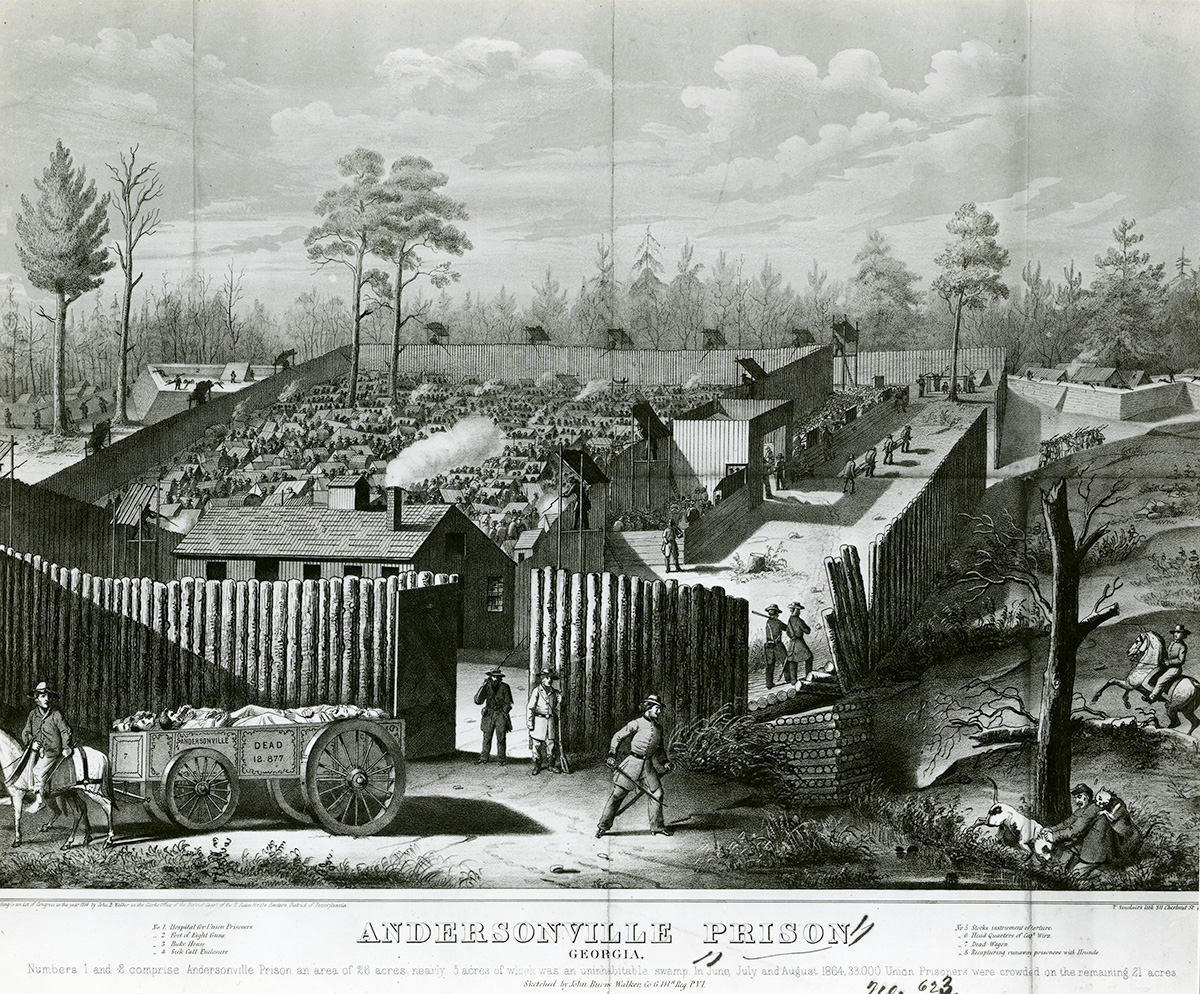
A sketch of the Andersonville prison, by John B. Walker, 1864. Georgia Historical Society.

Here are a few key terms to help as you investigate Georgia’s legends:

  • Andersonville: founded in 1864 and located in southwest Georgia, the largest prison camp in the Civil War.
  • Columbus: a city founded in 1828 along the Chattahoochee River to serve as a trading post.
  • Historian: like a detective of the past, someone who researches in primary and secondary sources and constructs a narrative about things that happened long ago, such as wars, famous people, and how people lived.
  • Legend: a story, often passed down through generations, that is believed to be based on real events or people, which may include fictional or exaggerated elements.
  • Fact: something that is true and can be proven.
  • Fiction: a made-up story, though sometimes based on real things.
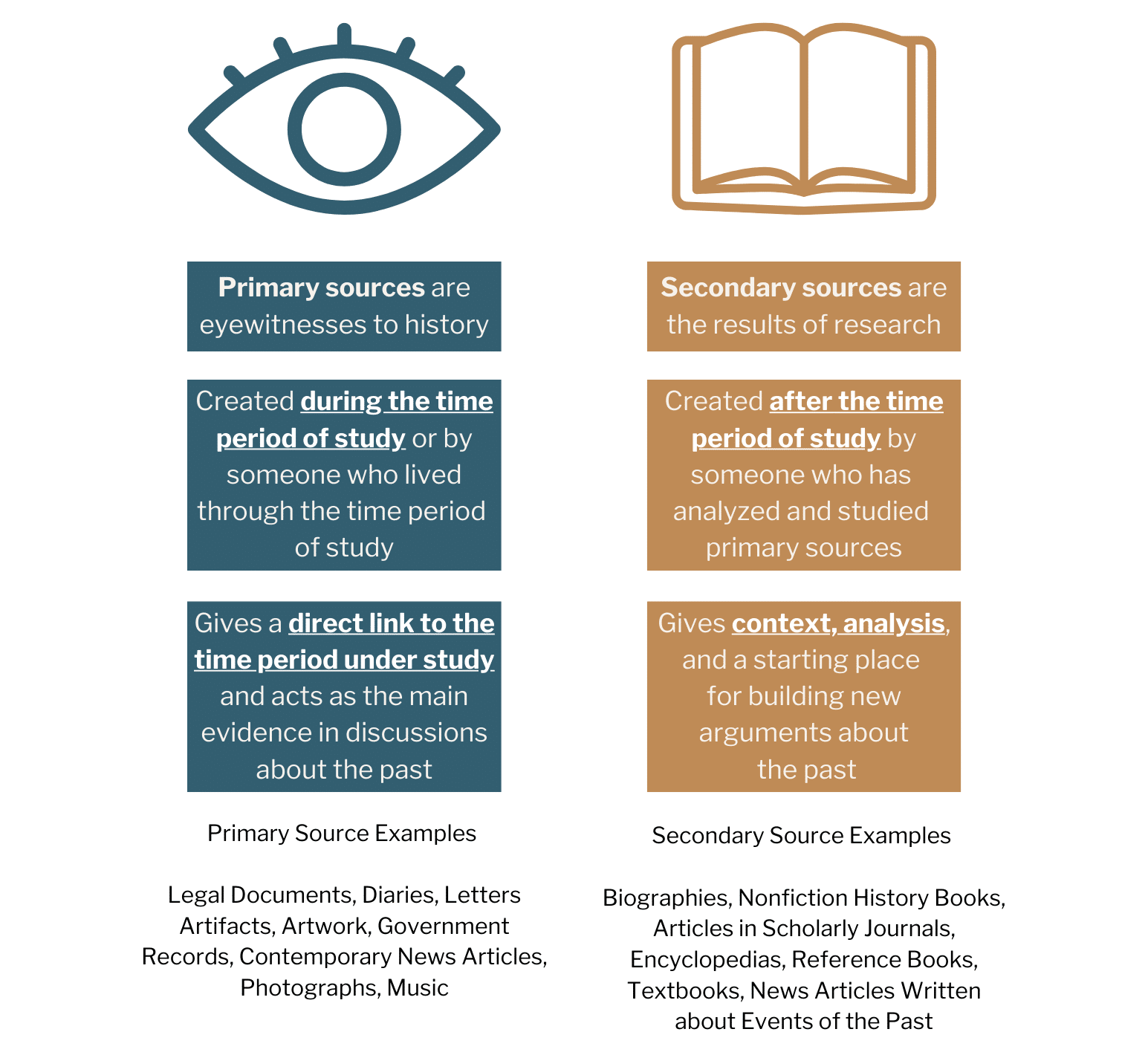
Primary Versus Secondary Sources Expand

Historians are truth seekers and use primary and secondary sources to guide them. Let’s review the differences.

Row wavy Shape Decorative svg added to top
Row wavy Shape Decorative svg added to bottom

Legend has it that...

  • “Due to the lack of clean water, inadequate food, and poor living conditions guards died at the same rate as prisoners.”

  • “Captain Henry Wirz, the man in charge of Andersonville, was the only man tried for war crimes during the Civil War and his execution was a matter of revenge rather than justice.”

  • “General Sherman’s March to the Sea destroyed food that was supposed to feed the prisoners.”

Common Legends of Andersonville Prison

Our investigation starts with a highly controversial topic in Georgia history: Andersonville Prison. Andersonville was a Confederate prisoner-of-war camp, and its very nature has given rise to many legends. Here are a few legends surrounding Andersonville Prison:

Legend has it that…

  1. “Due to the lack of clean water, inadequate food, and poor living conditions guards died at the same rate as prisoners.”
  2. “Captain Henry Wirz, the man in charge of Andersonville, was the only man tried for war crimes during the Civil War and his execution was a matter of revenge rather than justice.”
  3. “General Sherman’s March to the Sea destroyed food that was supposed to feed the prisoners.”

Just like historians, we are going to examine legends surrounding Andersonville Prison using the correct tools and resources to make an informed decision. Understanding the past and connecting the past to its impact on the present will guide us through each section of the exhibit. Signs of a great historian include:

  • Using both primary and secondary sources to reconstruct the past.
  • Critically evaluating sources, identifying biases, and drawing logical conclusions based on evidence.

Detective's Journal

  • Why do you think these legends spread in the public consciousness?
  • What do these legends have in common?
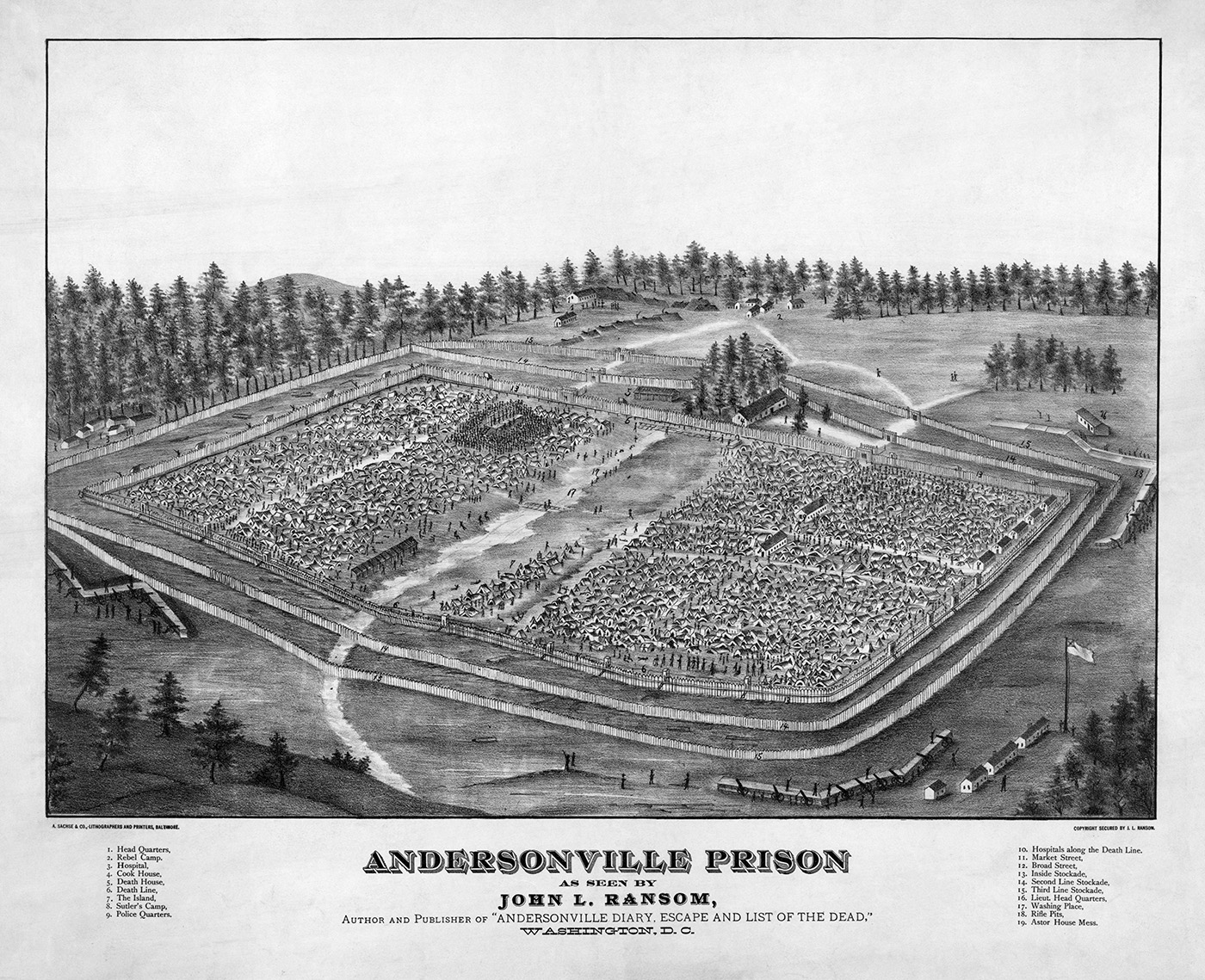
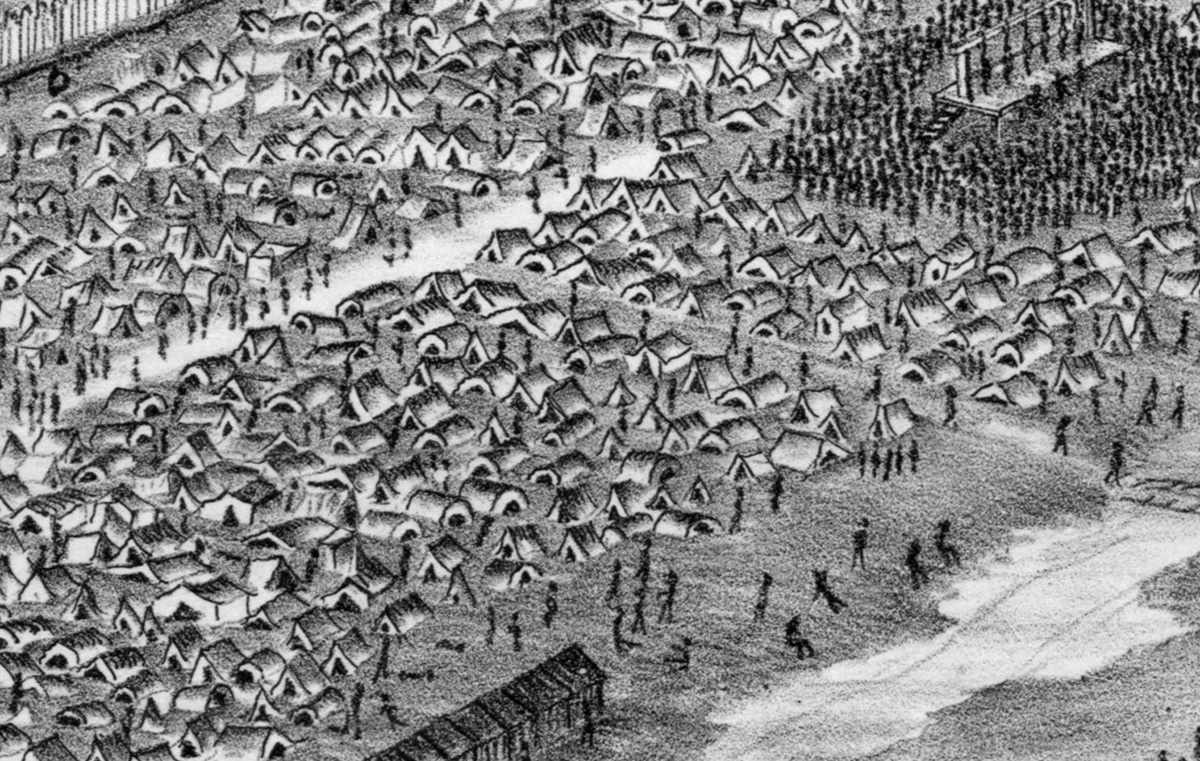
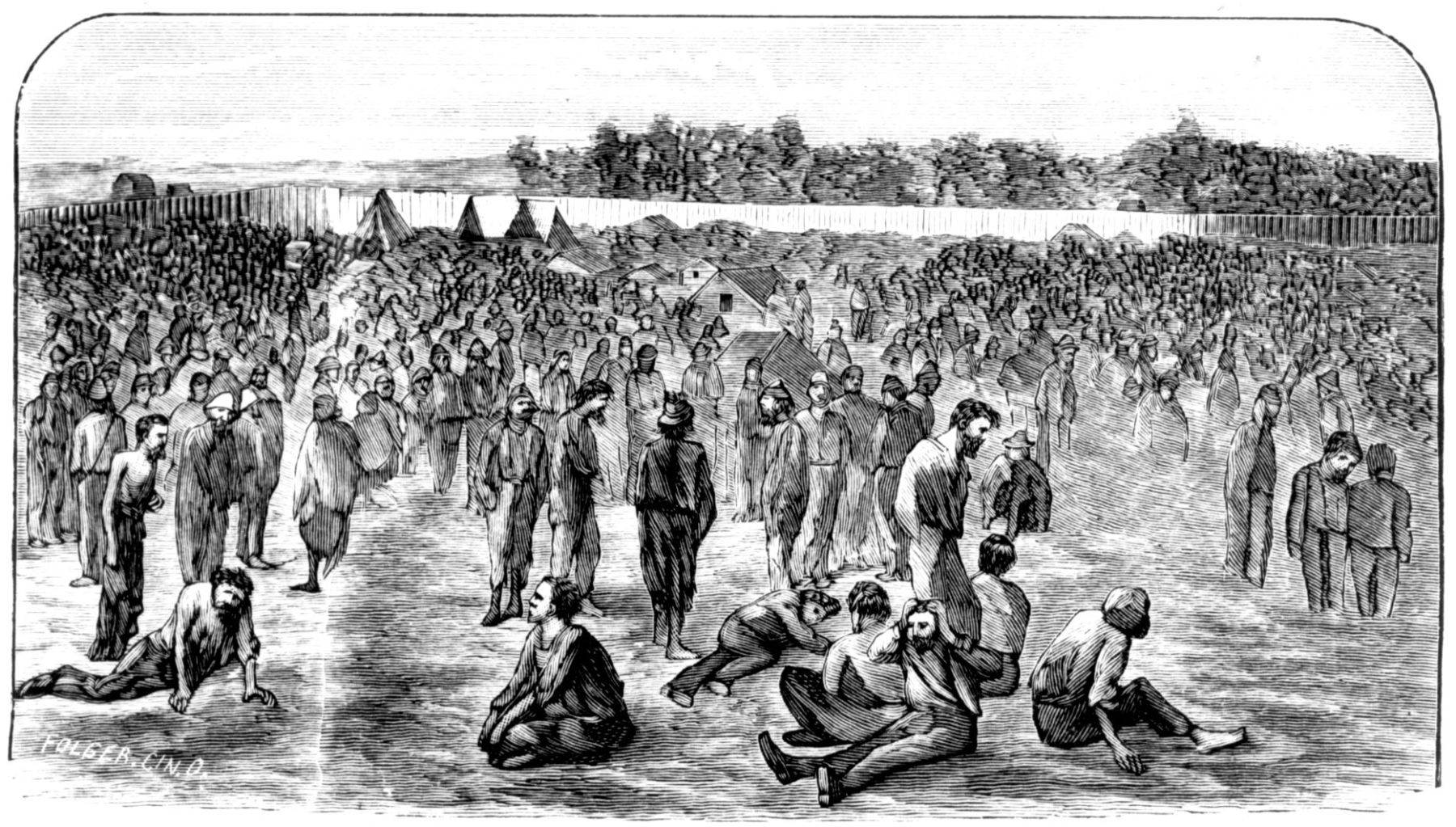
Andersonville Prison as seen by John L. Ransom, prisoner at Andersonville and  author and publisher of "Andersonville diary, escape and list of the dead," c.1882. Library of Congress.
Andersonville Prison as seen by John L. Ransom, prisoner at Andersonville and author and publisher of "Andersonville diary, escape and list of the dead," c.1882. Library of Congress.

Overview of the Andersonville Prison

Andersonville was one of several prisons constructed by the Confederacy in the later years of the war to hold U.S. prisoners after the end of prisoner swaps. Andersonville’s location was chosen due to its remote nature; it was removed from the coast making raids impossible and there were few locals to oppose its construction.

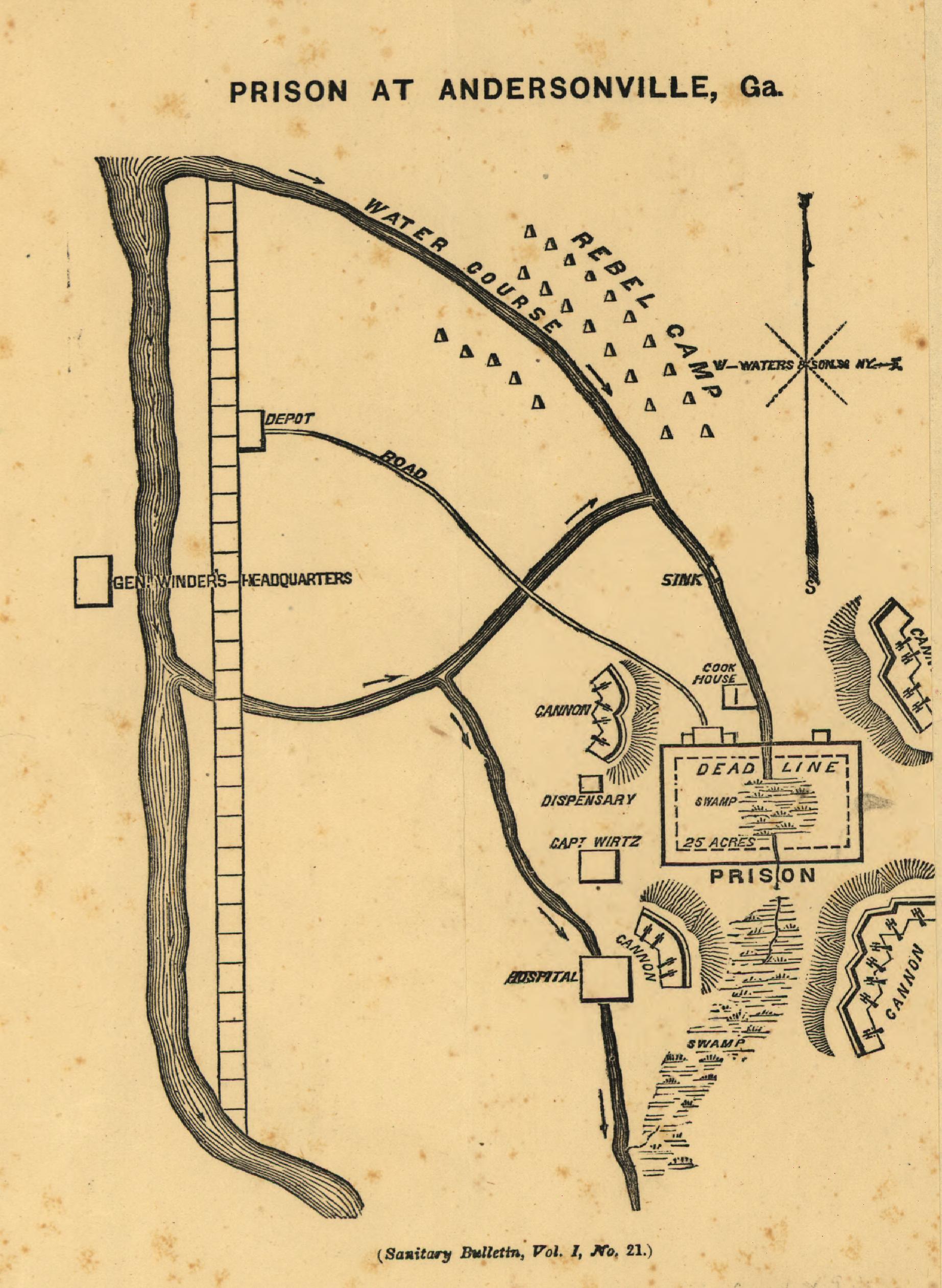
Initially the prison was built to contain 10,000 men and originally consisted of a stockade and trench with a small creek that ran through the prison. In the summer of 1864 as the population exceeded 30,000 Captain Henry Wirz used prison labor to have a hospital, baker, and barracks constructed.  Despite this, the prison was not built to properly hold its population, and thousands would die as a result of overcrowding, starvation, and illness.

Detective's Journal

  • How did Andersonville’s location contribute to the mass casualties that took place?
  • What makes a location overcrowded? Why does that lead to mass casualties?
Prison at Andersonville, Ga. map by the United States Sanitary Commission, 1864. Library of Congress.

The Significance of Columbus

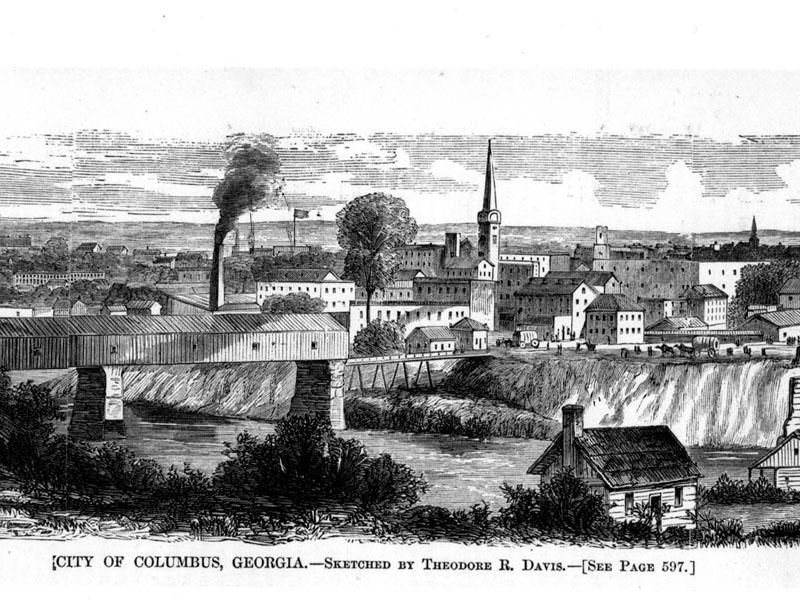
The City of Columbus was founded in 1828 by the Georgia Legislature to serve as a trading post along the Chattahoochee River on what was originally the site of a Creek Indian village and was considered the last frontier town of the original thirteen colonies.

In the civil war Columbus was the Confederate city closest to Andersonville and would at times provide equipment such as spades and axes to the Confederate forces expanding the prison. The city's fall to General James H Willson and his cavalry at the eponymous Battle of Columbus April 16, 1865, would directly lead to the capture of Andersonville and Captain Henry Wirz.

Today, Columbus is now home to several significant cultural institutions such as the National Civil War Naval Museum and the Bo Bartlett Center.

Detective's Journal

  • What impact do you think Columbus’s location has had on Georgia History?
  • Why did the Battle of Columbus lead to the capture of Andersonville?
A picture of Downtown Columbus, Georgia, United States, in 1880. Wikipedia.

The Facts of Andersonville Prison

In the summer of 1863, the United States ceased all prisoner swaps with the Confederacy. The population of captured prisoners quickly swelled especially with the fighting in Richmond, Virginia.  Andersonville was founded in February 1864 to provide a new location for the Confederacy to house the U.S. Prisoners of War. It was originally named Camp Sumter but quickly became known as Andersonville after the nearby train station.

The site was chosen due to its remote location, constructed using slave labor, and was designed to hold a population of roughly 10,000. Over time its population would well exceed 30,000. Poor sanitation and living conditions, lack of food, and bad water—much of which could be attributed to the overpopulation of the prison—meant that of the 45,000 total men who passed through Andersonville’s gates 12,920, or 29 percent, would die in captivity.  In addition to this, there were only some 2,000 guards to manage the entire population, leading to powerful gangs forming amongst the prison population. The guards also struggled with the low food supplies but were able to leave the prison grounds to scavenge in the area surrounding the prison. While the casualty rate for guards was high, around 10 percent, they had access to far better conditions than prisoners and had a higher survival rate.

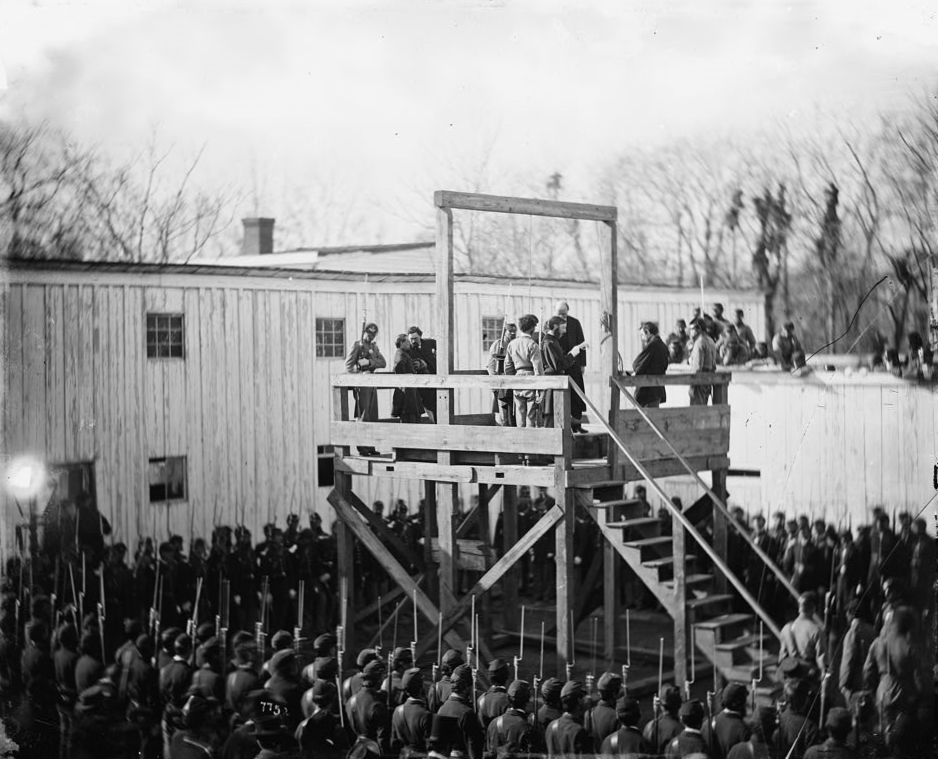
Captain Hartmann Heinrich “Henry” Wirz was placed in charge of the prison in late March 1864 and would remain so until the prison was seized by U.S. forces. Wirz was given this position due to his prior experience managing prisoners in Richmond, Virginia, but found that managing the Georgia prison was an immense challenge. Wirz was tried after the war as a war criminal, where he blamed the overall condition of the prison on his superiors and wartime conditions and claimed that he attempted to help prisoners when possible. Many prisoners, however, testified to his cruelty towards them, and he was found guilty by a military tribunal and executed by hanging. In fact, other men were tried and executed during and after the war. Examples include men like Champ Ferguson who was executed for executing 56 U.S. prisoners, and Robert Kennedy who was executed for placing explosives around New York City. Wirz’s was certainly the most publicized trial, which led many to believe it was the only one.

When General Sherman captured Atlanta on September 2, 1864, the Confederacy immediately began transferring prisoners out of Andersonville to different prisons in Georgia and the Carolinas away from Sherman’s forces. The vast majority of deaths occurred before Sherman’s March began on November 15, 1864.

Detail of Andersonville Prison as seen by John L. Ransom, prisoner at Andersonville and  author and publisher of "Andersonville diary, escape and list of the dead," c.1882. Library of Congress.
Detail of Andersonville Prison as seen by John L. Ransom, prisoner at Andersonville and author and publisher of "Andersonville diary, escape and list of the dead," c.1882. Library of Congress.
Photograph taken at the execution of Captain Henry Wirz, November 1865. Library of Congress.

Detective's Journal

  • How does knowing the facts of Andersonville change your opinion of the legends?
  • Looking at the shacks in the first image, what do you think it was like living as a prisoner in Andersonville?

Tools for Exploration

Great work investigating the legends of Andersonville Prison! Let’s look a little deeper using tools that will aid in connecting the past to the present. Just like a historian, remember to:

  • Explore primary and secondary sources.
  • Challenge your own assumptions.
  • Use evidence to support your arguments.

Be sure to keep the Detective’s Journal near as you further analyze resources, reflect on what you’ve learned, and form your own conclusions. Good luck with your investigation!

Keep scrolling for these resources:

  • Dispatches from Off the Deaton Path Video: Andersonville Prison
  • Andersonville Prison Interactive Storymap
  • Elementary Activity Sheet (pdf)
  • Secondary Activity Sheet (pdf)

And then:

  • Test Your Knowledge! (Quiz)
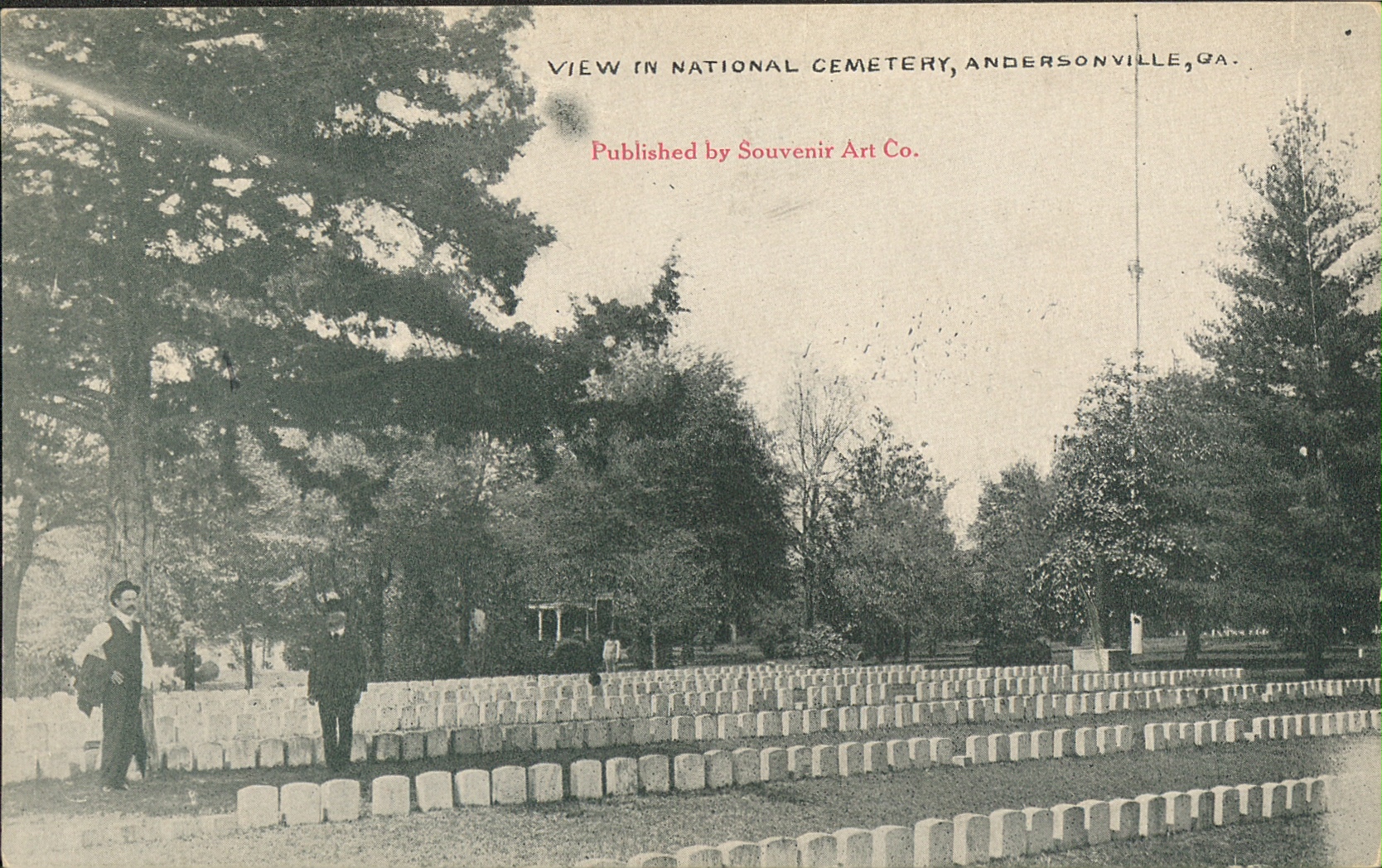
View in National Cemetery, Andersonville, circa 1940s. Georgia Historical Society postcards collection.

Detective's Journal

  • How did the tools help you understand Andersonville?
  • How has your view on Andersonville and the civil war changed after this exhibit?

Dispatches from Off the Deaton Path

Andersonville Prison StoryMap

Visit the Andersonville Prison StoryMap

Elementary Activity: Andersonville Prison

Download Activity

Secondary Activity: Andersonville Prison

Download Activity

Test Your Knowledge

Dive into the quiz below and discover what you have learned about Andersonville Prison. See how many you can get right and what you can learn more about!

Andersonville Prison Quiz

1 / 5

1. How many men died at Andersonville Prison?

2 / 5

2. What happened to the practice of swapping prisoners during the war?

3 / 5

3. Why was Henry Wirz placed in command of Andersonville?

4 / 5

4. Was Henry Wirz the only man executed for war crimes on American soil?

5 / 5

5. What was the casualty rate for guards stationed at Andersonville?

Your score is

The average score is 67%

0%

Primary Source Analysis Activity (Padlet)

Visit the following activity to observe, reflect on, and ask questions about a primary source related to Andersonville.

View Activity

Bonus Resources

Picture Books

Mara, Will. If You Were a Kid During the Civil War. Scholastic, 2016.


Books

McElroy, John. Andersonville: A Story of Rebel Military Prisons. https://www.gutenberg.org/cache/epub/3072/pg3072-images.html

Ransom, John. L.  Andersonville Diary, Andersonville Diary: Escape, and List of the Dead. https://www.gutenberg.org/ebooks/71609

Shatzel, Albert H. Imprisoned at Andersonville: The Diary of Albert Harry Shatzel, May 5, 1864-September 12, 1864. Edited by Donald F. Danker. Nebraska History 38 (1957): 81-126 https://npshistory.com/publications/ande/nh-v38-1957.pdf

Articles

Davis, Robert. "Andersonville Prison." New Georgia Encyclopedia, 22 January 2003. https://www.georgiaencyclopedia.org/articles/history-archaeology/andersonville-prison/.

Linder, Douglas O. “Andersonville Prison (Henry Wirz) Trial (1865)” Famous Trials. Accessed 10th of December 2025. https://www.famous-trials.com/andersonville

“The Prison Camp at Andersonville” NPS History, accessed 9th December 2025. https://npshistory.com/publications/civil_war_series/5/sec2.htm#top


Videos

“Death List: How One Union Soldier Exposed the Truth | Prison Chronicles (S1) | History”.  The History Channel. https://www.youtube.com/watch?v=xj95eSTfbvo

“Henry Wirz.” Today in Georgia History.https://www.todayingeorgiahistory.org/tih-georgia-day/henry-wirz/

“First POWs at Andersonville Prison” Today in Georgia History. https://www.todayingeorgiahistory.org/tih-georgia-day/first-pows-at-andersonville-prison/

andersonville-prison_001-1800x1023

Sponsored in part by

coca-cola-company-e1678388514671

Georgia at the US250

December 1, 2025 by

Row triangle Shape Decorative svg added to top

Georgia

at the

US250

Star icon

From the Collections of the
Georgia Historical Society

Introduction

by W. Todd Groce, Ph.D. President and CEO

Anyone traversing modern-day Georgia will find a land that both resembles and stands in stark contrast to the image of the state in popular culture. From the towering skyscrapers and traffic jams of Atlanta to the moss-draped oaks and historic squares of Savannah, the state seems a paradox, comfortably straddling both the old and the new. Somehow, in that uniquely Southern way, the past and the present merge into one. Georgians may not live in the past, but the past clearly lives in Georgians.

Read more

Understanding how our world was created-how the past and the present merge-is critical to the mission of the Georgia Historical Society (GHS). Founded in 1839 as the independent, statewide educational and research institution responsible for collecting and teaching Georgia and American history, GHS has amassed a remarkable collection of Georgia-related materials over the past 186 years, including over 5 million documents, letters, photographs, maps, portraits, rare books, and artifacts.

The GHS archival collection is one of the most important in the nation. It represents every part of the state and covers every period and subject, from Georgia founder James Oglethorpe and Girl Scout pioneer Juliette Gordon Low to former state supreme court Chief Justice Leah Ward Sears and the legendary Vince Dooley. An original draft of the United States Constitution and the papers of a US Supreme Court Justice, eighteen Georgia Governors, and the only native Georgians to serve as US Attorney General-John Macpherson Berrien and Griffin Bell-are among its many treasures. Through individual donations and dedicated collecting efforts like the Community Archives Initiative, the GHS collection continues to grow and to more fully reflect the people, places, ideas, and events that make up Georgia's rich history.

In commemoration of the 250th anniversary of the founding of the United States, GHS has published this history of Georgia using more than 50 objects and documents from its collection as a window into our shared past. This is just a sampling of the materials we have collected since our founding in 1839 that tell us who we are as Georgians and that help us to gain the knowledge and context for creating a better future.

Accompanying each object is text written by Georgia Historical Society's Emmy® Award-winning Senior Historian, Stan Deaton who is imminently qualified to make this material come to life and explain why the stories they tell matter to this day. Some of what he relates here will inspire you; some of it may make you uncomfortable. But we must take the past on its own terms, not as we wish it to be, and study both our successes and failures, if we are to create a better tomorrow.

For nearly two centuries the Georgia Historical Society has enabled Georgians to make sense of the ever-changing world in which they live. By sharing these historical materials from our vast and growing collection, we hope this special US250th anniversary publication demonstrates our commitment to making history accessible-and our firm belief that the quality of the future we will build is directly tied to how well we understand our shared past.

The
Colony

The American Revolution

The
Constitution

Antebellum
Georgia

Slavery
 

The Civil War and Emancipation

Sherman
 

Reconstruction
 

Jim Crow
 

The Progressive
Era

The Rise of Atlanta and the Railroad

White
Supremacy

World War I
 

The Rise of the Automobile

FDR and Georgia
 

World War II on the Homefront

World War II on the Battlefield

The Civil RIghts Movement

Vietnam
 

Georgia Legends
 

Georgians on the National Stage

Georgia's Iconic Companies

The Turn of the 21st Century, and Beyond

The Colony

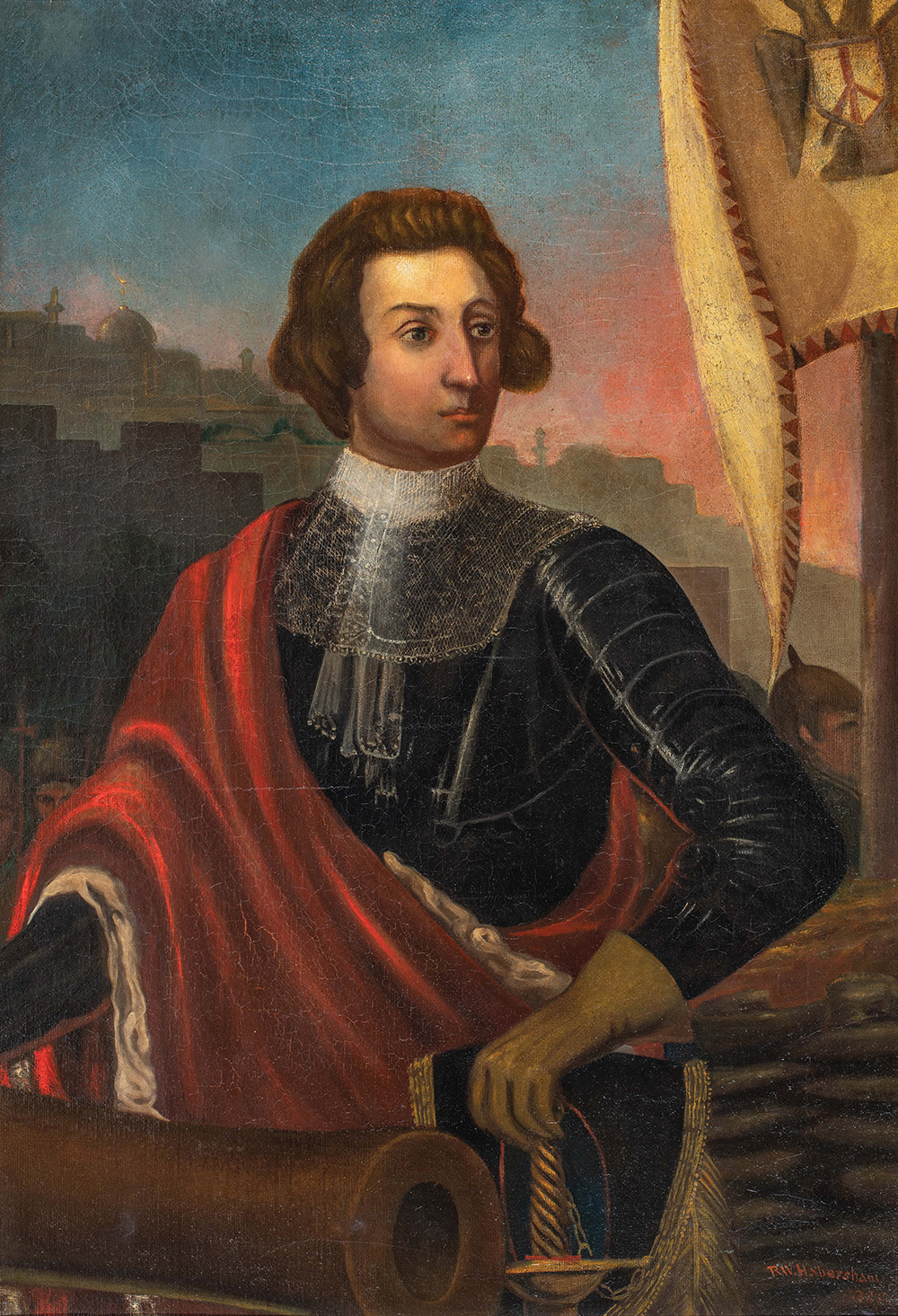
Savannah is one of the world's premier tourist destinations, its stately squares and moss-draped oaks offering one of the most scenic and historic landscapes in America. Its origins lie in the vision of its founder, James Edward Oglethorpe, and in that of the group he represented, the Georgia Trustees, who received a charter from King George II in 1732 for what turned out to be the last British colony in mainland North America. Oglethorpe arrived with the first colonists in February 1733. He remained for ten years, working tirelessly to ensure political, military, and economic stability. He left behind a colony that grew to become the largest American state east of the Mississippi, and a city of incomparable beauty. Richard West Habersham's 1885 portrait of "Oglethorpe at Belgrade, 1718," imagines Georgia's young founder as he appeared fighting under Prince Eugene of Savoy in the Austro-Turkish War.

A painting of James Edward Oglethorpe in 1718, by Richard West, from the collection of the Georgia Historical Society.

Richard West Habersham, "Portrait of James Edward Oglethorpe in 1718," GHS 1361-AF-327.

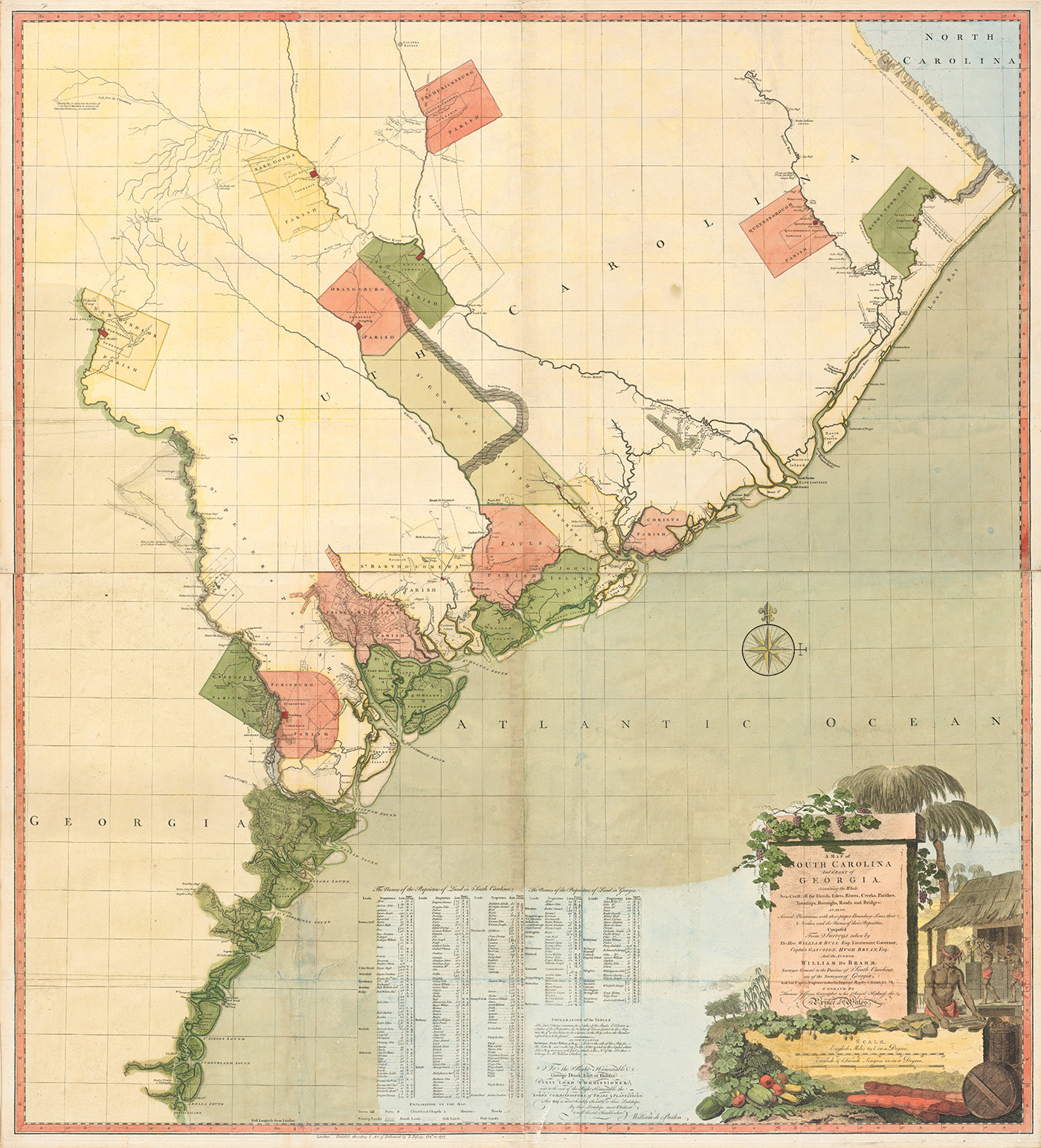
A map of South Carolina and part of Georgia," 1757, by John Gerard William DeBrahm, from the Georgia Historical Society.

John Gerard William DeBrahm, "A map of South Carolina and part of Georgia," 1757, GHS 1361-MP-0423.

The American Revolution

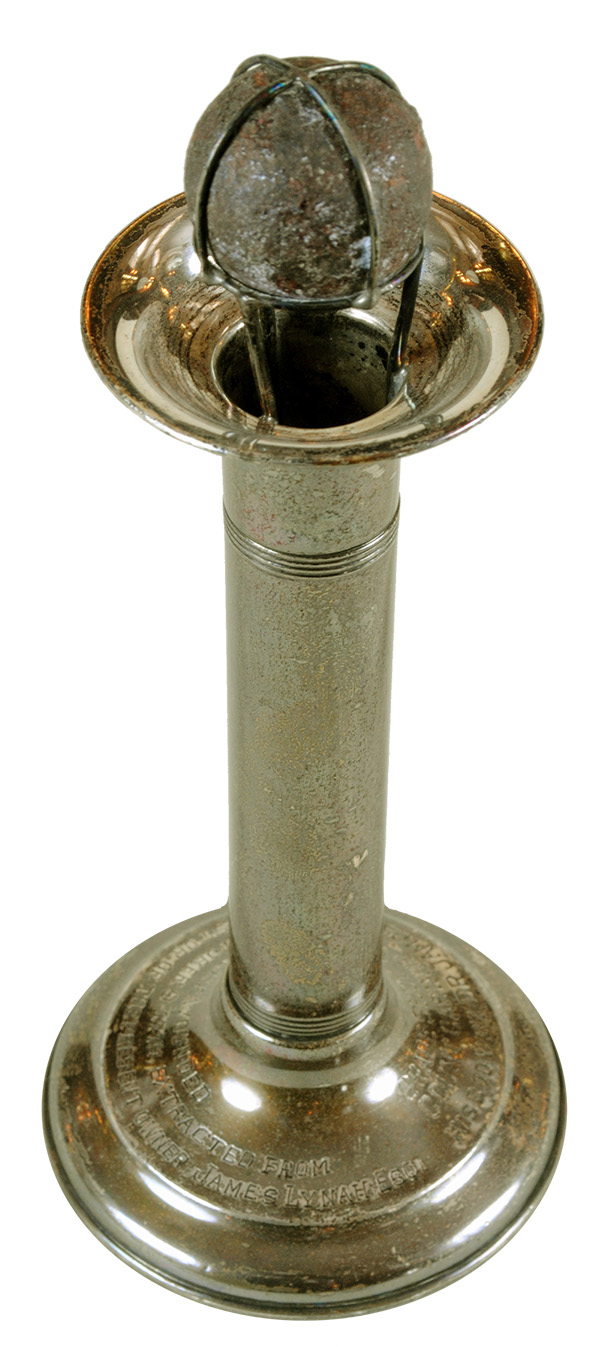
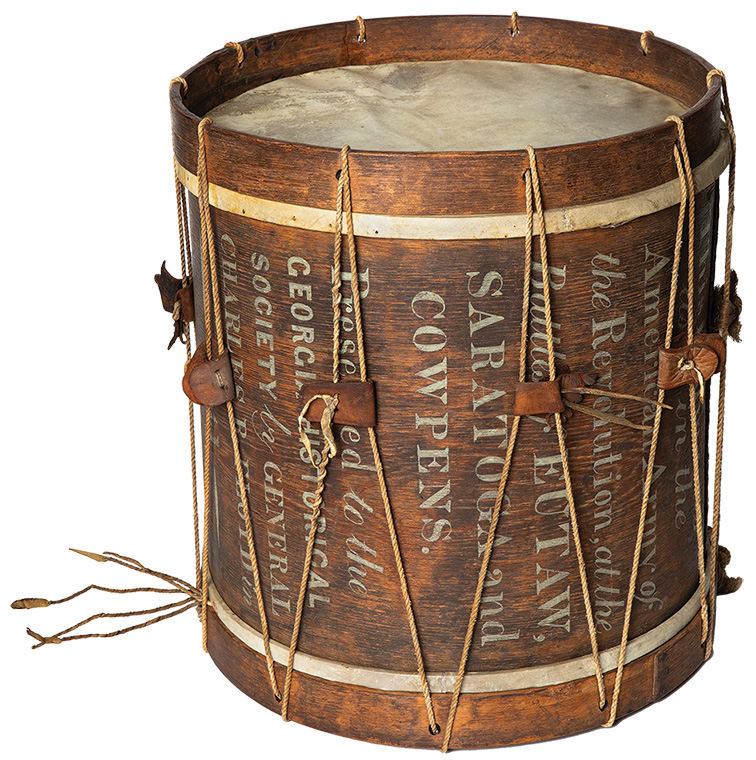
The men and women who sacrificed so much in carrying out the American Revolution are all long gone, but their legacy is all around us in our democratic institutions and the hard-won freedoms that we all enjoy. Though we don't know who carried it, or whose hands beat out the call to arms, this rare drum from that era is a more material legacy and evokes the violence and martial spirit of that conflict that resonates with us still. The inscription states: "This Drum was used in the American Army of the Revolution, at the Battles of Eutaw, Saratoga and Cowpens. Presented to the Georgia Historical Society by General Charles R. Floyd in 1841." This drum and the grapeshot that killed Count Casimir Pulaski at the siege of Savannah in 1779 were two of the first artifacts donated to GHS and remain among the rarest and most venerable in the collection, a tangible link to the birth of the Republic 250 years ago.

A grapeshot displayed on a pedestal. The grapeshot that killed Casimir Pulaski, from the collection of the Georgia Historical Society.

Grapeshot that Killed Casimir Pulaski, GHS 0509-AF-052-002.

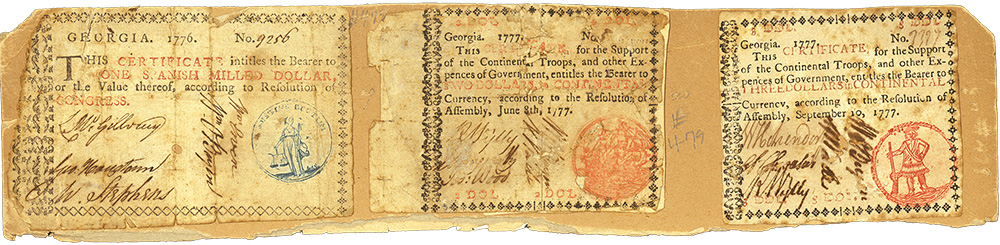
A set of three currency certificates from Georgia, 1776-1777, from the collection of the Georgia Historical Society.

Certificates Issued by State of Georgia During Revolutionary War, 1776, GHS 1361-AF-099-362 a.

A drum that was used in the American Revolution, from the collection of the Georgia Historical Society.

Revolutionary Drum, c. 1780. GHS 1361-Af-107.

The Constitution

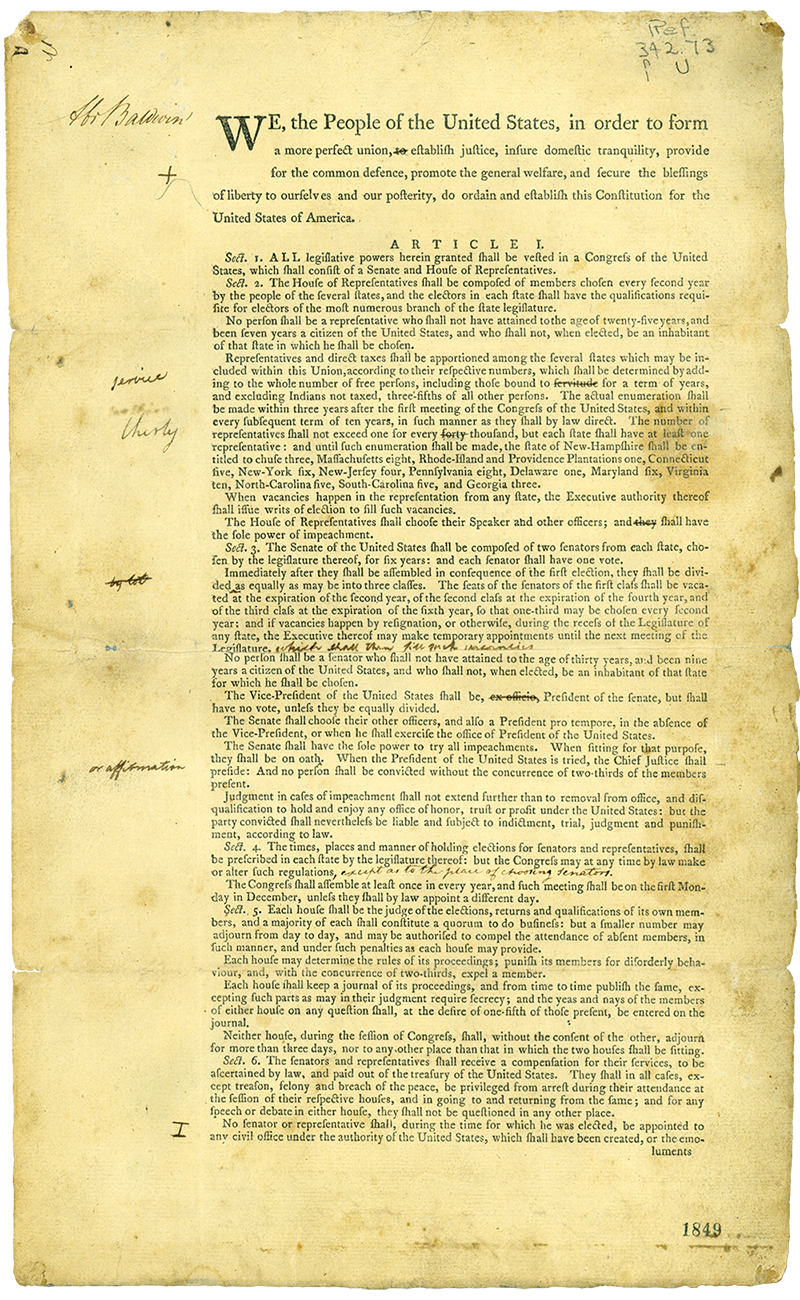
A draft copy of the United States Constitution with margin notes from Abraham Baldwin, 1787, from the collection of the Georgia Historical Society.

Few documents in American history are more iconic-or continue to have more impact on our daily lives-than the US Constitution. This draft copy of the Constitution belonged to Georgia delegate Abraham Baldwin and is one of the crown jewels of the GHS collection. Baldwin, one of 55 delegates to the 1787 Convention, received this draft, printed by Dunlap and Claypoole, for review. This first printing of the Constitution, printed on four folio leaves complete with Baldwin's signature and marginal notes, is one of only twelve in existence. Baldwin's annotations include deletions and additions that were included in the final version of the document that was ratified by the Convention. It reflects the evolving collaborative approach of the framers that is also part of our collective heritage. Besides its significance as a priceless artifact, this rare document is crucial to understanding the development of our federal system of government.

United States Constitution draft annotated by Abraham Baldwin, 1787, GHS 1703.

Antebellum Georgia: The Cherokee

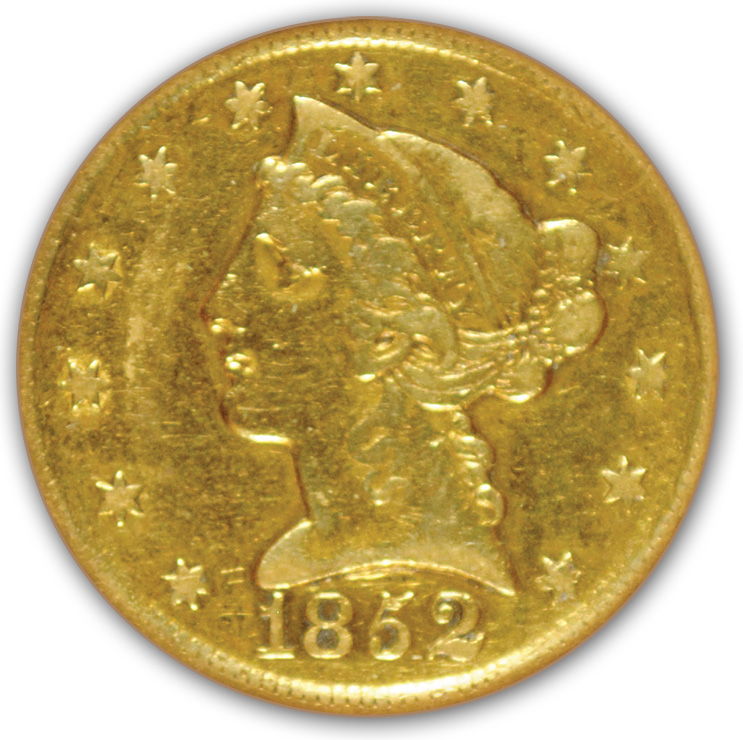
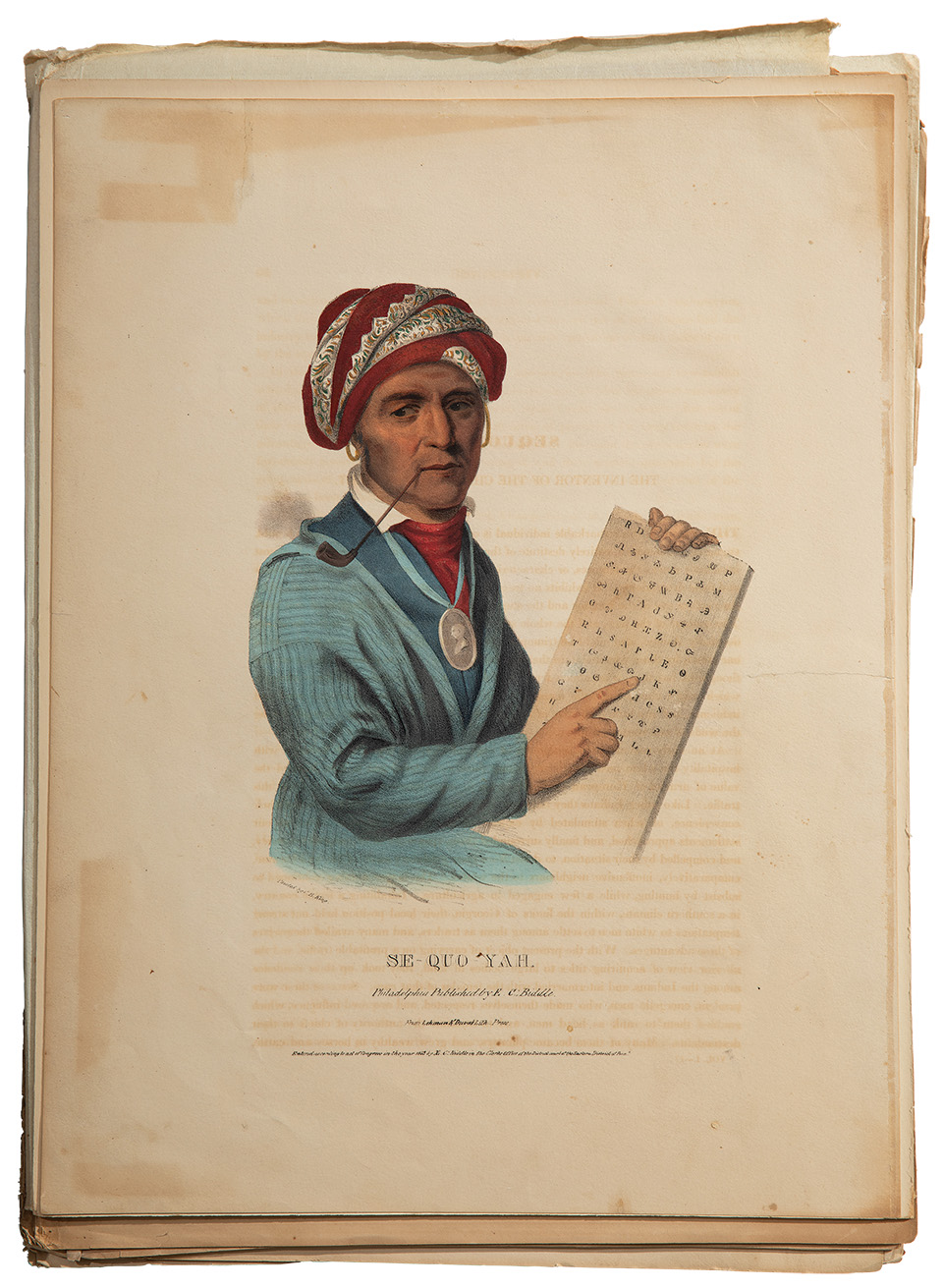
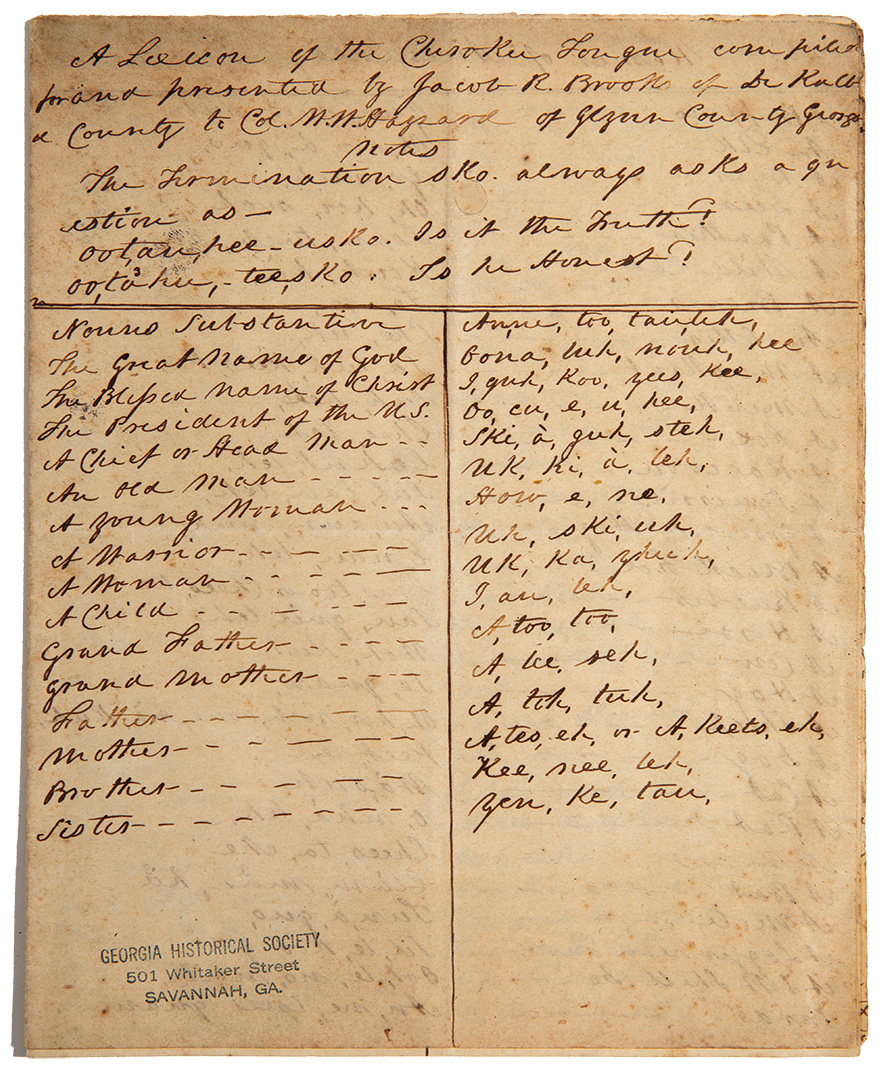
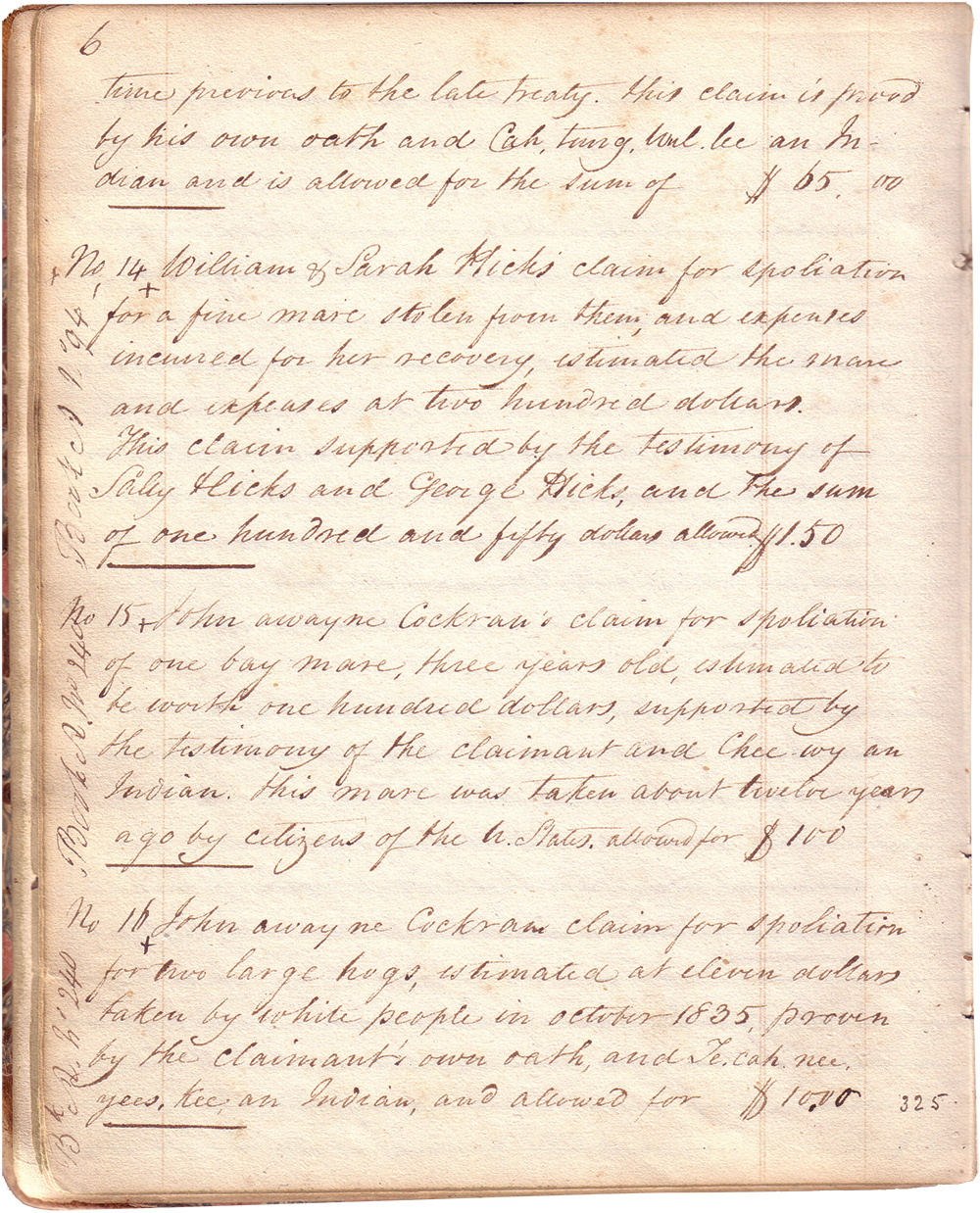
Impressed by the Whites' ability to communicate over distances by writing, Sequoyah, a Cherokee, invented a system of 84 to 86 characters that represented syllables in spoken Cherokee. Completed in 1821, the syllabary (pictured here with Sequoyah) was rapidly adopted and was used to print articles in the Cherokee Phoenix newspaper, published in New Echota from 1828 to 1834. Georgia authorities viewed the newspaper and the Cherokee as a direct threat to White expansion into the territory. The discovery of gold in North Georgia (an 1852 Dahlonega gold coin is pictured here) led to the Cherokee Removal Bill in 1830, and Whites swarmed over Cherokee land. Major Ridge and a few other Cherokee signed the Treaty of New Echota without authorization from Chief John Ross and agreed to removal west of the Mississippi in exchange for $5 million. Though ratified by one vote in the US Senate, the Cherokee Nation rejected the treaty, leading directly to forced removal-the Trail of Tears-by the federal government in 1838, one of the most infamous acts in American history. Pictured here is "A Lexicon of the Cherokee Tongue," compiled by Jacob R. Brooks of DeKalb County in the 1840s, and a Record of Spoliations containing 423 claims made by the Cherokee of property taken from them during this period.

A five dollar half eagle gold coin made from Dahlonega gold, from the collection of the Georgia Historical Society.

Five Dollar Half Eagle Gold Coin Made from Dahlonega Gold, GHS 2403-AF-068-003.

An illustration of Sequoyah, the inventor of the Cherokee syllabary, from History of the Indian Tribes of North America by Thomas L. M'Kenney and James Hall.

Sequoyah, Thomas L. M'Kenney and James Hall, History of the Indian Tribes of North America (Philadelphia, 1836-1844).

A page from a lexicon of the Cherokee language compiled by Jacob R. Brooks, from the collection of the Georgia Historical Society.

Jacob R. Brooks Cherokee Language Lexicon, GHS 0093.

A page from "Record of Spoliations (Claims), No. 1, 1836-1838," 1 volume, which lists claims made by the Cherokee of property taken from them during their forced removal by the federal government. From the collection of the Georgia Historical Society.

Record of Spoliations (Claims), No. 1, 1836-1838, 1 volume. Harvey Dan Abrams Collection on Cherokee Indians Relocation. GHS 0927-01-02-09.

Slavery

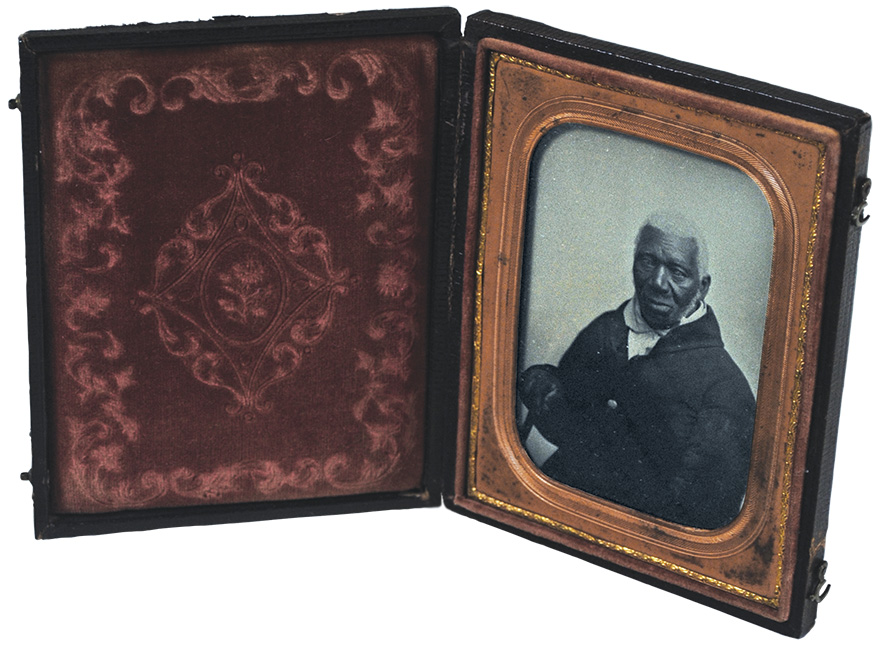
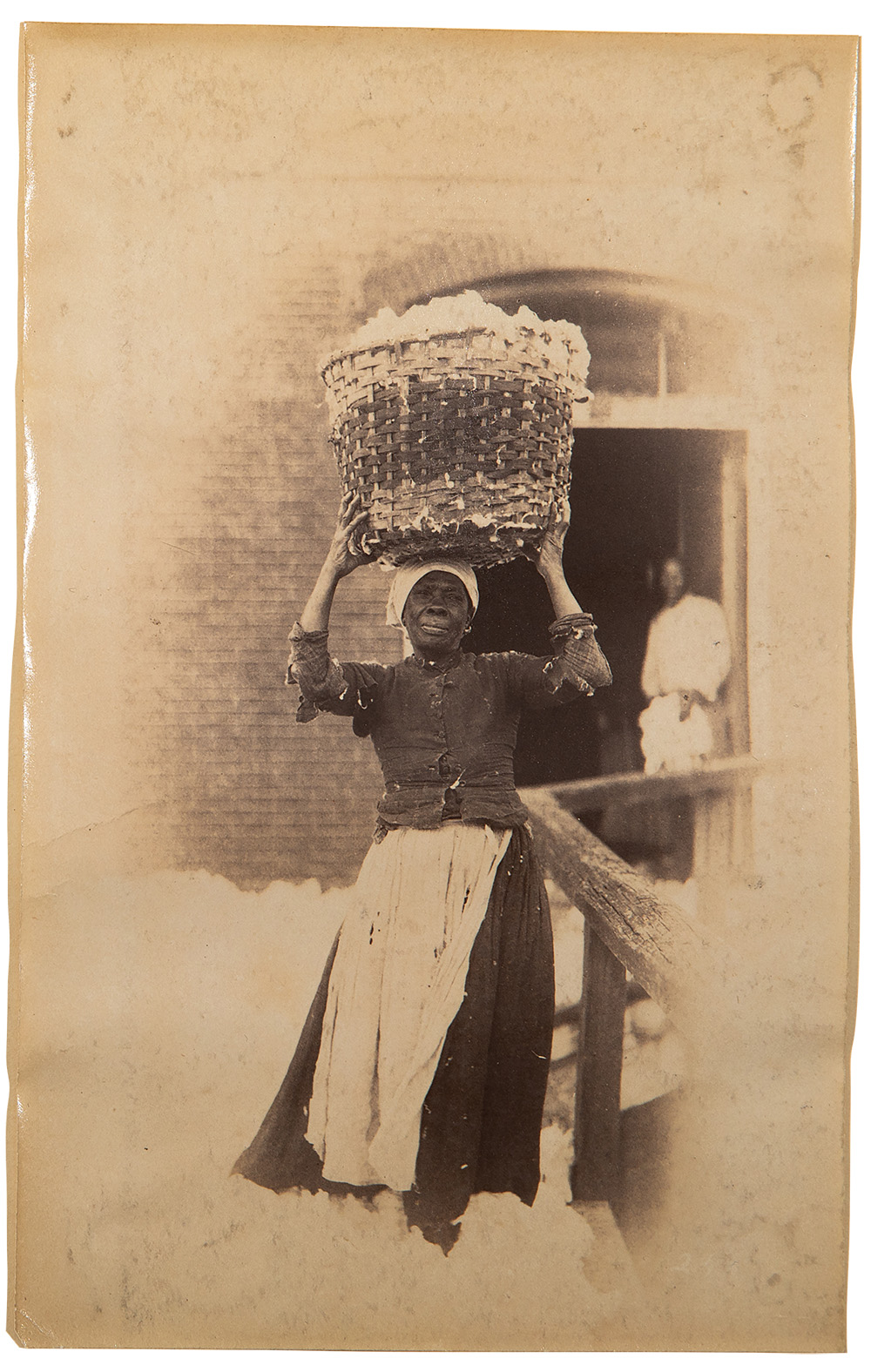
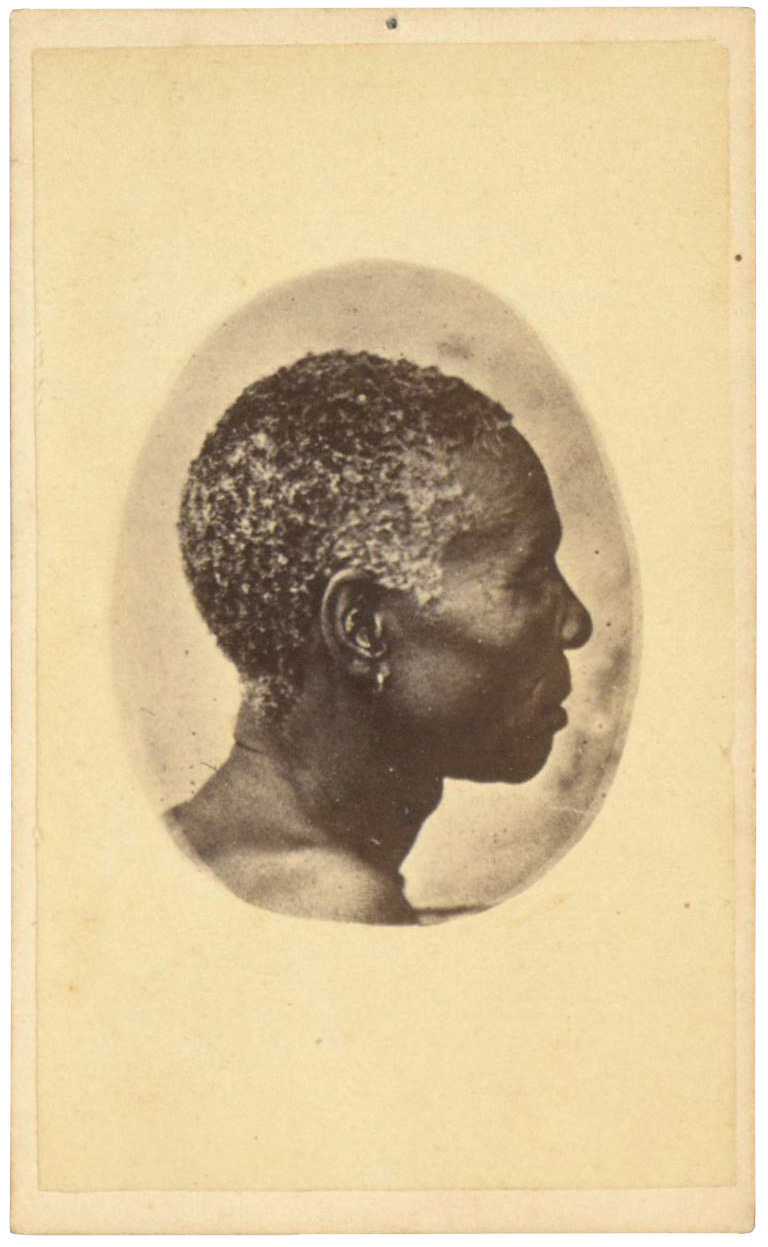
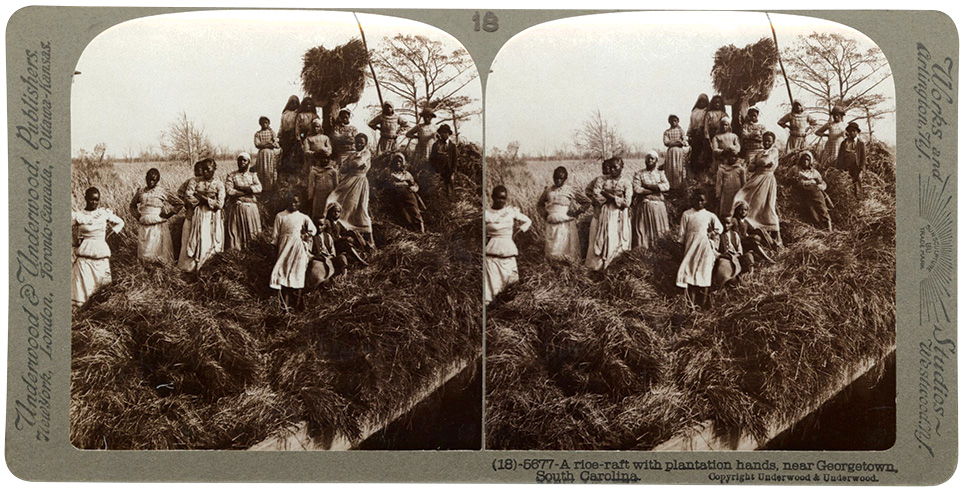
The institution of slavery was banned in the Georgia colony between 1733 and 1750 by the Georgia Trustees, but economic pressure from Whites succeeded in overturning the ban. Slavery spread rapidly as a plantation economy developed that centered first on the export crop of rice and later on cotton. Between 1750 and 1775 Georgia's enslaved population grew from less than 500 to approximately 18,000 people. As westward White settlement displaced Georgia's indigenous population, slavery spread throughout the state. In 1860, on the eve of the Civil War, Georgia held more than 462,000 enslaved people, 44 percent of the state's total population-more enslaved people and slaveholders than any state in the lower South and second only to Virginia nationally. Enslaved individuals had no legal rights, and they struggled to establish some degree of autonomy for themselves. Still, against overwhelming odds, enslaved people created families, worshipped, resisted their owners in large ways and small, and asserted their humanity in ways that kept alive their enduring quest for freedom.

Cased portrait of unidentified Black man, from the collection of the Georgia Historical Society.

Portrait, unidentified Black man, GHS 1361-PH-42-18-01.

Photographic portrait of an unidentified Black woman carrying a basket above her head, from the collection of the Georgia Historical Society.
Photographic portrait of an unidentified Black male, in profile, from the collection of the Georgia Historical Society.
Stereographic photo, group portrait of people on a rice raft. The caption on the photo border says "A rice-raft with plantation hands, near Georgetown, South Carolina." From the collection of the Georgia Historical Society.

Portrait, unidentified Black woman, GHS 1361-PH-41-67-01; Unidentified Black Male, GHS 1361-CP-02-01; Group portrait of people on a rice raft, GHS 1361-SG-03-04-B-01.

The Civil War and Emancipation

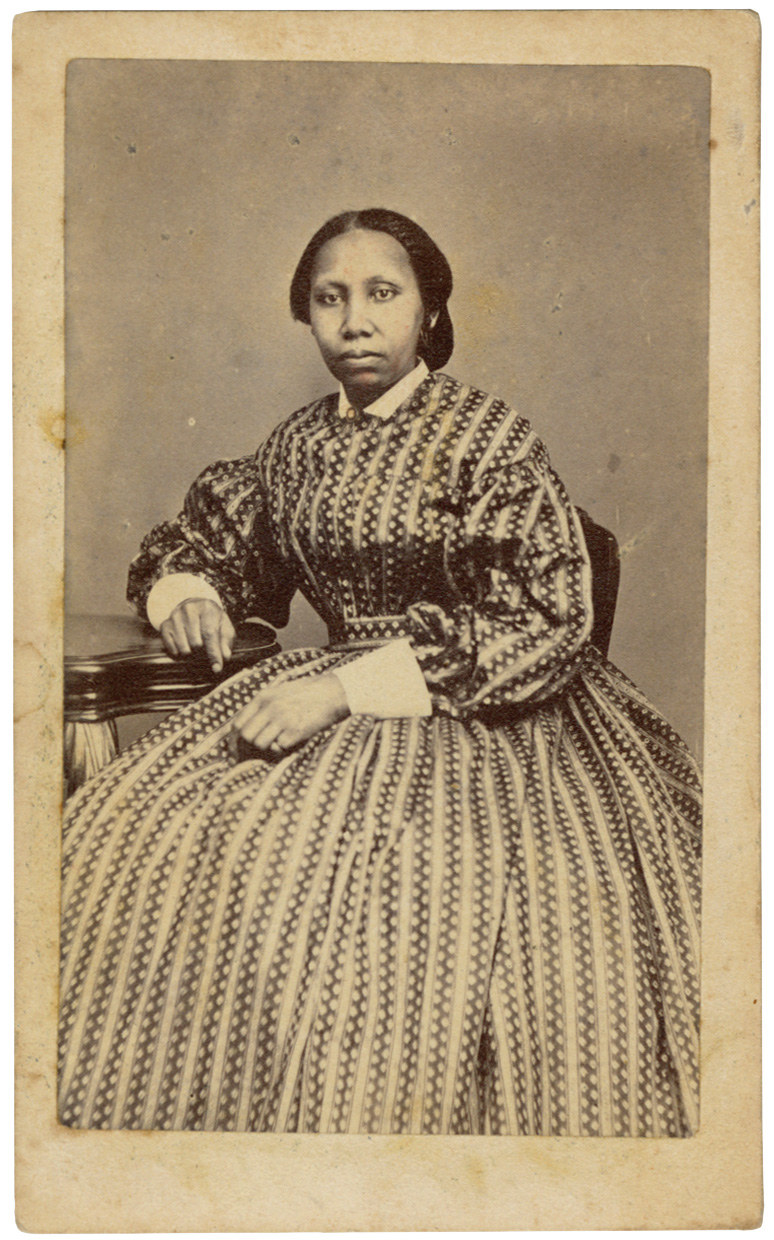
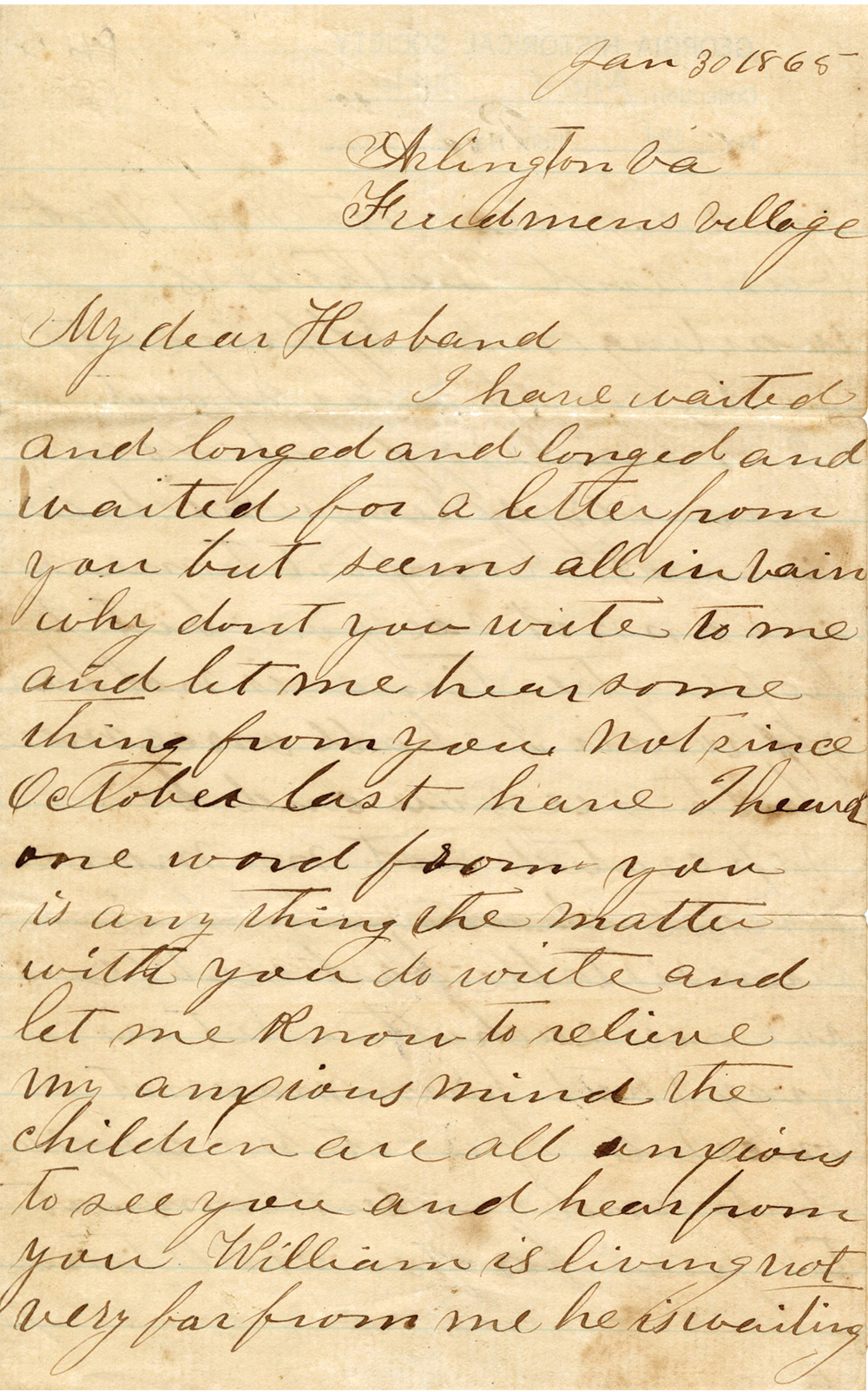
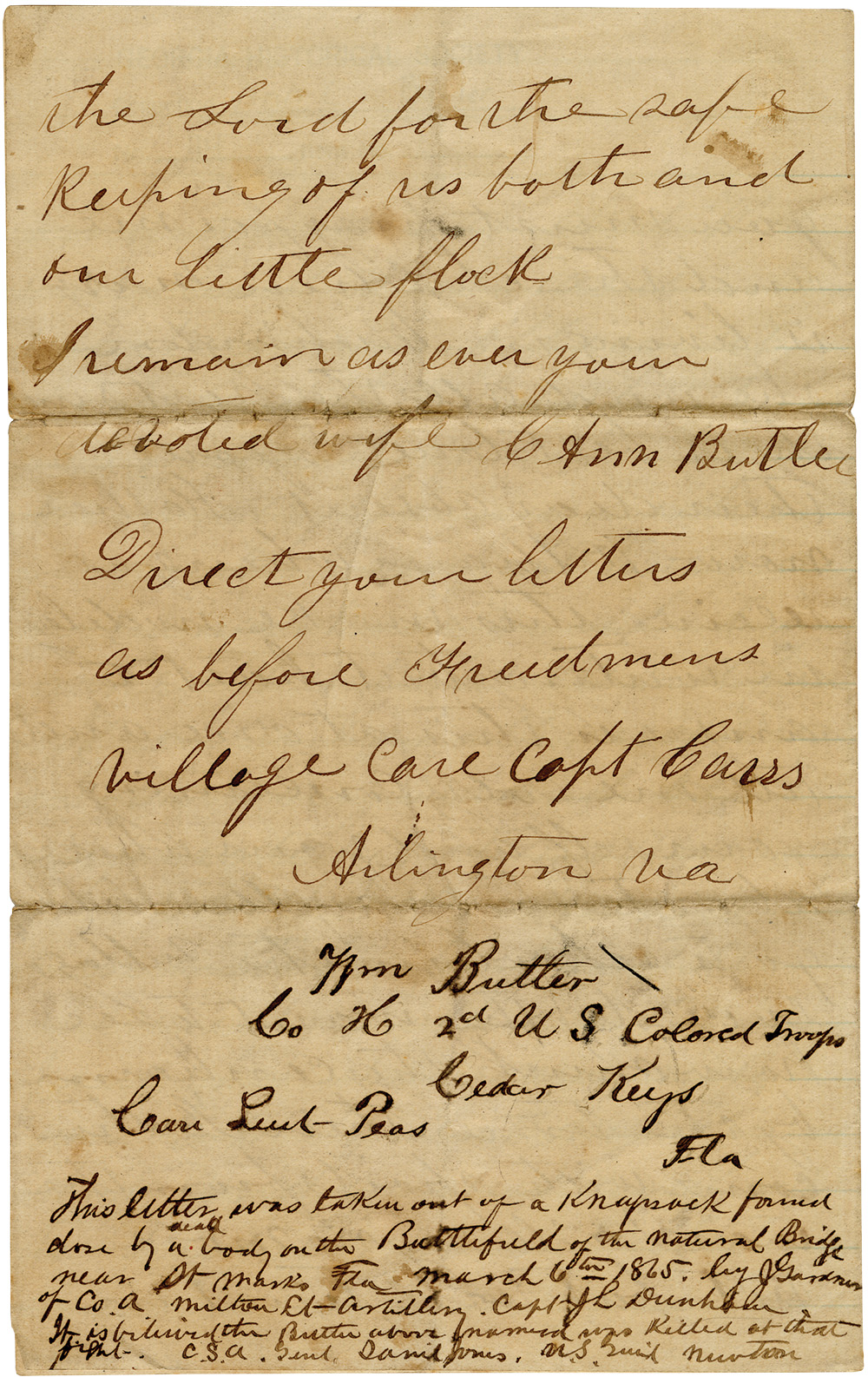
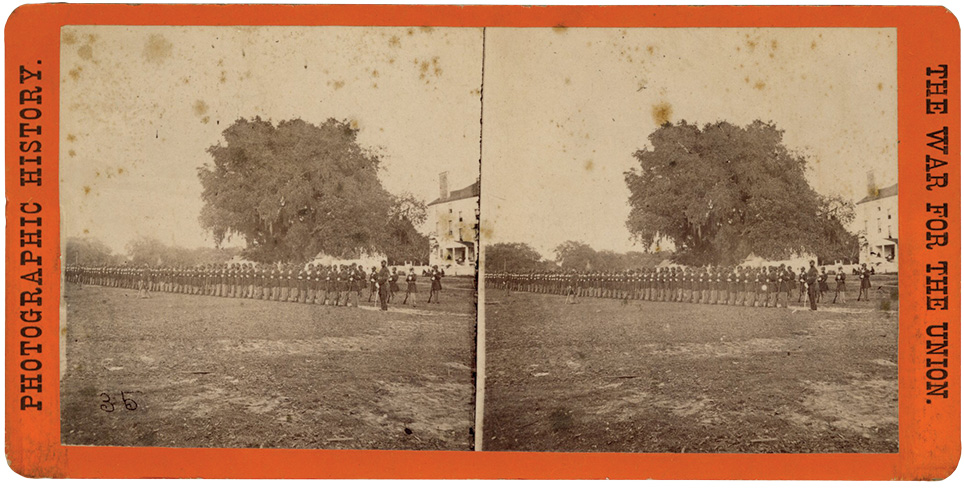
The Civil War repudiated the doctrine of secession and destroyed the institution of slavery-more than 460,000 enslaved people were freed in Georgia during and after the war. The War also brought African Americans into the armed forces of the United States. Over 200,000 served in the US Army and Navy. Included here is a stereograph of the First South Carolina (US). Organized in 1862, the "First South," as it was called, was the first African-American regiment ever raised for United States service. Among its ranks were hundreds of Black Georgians, men who had self-liberated before the issuance of the Emancipation Proclamation. The regiment was later re-designated the 33rd USCT (United States Colored Troops). Harriet Tubman and Susie King Taylor (who was married to a member of the regiment) served with the First South, providing vital services as nurse and scout. Other Black Americans served as well, including the formerly enslaved William Butler, in Company H, 2nd US Colored Troops. This poignant letter from his wife Ann, dated January 1865, begs for news from William. She longs for his safe return, and sends news of their children, who are attending school. The letter was found in a knapsack near a dead soldier's body, presumably William, at the Battle of Natural Bridge in Florida in March 1865. There were three quarters of a million casualties in the Civil War, including one newly freed soldier, beloved by his family, who died to help preserve the American Republic and extend the promise of the Declaration of Independence to all Americans.

Photographic portrait of an unidentified Black woman, seated. From the collection of the Georgia Historical Society.

Unidentified Black woman, GHS 1361-PH-41-67-01.

Page one of an 1865 letter from C. Ann Butler to her husband, William Butler, who served in Company H, 2nd U.S. Colored Troops during the Civil War. From the collection of the Georgia Historical Society.
Page two of an 1865 letter from C. Ann Butler to her husband, William Butler, who served in Company H, 2nd U.S. Colored Troops during the Civil War. From the collection of the Georgia Historical Society.
Stereograph image of 1st South Carolina Volunteer Infantry Regiment dress parade, from the collection of the Georgia Historical Society.

C. Ann Butler Civil War letter to William Butler, 1865, GHS 0114; 1st South Carolina Volunteer Infantry Regiment dress parade, GHS 1361-SG-04-02-A-04.

Sherman

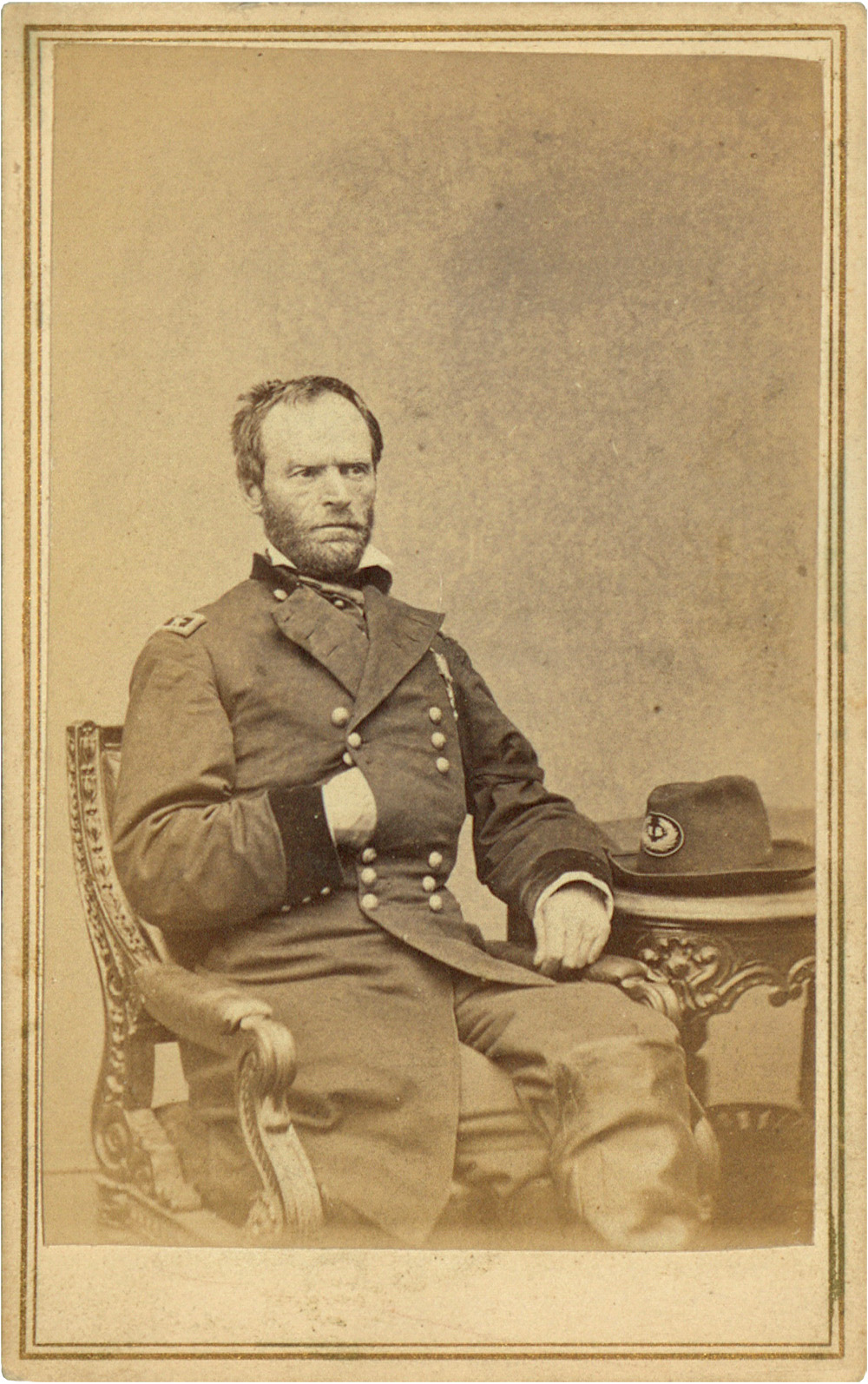
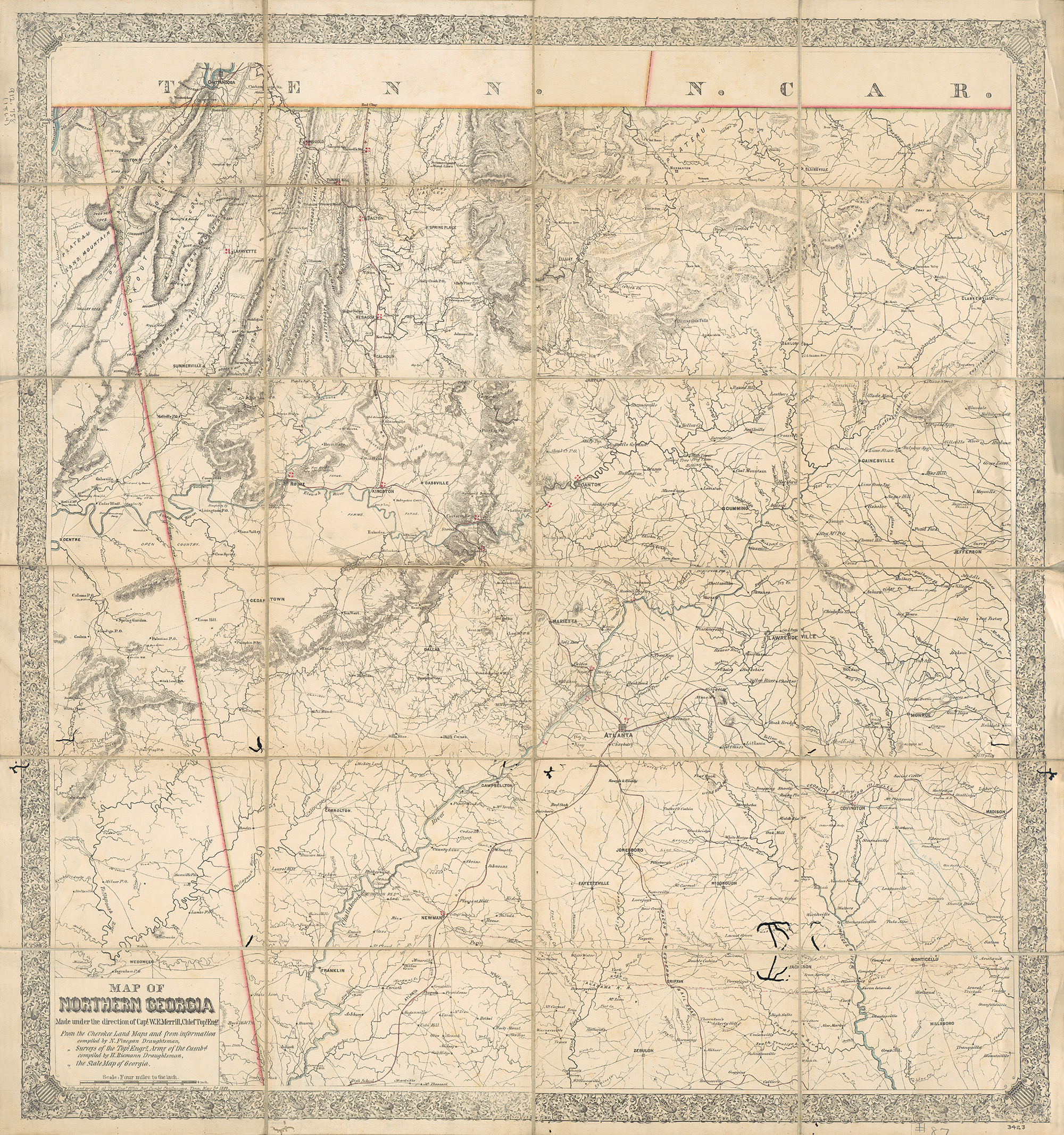
Georgia had the largest population and the largest number of both enslaved people and enslavers of any Deep South state in 1861, and thus played a crucial role in the secession crisis and the formation of the Confederacy. Georgia was also home to the most decisive US military incursion into the Deep South: US General William Tecumseh Sherman's campaign from Chattanooga to Atlanta in 1864. Atlanta's importance as a railroad hub made it strategically vital to the Confederacy and a major target for the United States Army. Sherman's campaign began in May and ended with Atlanta's fall in September, a major military and psychological setback to the Confederacy. It also secured President Abraham Lincoln's re-election in November. Sherman's subsequent March to the Sea was an equally devastating blow to Confederate morale, capped by the December capture of Savannah. This wartime photograph of Sherman was taken by famed Civil War photographer Matthew Brady in his Washington, DC studio, probably when Sherman and his troops participated in the May 1865 Grand Review of the Armies in celebration of the US victory. Note the high-topped officer's riding boots that he would have worn in the field and were rarely captured in photographs. The 1864 map of northern Georgia, so crucial to Sherman's Atlanta campaign, was made under the direction of Captain William Emery Merrill, Chief Topographical Engineer, Army of the Cumberland. It was drawn and printed in the field during the war and is a copy of the one used by Sherman on his campaign from Chattanooga to Atlanta.

Photographic portrait of United States Army Major General William T. Sherman, by Matthew Brady. From the collection of the Georgia Historical Society.

Matthew Brady, "United States Army Major General William T. Sherman" portrait, undated. GHS 1361-PH-41-65-01.

A map of Northern Georgia, 1864, used by General Sherman. From the collection of the Georgia Historical Society.

Map of Northern Georgia, 1864. GHS 1361-MP-087, used by Sherman.

Reconstruction

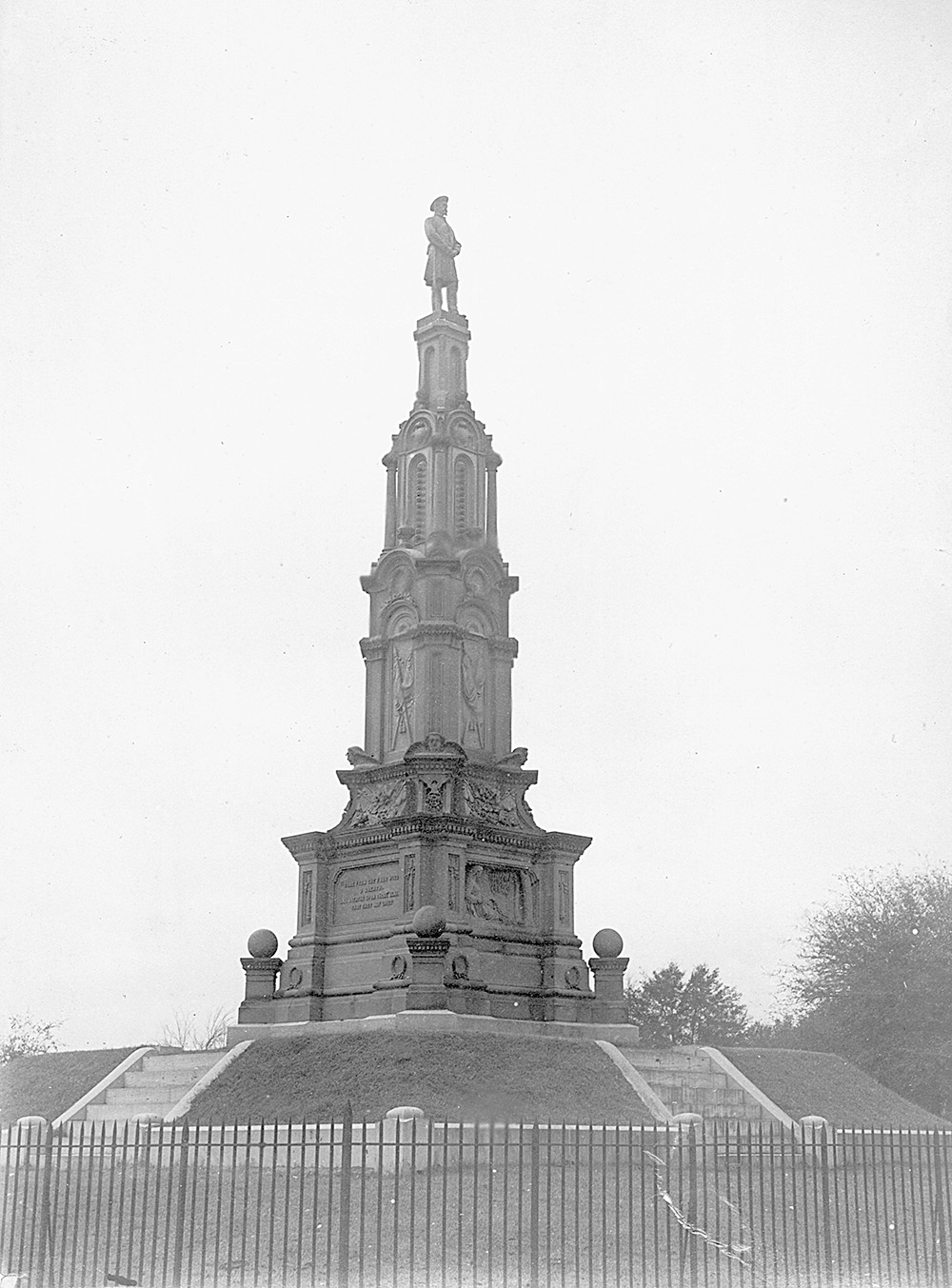
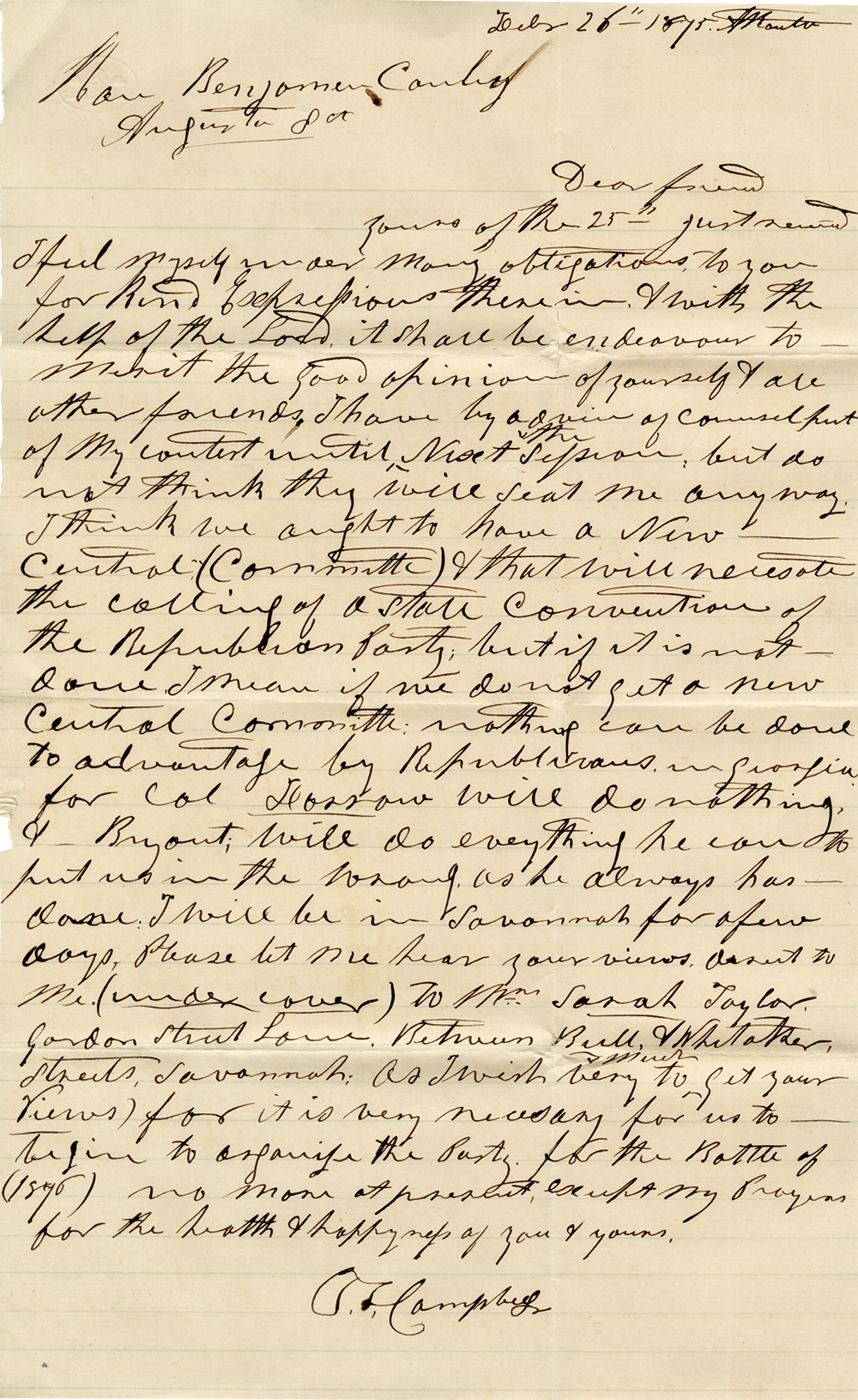
Reconstruction, the period following the Civil War, was one of the most divisive and consequential in American history. The United States attempted to implement interracial democracy for the first time, as newly freed men and women sought to take their rightful place in American political, social, and economic life. At the national level, constitutional amendments permanently altered state-federal relations, the definition of American citizenship, and granted Black men the right to vote. In the South, a politically mobilized Black community joined with White allies to bring the Republican Party to power. Tunis Campbell, an African-American native of New Jersey, settled in McIntosh County after the war, organized an association of Black landholders along the coast, and became the highest-ranking, most influential African-American politician in 19th-century Georgia. He led an effective political movement that registered Black voters and elected Black delegates to Georgia's constitutional convention in 1867 and the Georgia legislature in 1868. Campbell became a symbol of all that White Democrats wanted to resist, and his 1872 letter to Governor Benjamin Conley, reproduced here, details the threats and violence that he faced on a daily basis. Ultimately, Black political engagement could not overcome the inevitable White backlash, led by the Ku Klux Klan, that ended the promise of Reconstruction and saw the triumph of White supremacy and Jim Crow. Interracial democracy would have to wait for the Civil Rights Movement nearly a century later.

Photograph of a Confederate Monument, located in Forsyth Park, in Savannah, Georgia. From the collection of the Georgia Historical Society.

Confederate Monument, Savannah, GHS 1361-PH-22-03-4369.

A letter from Tunis Campbell written to Georgia Governor Benjamin Connoly, from the collection of the Georgia Historical Society.

Tunis Campbell letter to Benjamin Connoly, Benjamin F. Conley Papers, GHS 2688.

Jim Crow

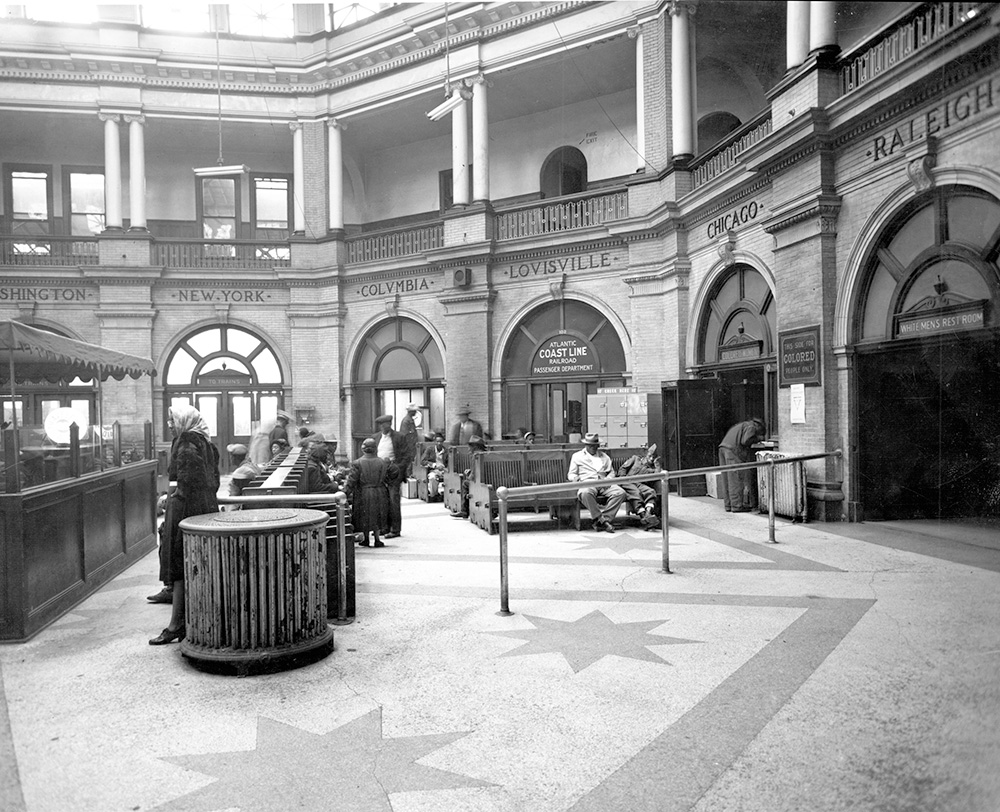
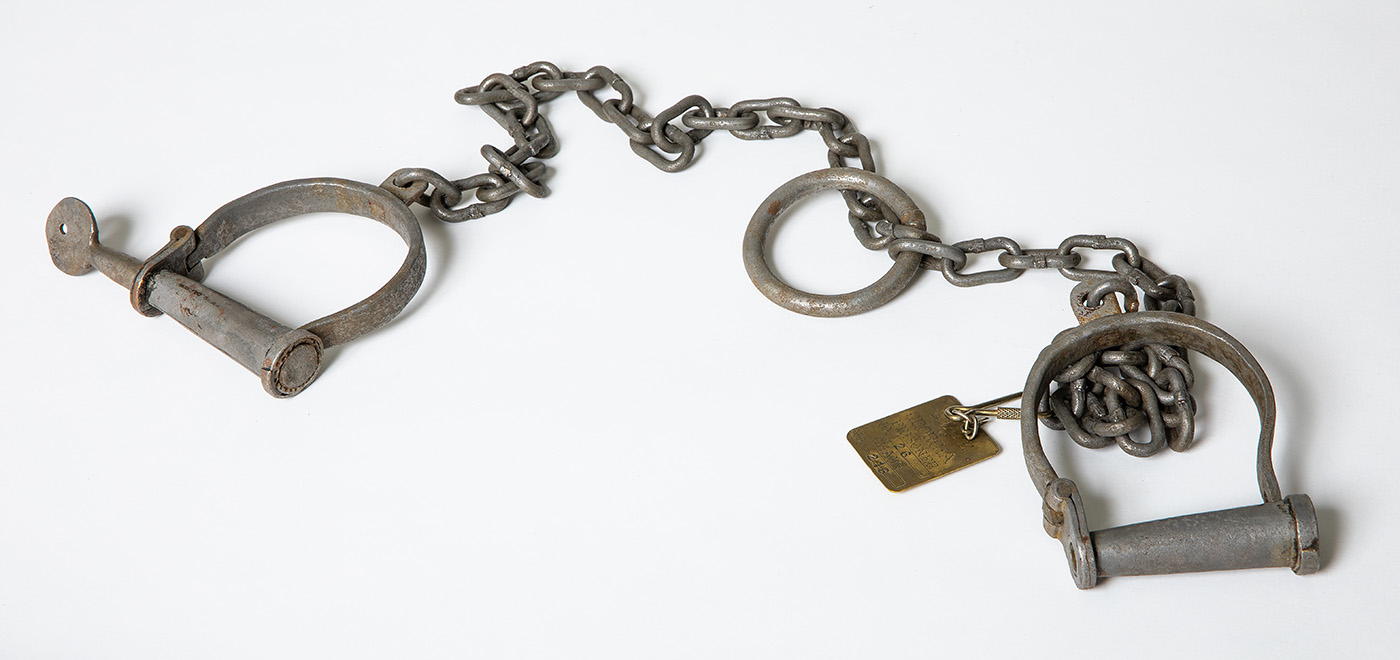
The indignities of Jim Crow seeped into every facet of social, political, and economic life in segregated America. That reality is nowhere better illustrated than in the architectural drawing of a segregated waiting room in the Central of Georgia Railway station depot in Monticello, Georgia, dated 1901, and the shackles used on Black convict labor chain-gangs in the late nineteenth century. The harsh and humiliating realities of Jim Crow are sanitized in the precise architect's handwriting denoting the White and Colored bathrooms. Note that White women are referred to as "Ladies," a social distinction denied to all Black women. It was no accident that the movement to destroy the institutionalized dehumanization of African Americans in this country-and the violent White backlash it provoked-would begin in places of public accommodation like those rendered so bloodlessly here in black and white.

Photograph of a Central of Georgia Railway Depot in Monticello, Georgia, 1901, in which segregated restrooms are shown. From the collection of the Georgia Historical Society.

Central of Georgia Railway Depot, Monticello, Georgia, 1901, Central of Georgia Railway Records, 1835-1971, GHS 1362.

Convict labor shackles, from the collection of the Georgia Historical Society.

Convict labor shackles, GHS 2746-AF-0005; Union Station, Savannah, 1950, GHS 1361-PH-29-05-5904.

The Progressive Era

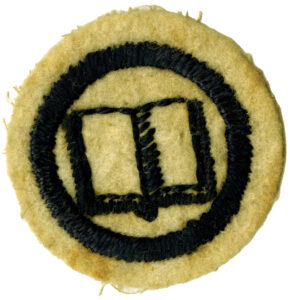
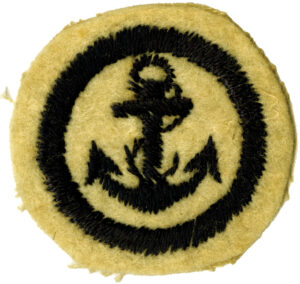
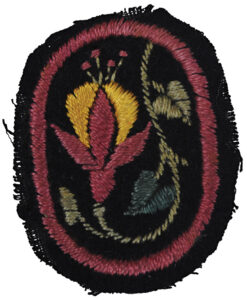
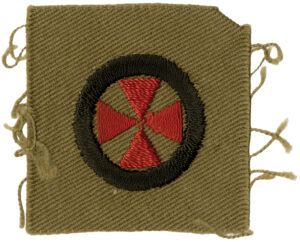
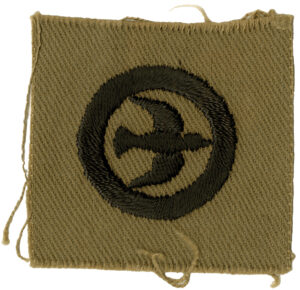
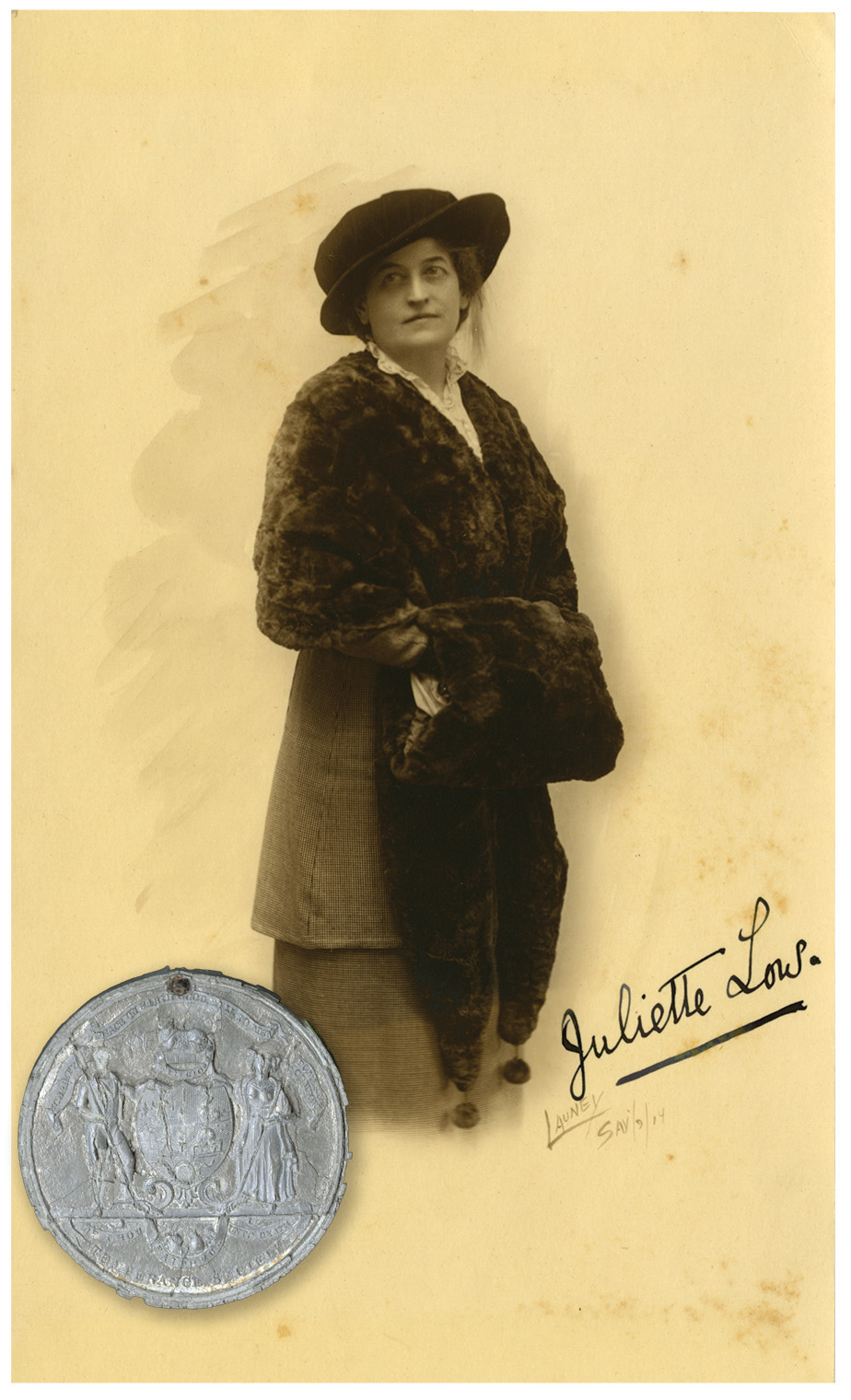
Few people had the impact on young women that one Georgian has for over a century. Juliette Gordon Low was partially deaf, mentally depressed, with no children of her own, yet she founded the Girl Scouts of the USA in Progressive-era Georgia. The Savannah native married William Low, a wealthy British merchant, but their marriage was falling apart when he died suddenly in 1905. Six years later, Juliette met Sir Robert Baden-Powell, the British founder of the Boy Scouts, and the meeting changed her life. In 1912 she returned to Georgia and started the Girl Scouts of the USA (five 1920s-era Girl Scout badges pictured here), which grew to become the largest voluntary association for women and girls in the United States. By 1925, there were 90,000 Girl Scouts. Today there are 3.2 million, still influenced by the vision and dream of the Georgian known as Daisy.

Photograph of Girl Scout Founder Juliette Gordon Low, along with a Temperance Declaration medal. From the collection of the Georgia Historical Society.
Juliette Gordon Low's Scribe Girl Scout Badge
Juliette Gordon Low's Sailor Girl Scout Badge
Juliette Gordon Low's Fuchsia Girl Guides Troop Crest Badge
Juliette Gordon Low's Child Nurse Girl Scout Badge
Juliette Gordon Low's Bird Finder Girl Scout Badge

Juliette Gordon Low's Girl Scout Badges, c.1920s, Gordon Family Papers, GHS 0318-AF-0134-005, 006, 014, 016, 019; Juliette Gordon Low Photograph, Gordon Family Papers, GHS 318-PH-40-443-3729; Girl Scout Troop Certificate, GHS 2351; Temperance Declaration Medal, GHS 1361-AF-012-155.

The Rise of Atlanta and the Railroad

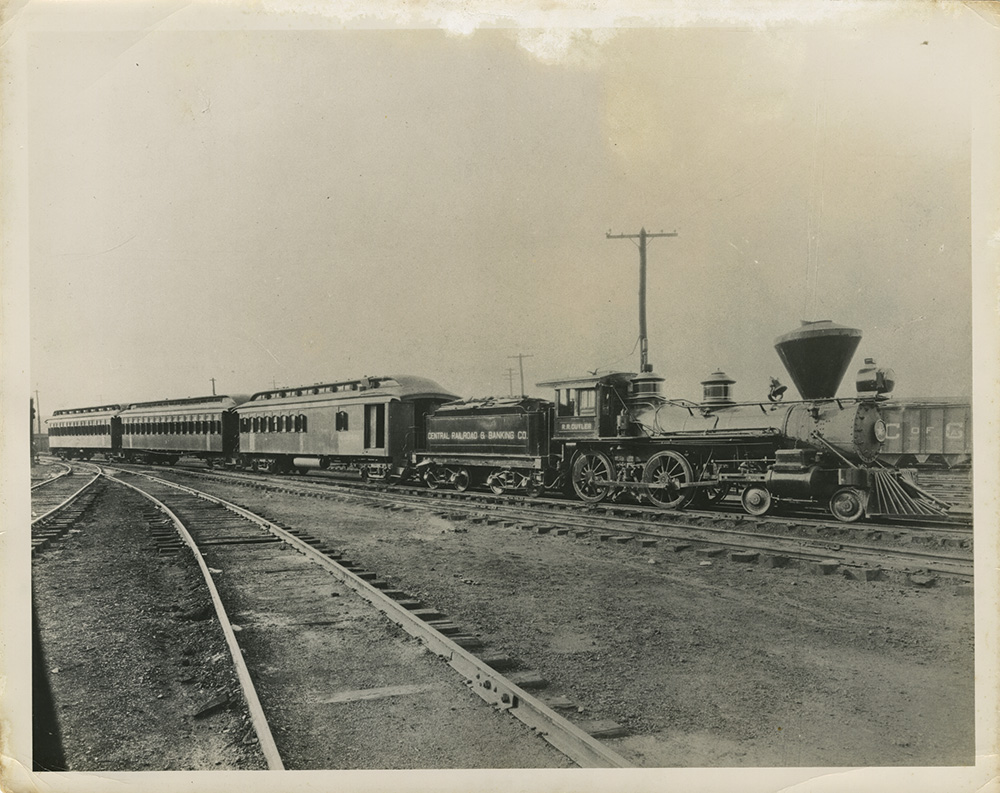
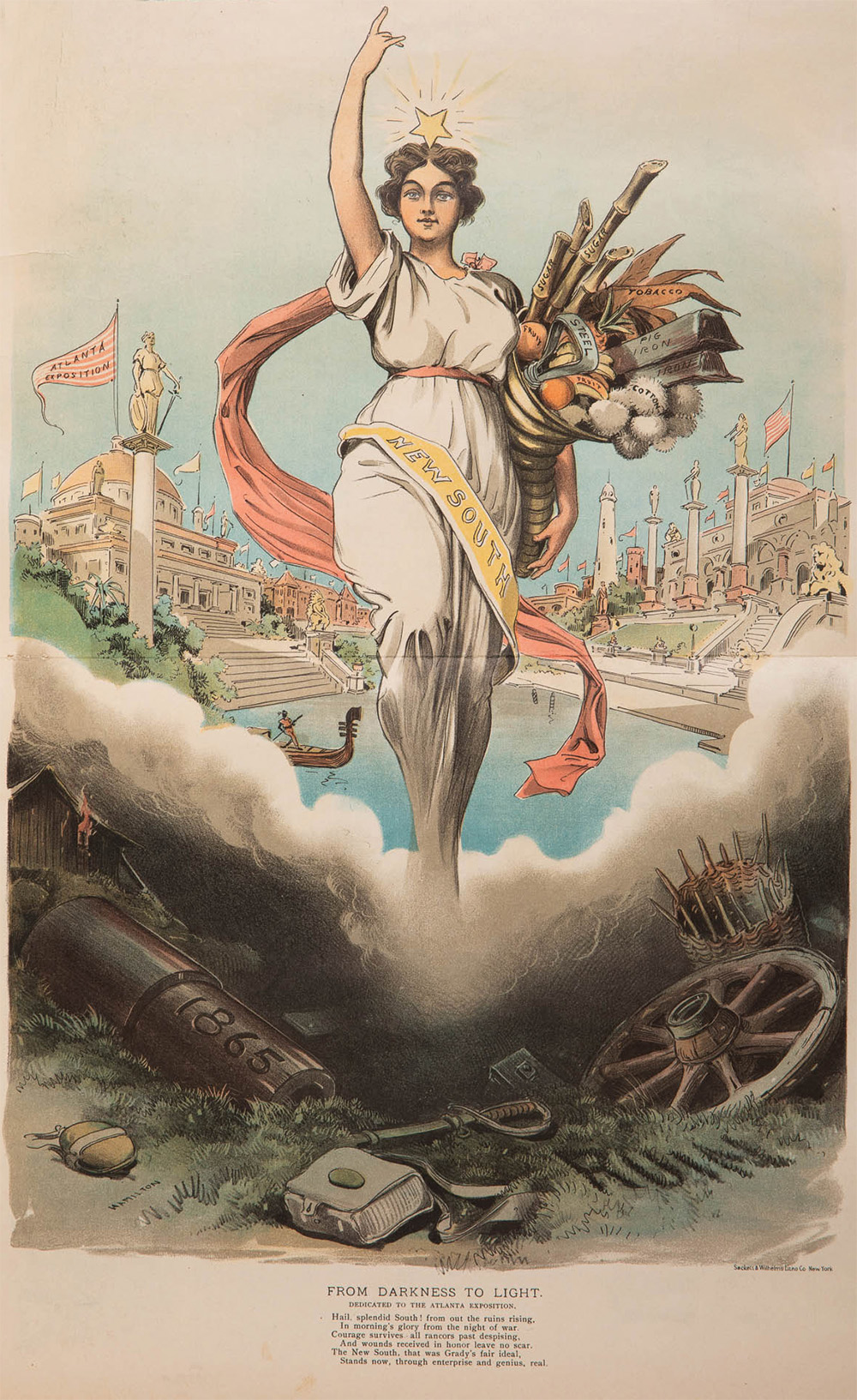
In 1837 the Western and Atlantic Railroad staked out a point on a ridge seven miles east of the Chattahoochee River as the southern end of a rail line they planned to build south from Chattanooga, Tennessee. The town was called Terminus, which literally means "end of the line." Two other railroad lines later converged in the center of town, and the city now called Atlanta was on its way to becoming the commercial and transportation center that it remains to this day. The railroad made Atlanta a transportation hub and the target of Gen. William Sherman's US Army in 1864. The railroad also transformed antebellum Georgia. It revolutionized the way that people and goods moved from place to place, reconfiguring Georgia's economic and social landscape. As Georgia's first railroad, the Central of Georgia (founded 1833) linked Savannah with upland cotton plantations. The Central of Georgia grew into one of the most significant rail and banking corporations in the American South, serving as a vital part of Georgia's transportation and financial infrastructure for more than a century. Atlanta rose from the ashes in the years after the Civil War, as city leaders hosted a series of "cotton expositions," the most ambitious of which was the 1895 Cotton States and International Exposition. It showcased Atlanta as a regional business center and helped to attract investment that would be essential to the city's prominence in the twentieth century.

Photograph of Central of Georgia train, from the collection of the Georgia Historical Society.

Central of Georgia photograph, undated, GHS 1360-PH-28-11-01.

An 1895 poster from the Cotton State and International Exposition. The illustration shows a woman with a sash that reads "New South," holding a variety of of agricultural products and resources. Below the illustration it reads "From Darkness to Light."

"From Darkness to Light," Cotton State and International Exposition poster, 1895, GHS 1361PR-OS1-59-01

White Supremacy

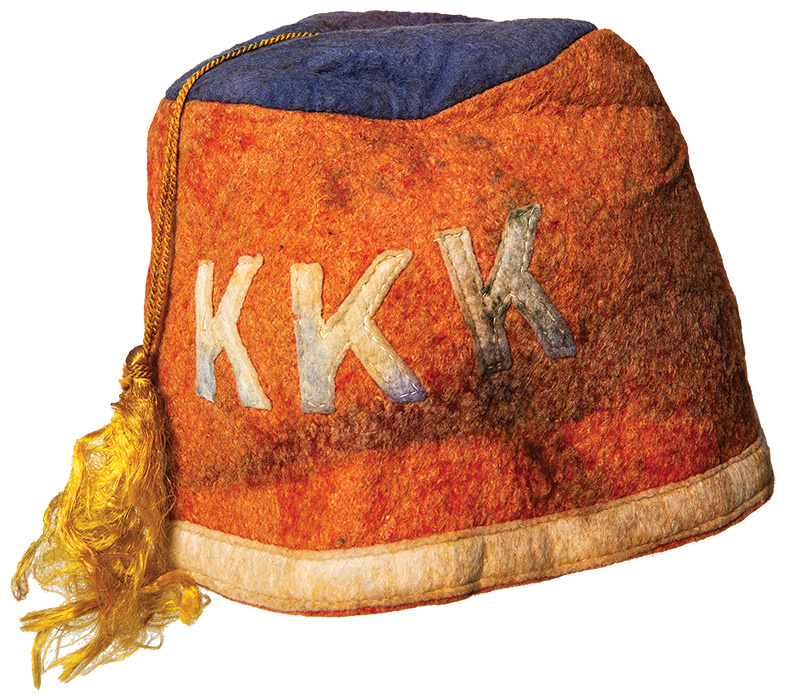
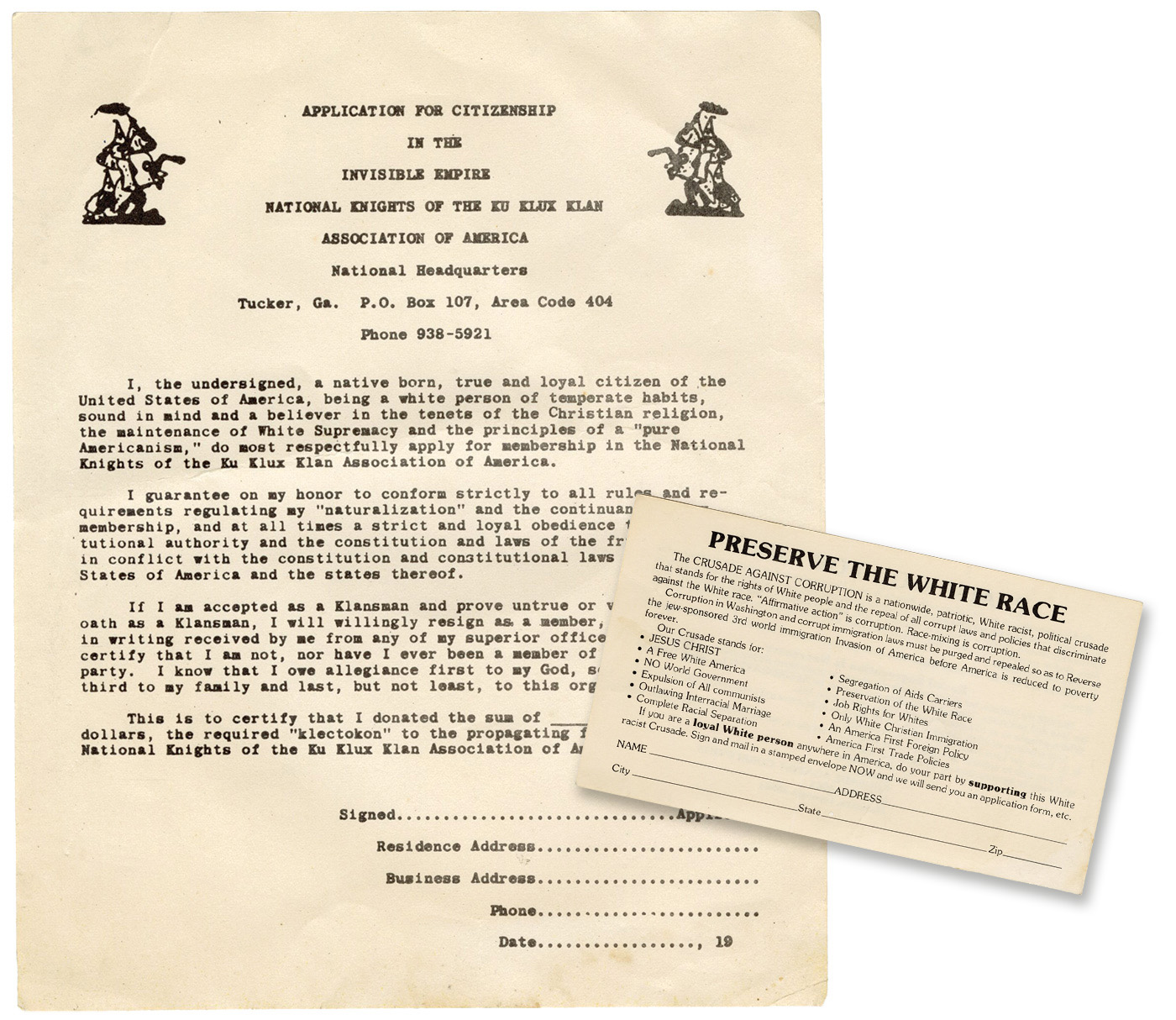
The early twentieth century was a particularly bleak period for race relations in Georgia and America. The workforce demands of the emerging industrial revolution brought increased immigration from deeply Catholic southern and eastern Europe, and the Great Migration sent many African Americans from the southern countryside to northern urban centers. America's changing demographics and increasing economic dislocation brought with it a corresponding rise in Protestant nativism and White supremacy, which attained broad political support. The Ku Klux Klan, created originally during Reconstruction, was revived atop Stone Mountain in Georgia in 1915 following the lynching of Leo Frank in August. Its popularity peaked in the 1920s, with membership surpassing 4 million nationally. Along with continued racial hostility toward Blacks the new Klan-particularly strong in the Midwest-was militantly opposed to Roman Catholics, Jews, immigrants, and organized labor. The Klan declined during World War II but found new life during the Civil Rights Movement. The felt fez seen here, complete with tassel, belonged to Edra C. Moore (1899-1960), a native of Shiloh, Georgia, who joined the Klan in 1929. He graduated from Georgia State Military Academy, became a police officer in Washington, DC, and served in the Army Reserve during World War II. The Klan application and Crusade card date from the Civil Rights Movement.

A fez that says "KKK." From the collection of the Georgia Historical Society.

KKK Headgear, c.1929, GHS 2452.

A Ku Klux Klan membership application letter and card, from the collection of the Georgia Historical Society.

Application for Citizenship in the Invisible Empire, "Preserve the White Race," Edwin L. Jackson Collection, GHS 2746

World War I

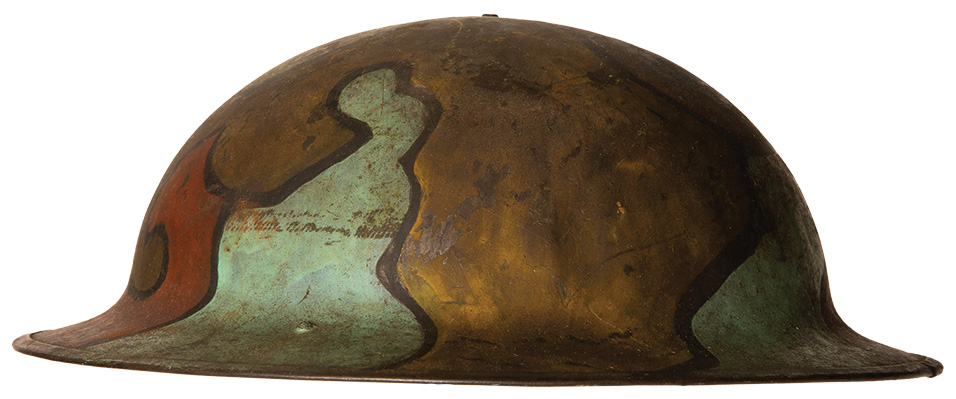
A World War I US Army helmet, 1917-1918. From the collection of the Georgia Historical Society.

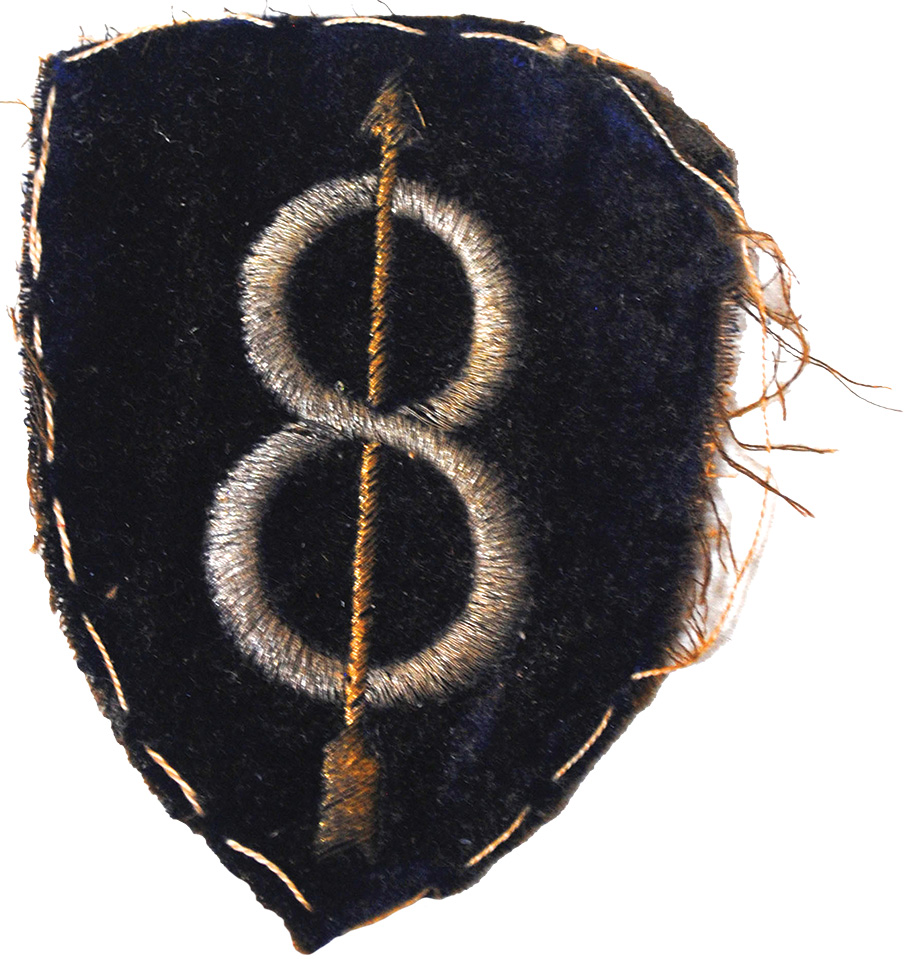
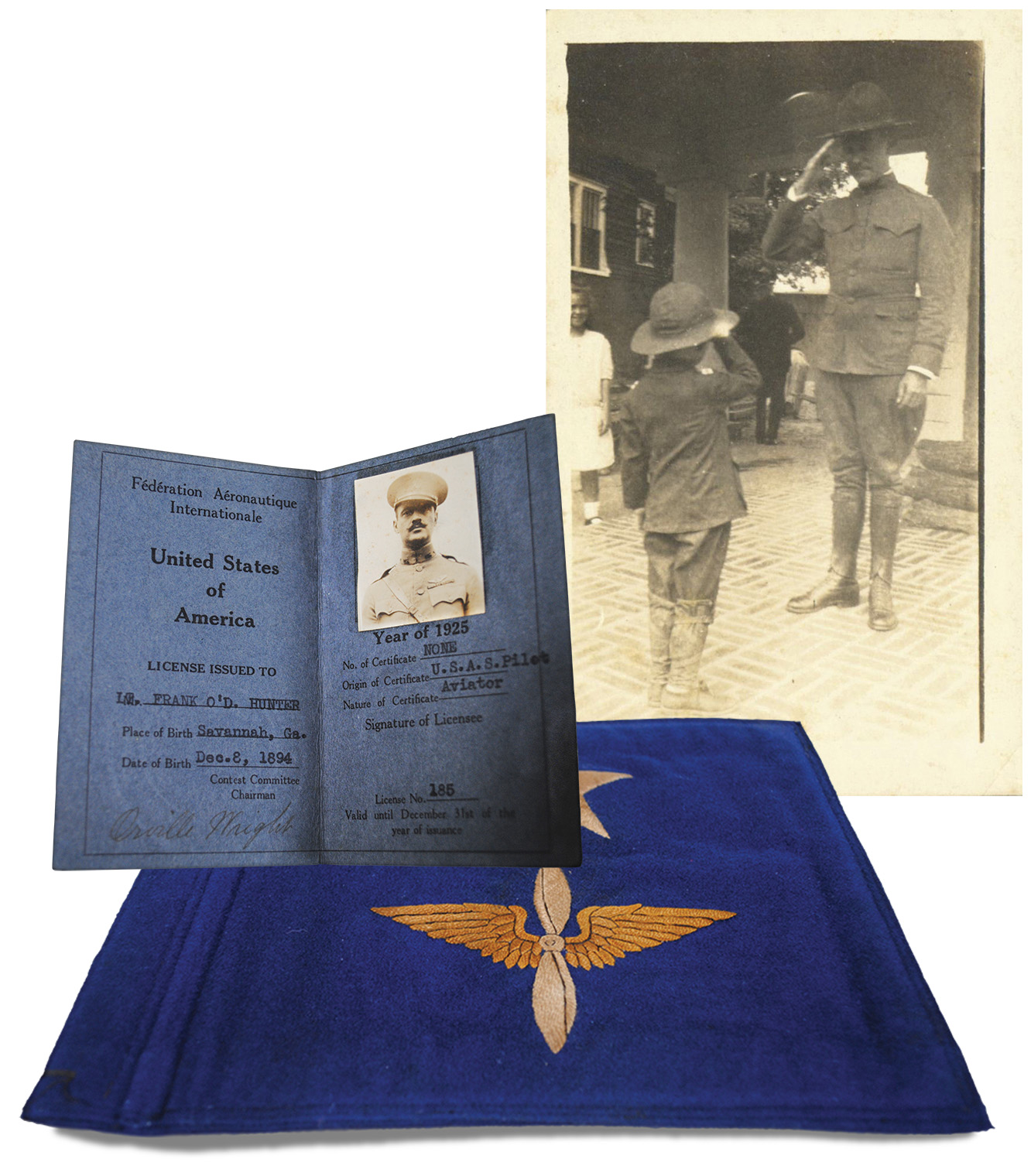
World War I cast a long shadow over the 20th century, launching America onto the world stage for the first time. One Georgia native, Frank O'Driscoll "Monk" Hunter, played an important role in that conflict and the larger one to come. Hunter was Georgia's only World War I flying ace, shooting down nine German planes as part of Eddie Rickenbacker's 94th Aero Squadron and the 103rd Aero Squadron, known previously as the Lafayette Escadrille. Hunter's pilot license, signed by aviation pioneer Orville Wright, is shown here, along with the US Army helmet worn in the conflict by another Georgia native, Fred W. Mingledorff Sr., whose son would fight in the Second World War (see p. 35). Hunter headed the Eighth Air Force Fighter Command in England during World War II and later took command of the First Air Force. Hunter Army Airfield in Savannah honors the native son for his service in two world wars and his skill and heroism as an aviator. His own rise mirrored that of his country as a world power.

World War I 8th Infantry Division Patch, from the collection of the Georgia Historical Society.
A collage image featuring Frank O'Driscoll Hunter's pilot license, a blue flag with white star from Frank O'Driscoll Hunter's car While Commanding the Eighth Air Force Fighter Command in England, and a1917 photograph of a  WWI soldier and child saluting. From the collection of the Georgia Historical Society.

F. W. Mingledorff Sr.'s US Army Helmet, 1917-1918. Frederick William Mingledorff, Jr. Family Papers, GHS 1991; 8th Infantry Division Patch, Dr. and Mrs. Ralph Olin Bowden, Jr. Family Papers, GHS 2540. Pilot license, Frank O'Driscoll Hunter Papers, 1917-1982, GHS 1342; Flag from Frank O'Driscoll Hunter's Car While Commanding the Eighth Air Force Fighter Command in England, GHS 1342-AF-065-003;  WWI soldier and child saluting, October 4, 1917, GHS 2835-PH-0003.

The Rise of the Automobile

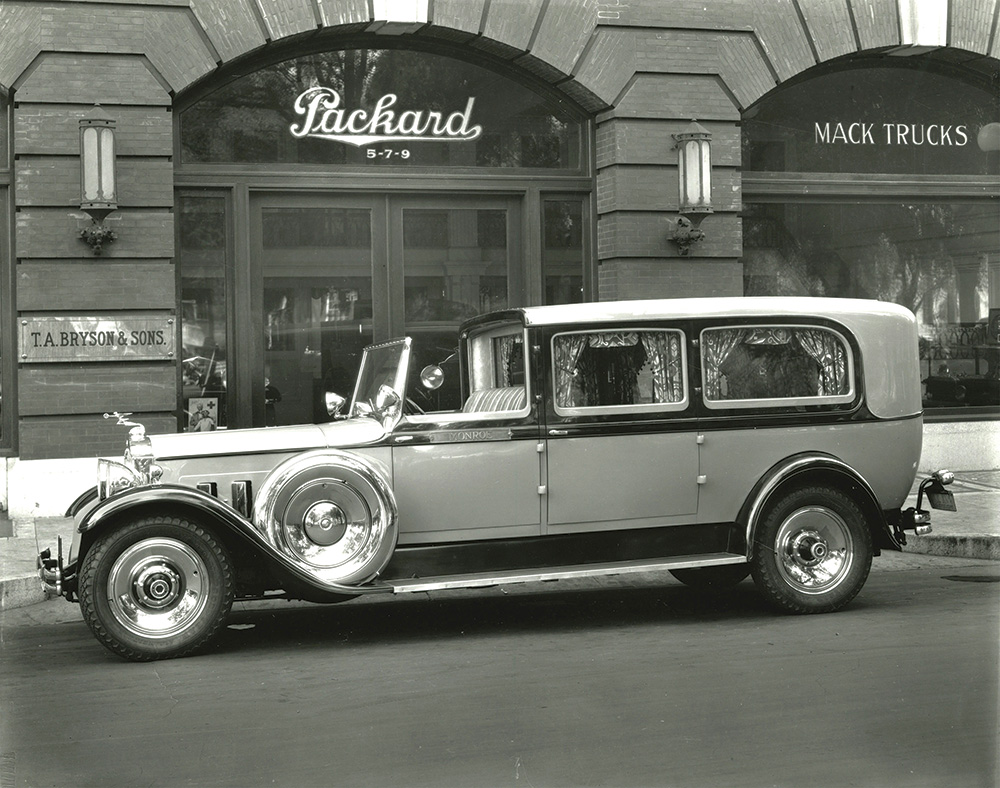
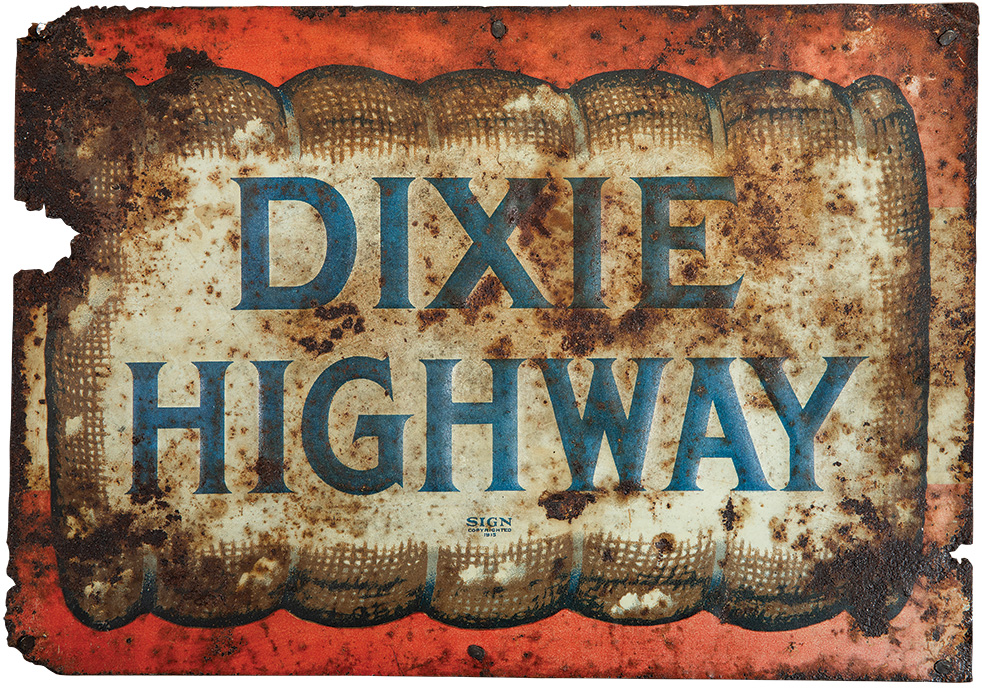
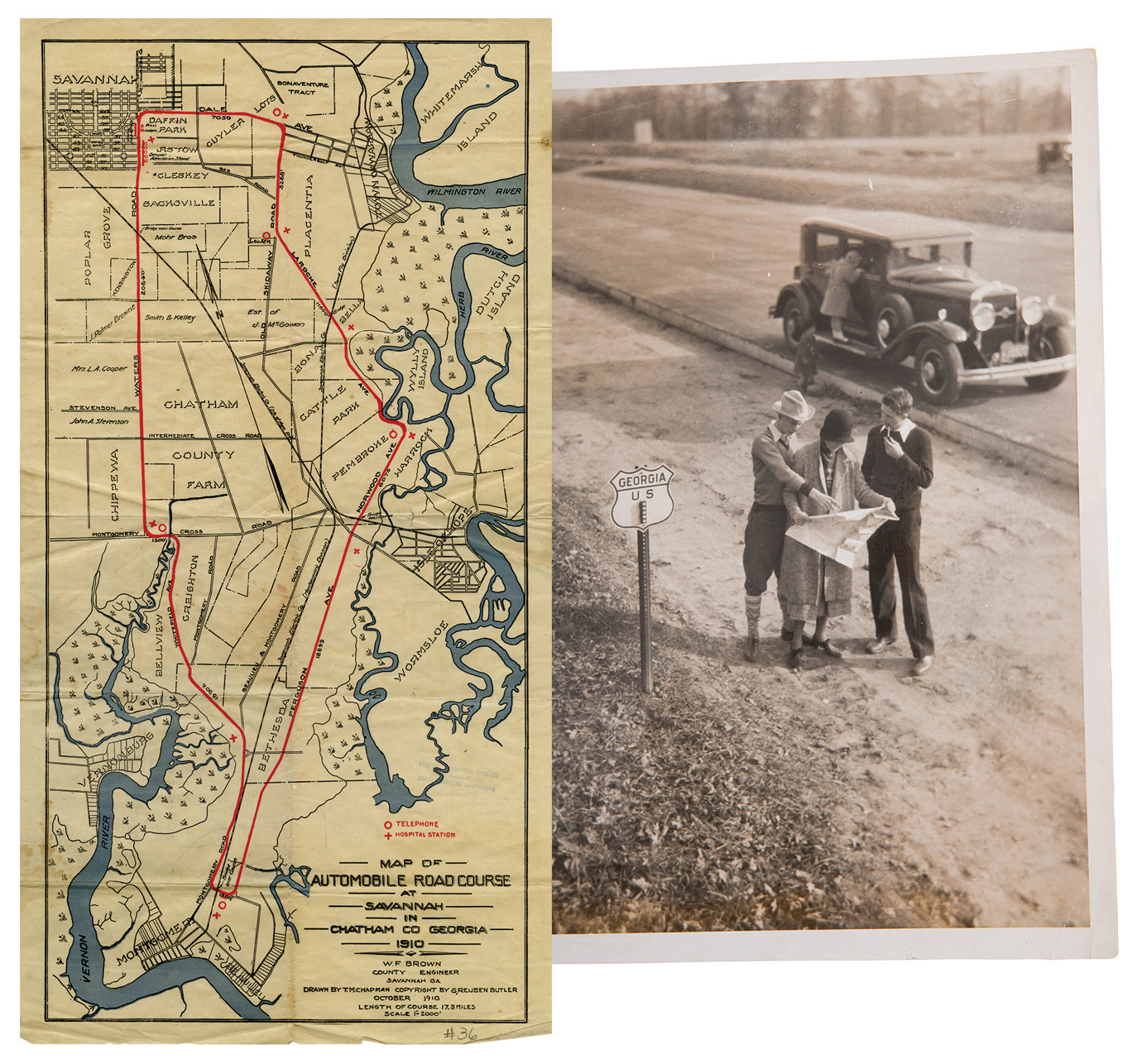
Few inventions transformed the way that Americans live their lives more than the automobile in the twentieth century. With the rise of mass production, automobiles replaced the horse and revolutionized transportation. Americans were on the move as never before, and tourism become one of the most important economic engines of the century. The Dixie Highway, a network of roads connecting Canada to Florida in the early decades of the twentieth century, was an ambitious effort to build the nation's first north-south paved interstate highway. As the largest state east of the Mississippi River, Georgia proved critical to the project's success, mainly because the state's size and location controlled access to Florida for anyone driving by car. The Dixie Highway became so popular for Midwesterners and Canadians that Georgia entrepreneurs opened gas stations, garages, restaurants, souvenir shops, roadside produce stands, tourist lodging, and other attractions for the traveling public. In 1926, federal and state highway officials replaced named trails like the Dixie Highway with numbered highways. The Dixie Highway had a relatively short official life, but its roadbeds-now numbered highways like US 1-constituted important physical and cultural transportation corridors before the arrival of interstate highways. The highway brought tourists from other regions, spurring a host of entrepreneurial undertakings that made a dramatic impact on the culture and economy of twentieth-century Georgia.

A photograph of a Packard hearse, 1930. From the collection of the Georgia Historical Society.
A rusted sign that reads "Dixie Highway." 1915. From the collection of the Georgia Historical Society.
Map of Automobile Road Course at Savannah, 1910. Photograph that shows motorist standing outside of a car, examining a map, on US No. 1 near Augusta, Georgia, 1931. From the collection of the Georgia Historical Society.

Dixie Highway sign, 1915; Hamilton Wright, "Motorists on United States Highway No. 1 near Augusta, Georgia, December 22, 1931," Edwin L. Jackson Collection, GHS 2746; Map of Automobile Road Course at Savannah, 1910, GHS 1361-MP-036; Packard Hearse in front of T.A. Bryson and Sons, January 8, 1930, GHS 1360-PH-27-28-01.

FDR and Georgia

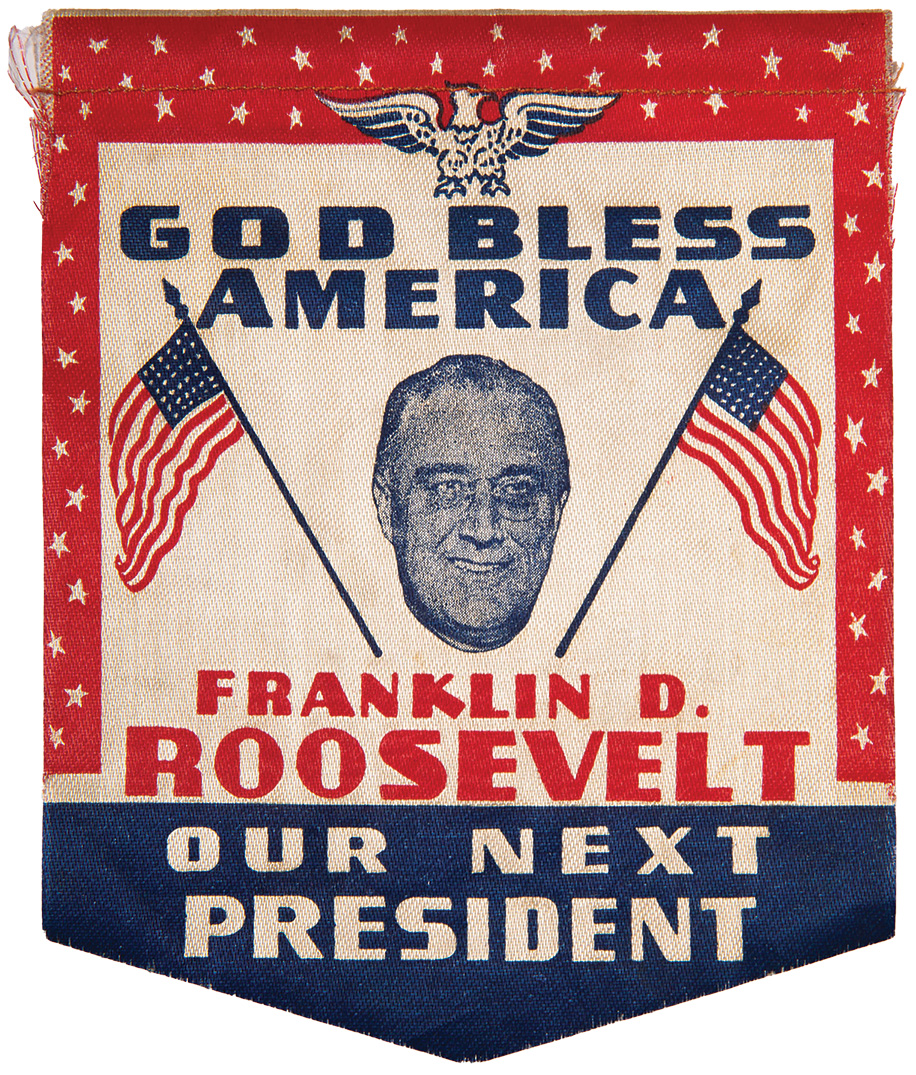
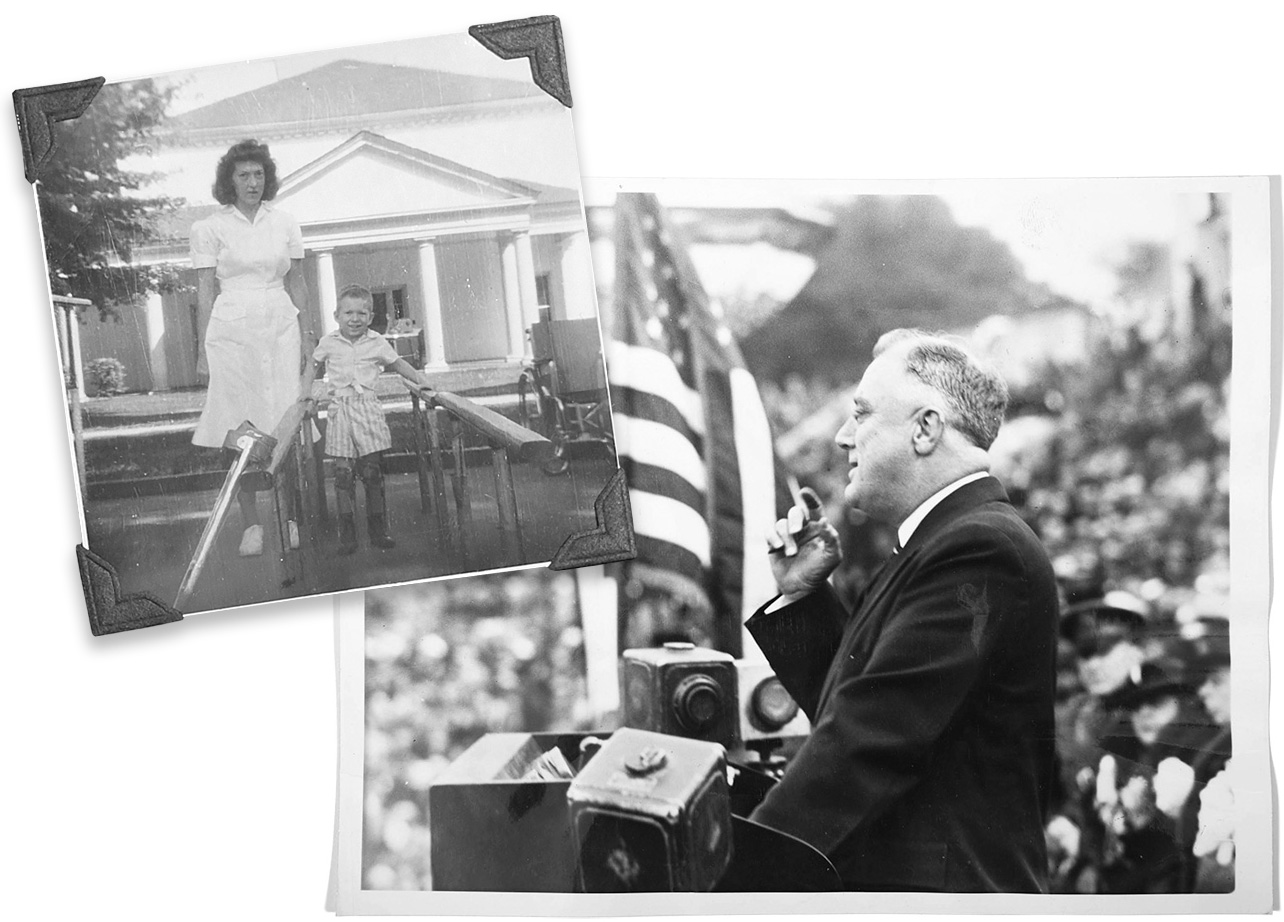
Between 1924 and 1945 Franklin D. Roosevelt visited Warm Springs and Georgia 41 times. FDR contracted polio in August 1924 at age 39 while on a family vacation at Campobello Island in New Brunswick, Canada. In October 1924 he learned of Warm Springs and its beneficial waters. He grew to love Georgia and its people, and they welcomed him as their adopted son. In 1927 he established the Georgia Warm Springs Foundation. Known today as the Roosevelt Warm Springs Rehabilitation Center, the facility serves patients suffering from the effects of polio, strokes, spinal cord injuries, and other disabilities. After his election to the presidency in 1932, his home at Warm Springs, "The Little White House," became a Presidential retreat. He died there in 1945. To a generation of west Georgians, he was both the president and a trusted friend. Among the GHS treasues is a remarkable collection of photographs that belonged to Mariana Johnson, a Worcester, Massachusetts, native who received graduate training from the Georgia Warms Springs Foundation in 1943-1944 and then worked as a physical therapist there until the early 1950s. Her photos document the therapeutic techniques and exercises of polio patients, and the daily life at Warm Springs. She also photographed FDR's funerary procession after his death on April 12, 1945.

Banner with Franklin Roosevelt's head and US flags that reads, "God Bless America - Franklin D. Roosevelt -Our Next President." From the collection of the Georgia Historical Society.
Photograph of President Franklin D. Roosevelt delivering speech at Grant Field in Atlanta, Georgia in 1935, Photograph of child with leg braces and nurse outside a building at the Warm Springs Institute. From the collection of the Georgia Historical Society.

Franklin Delano Roosevelt God Bless America Flag, c.1932; "President Franklin D. Roosevelt delivering speech at Grant Field in Atlanta, Georgia," November 30, 1935, Edwin L. Jackson Collection, GHS 2746; Children at Warm Springs photograph, Mariana Johnson Collection, GHS 2827.

World War II on the Homefront

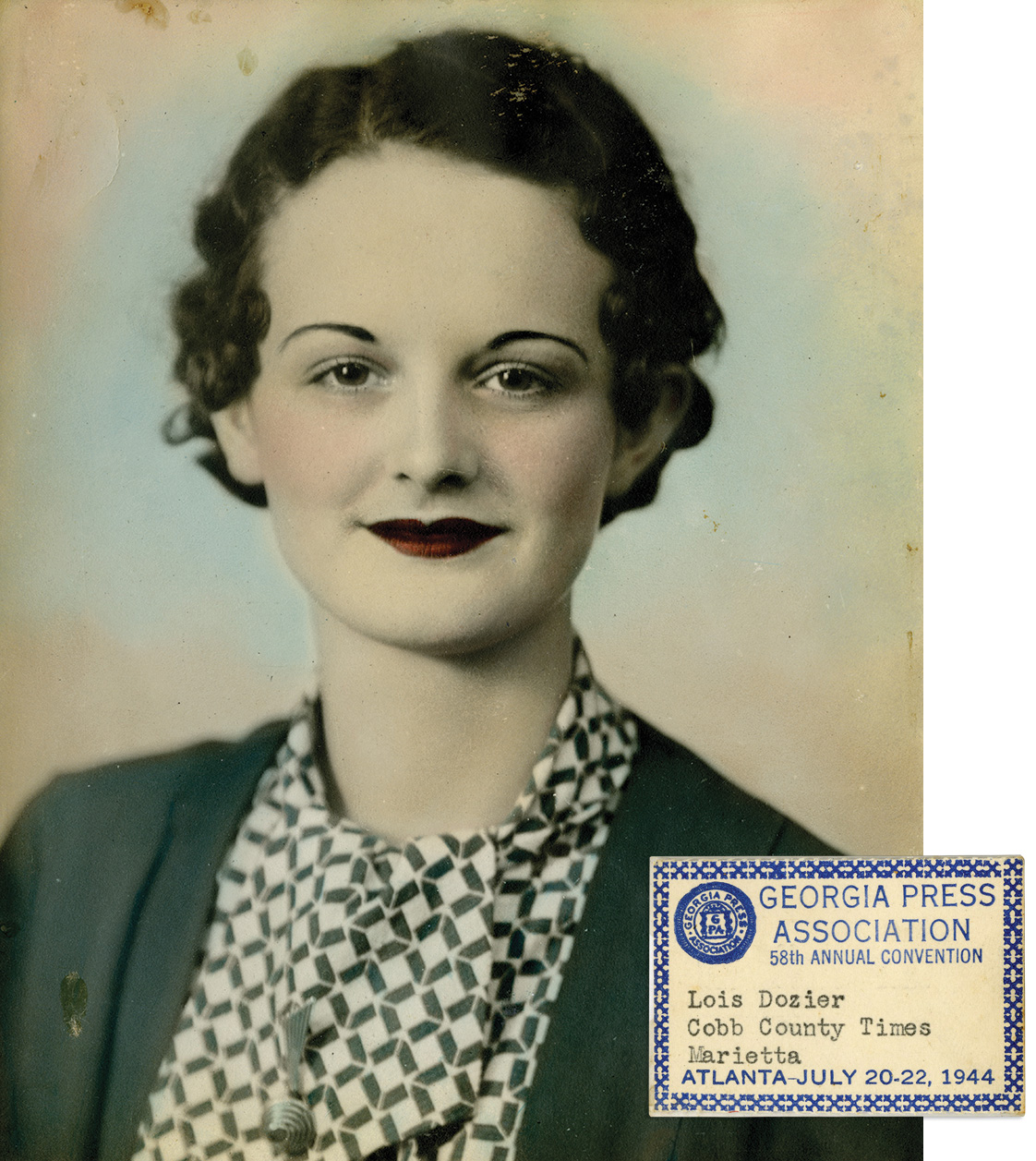
World War II brought women into the work force in record numbers, including a young woman from Athens named Evelyn "Lois" Dozier. During the war, Dozier sent and received letters from men and women in military service, and she published a monthly newsletter, Letters from Lois, about these soldiers. The Atlanta Journal published her popular column, "The Boys Write Home." Dozier, whose Georgia Press Association name badge is shown here, also wrote for the Newnan Herald and the Cobb County Times. She served for ten years as assistant editor and advertising manager of The Coca Cola Bottler in Atlanta, the company magazine for the Coca Cola Company. The war was a turning point for the country-and for one young woman who symbolizes the changing gender roles in the workplace that transformed American economic and social life.

Color photograph of Lois Dozier Norvell Photo, along with her nametag for the Georgia Press Association's 58th Annual Conference in Atlanta. From the collection of the Georgia Historical Society.

Nametag for the Georgia Press Association's 58th Annual Conference, Atlanta; Lois Dozier Norvell Photo, undated, Lois Dozier Norvell Papers, 1917-1994, GHS 1690.

World War II on the Battlefield

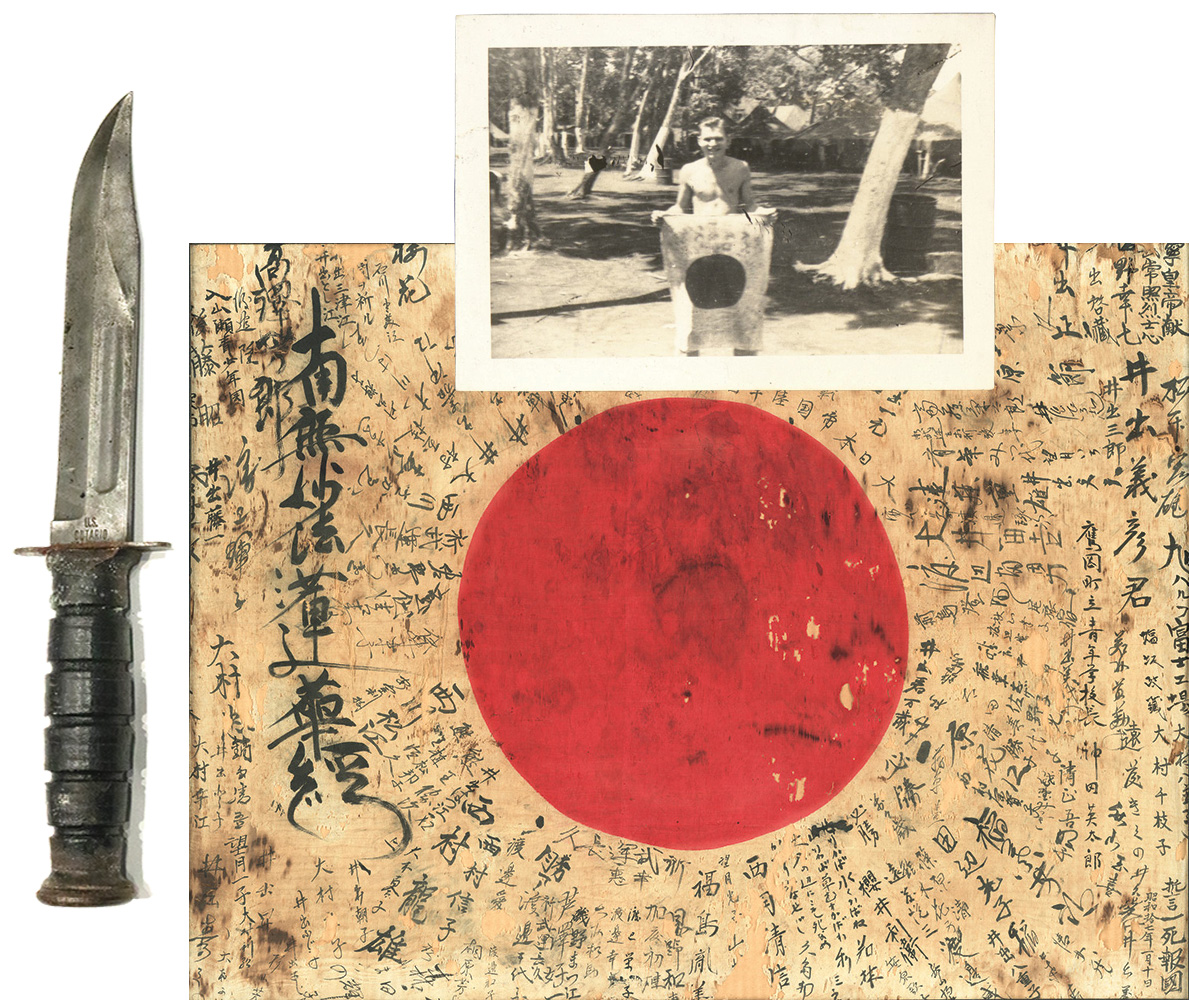
GHS holds materials related not only to Georgia, but also to Georgians who served on the world stage. Frederick Mingledorff, one of 320,000 Georgians who served in World War II, was a US Marine and participated in some of the fiercest fighting of the Pacific Theater. As a 19-year-old amphibious tractor driver, PFC Mingledorff ferried troops to the landing beaches at Roi-Namur in January 1944 during the Kwajalein operation. Under intense enemy fire Fred "learned for the first time what it meant to really be afraid." During the invasion of Guam, he picked up this Japanese "Good Luck Flag" (Fred is holding a flag in a wartime photograph below). Also pictured is his USMC KA-BAR knife. Fred contracted malaria in Guam and was evacuated to a hospital at Pearl Harbor. It was a fortuitous illness for Fred: months later at Iwo Jima his entire unit was virtually wiped out.

Collage of World War II items, including a Japanese Good Luck flag, a photograph of an American soldier holding a Japanese Good Luck flag, and a Ka-Bar knife. From the collection of the Georgia Historical Society.

Japanese Flag, c. 1939-1945; Mingledorff photograph; KA-BAR, Frederick William Mingledorff, Jr. Family Papers, GHS 1991.

The Civil Rights Movement

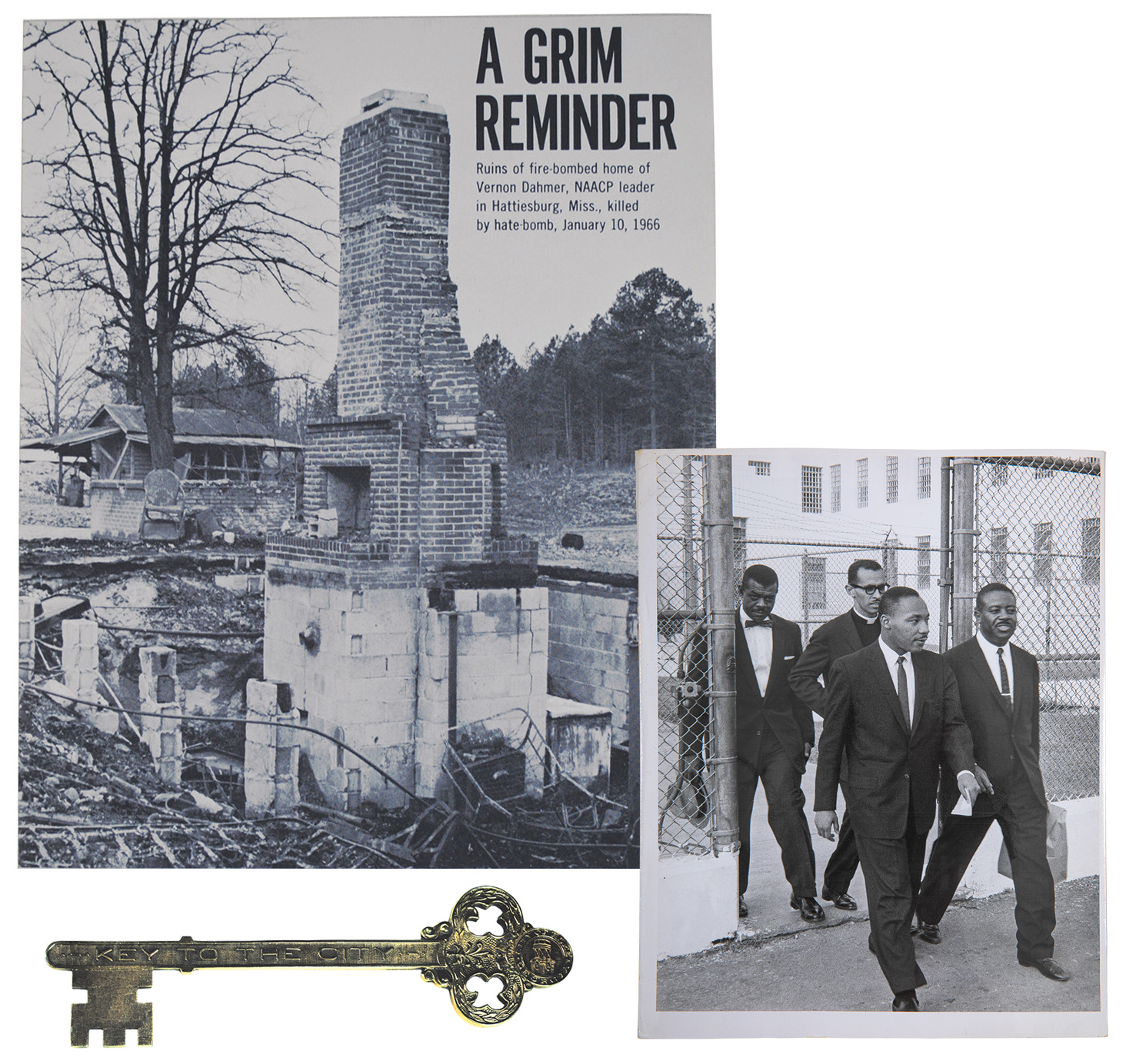
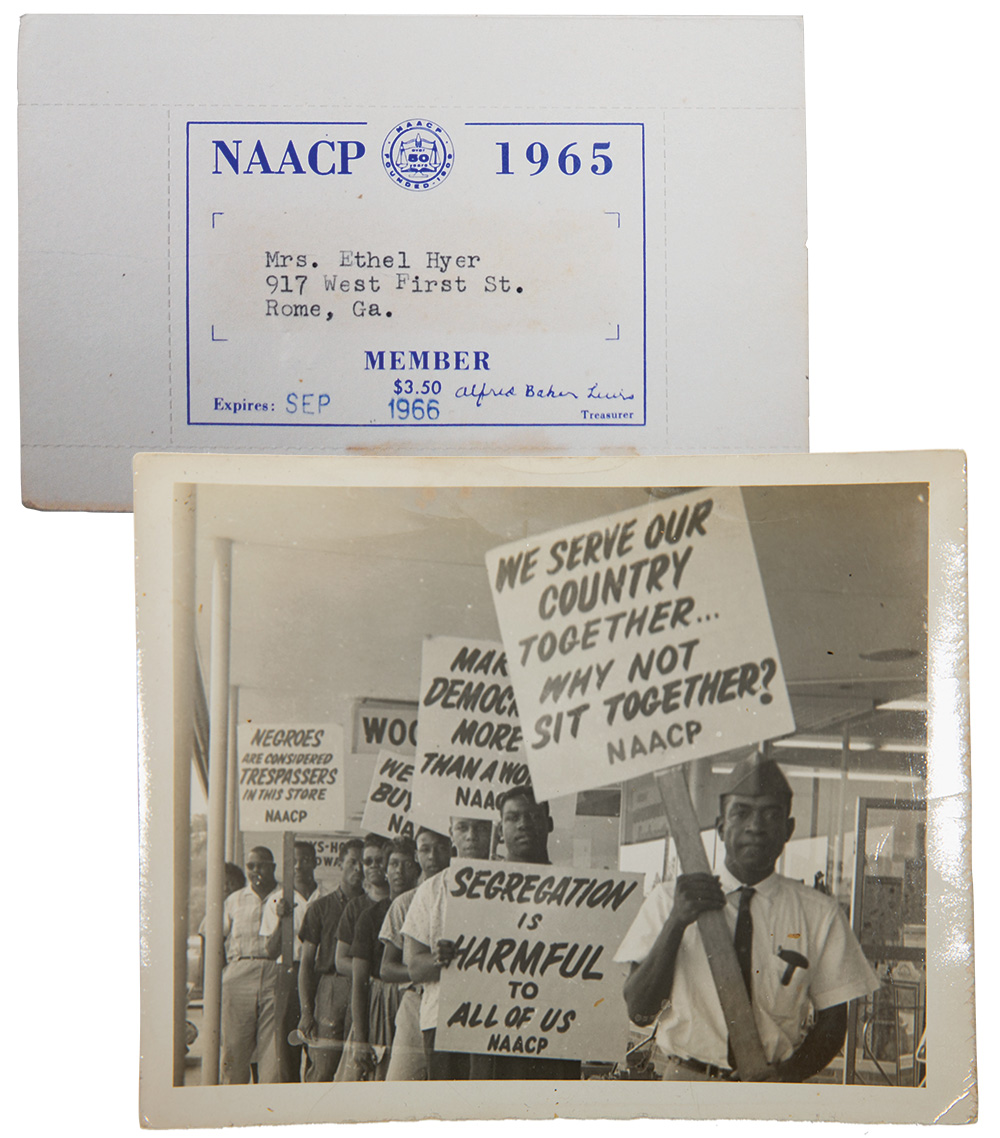
The Civil Rights movement was accomplished in large places and small, by the famous and those from everyday walks of life. The Rev. Martin Luther King, Jr., pictured here, is widely credited as the national leader of the movement. On the local level, Ethel Hyer, like many women in the 1950s and 60s, served her community of Rome in a variety of religious, civic, and social organizations. She attended Spellman College and was a member for 65 years of Thankful Baptist Church. She was also a trailblazer. Hyer was the first woman to be president of the Rome Chapter of the National Association for the Advancement of Colored People (NAACP), a position she held for 15 years. W. W. Law was a Savannah postal worker who emerged as one the community's staunchest advocates for Civil Rights, including a July 1960 boycott of Savannah's Woolworth's, as seen here. He served as president of the Savannah chapter of the NAACP from 1950 to 1976 and came to be widely known as "Mr. Civil Rights." For her service on behalf of human equality, Ethel Hyer was honored by the city of Rome in 1973 and given the key to the city (pictured here, along with her membership card and an NAACP flyer). She and Law represent the untold number of Georgians who served as foot soldiers of a movement that would not have succeeded without them.

A collage of Civil Rights items, including a NAACP flyer that says "A Grim Reminder," a key to the city of Rome, Georgia, and a photograph of Martin Luther King Jr. and others leaving jail. From the collection of the Georgia Historical Society.
A NAACP membership card and a photo of people holding signs at a NAACP protest of Woolworth in 1960. From the collection of the Georgia Historical Society.

Martin Luther King, Jr., Ralph Abernathy, and others leaving jail, undated. Savannah Morning News Collection of Photographs and Negatives. GHS 2850; NAACP boycott protest of Woolworth, Savannah, July 1960, John Williams Collection of W.W. (Westley Wallace) Law Papers. GHS 2697; NAACP Flyer, Key to the City of Rome, GA, NAACP Membership Card, 1965, Ethel Hyers Papers, GHS 2117.

Vietnam

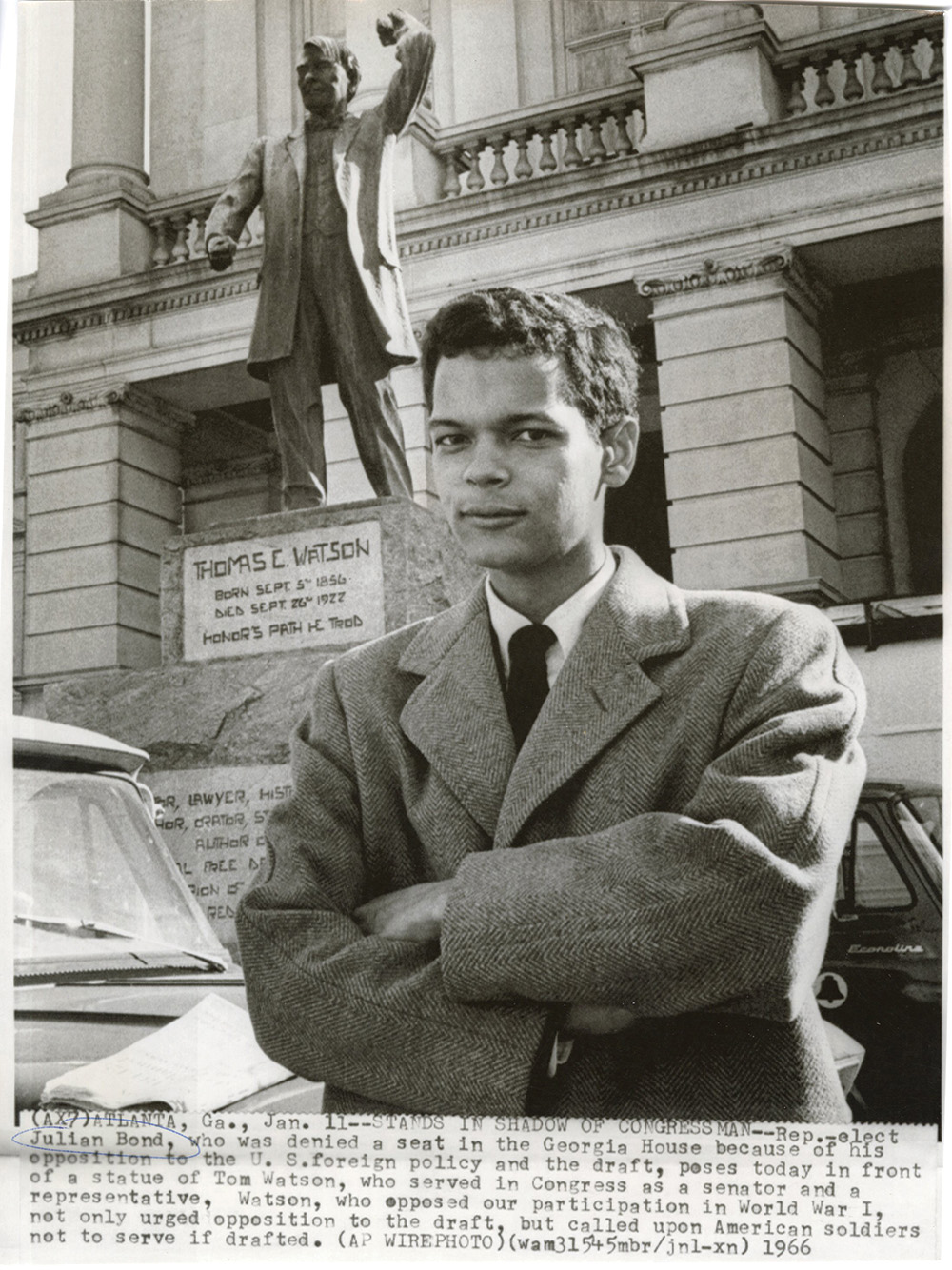
More than 2.7 million Americans served in the armed forces in the Vietnam War, including 228,000 from Georgia. One of those was William T. "Ted" Moore, who grew up in Brunswick. He entered the United States Army in 1967 at age 19 and was admitted to Officer Candidate School, graduating as a Second Lieutenant in January 1968. Following a tour in the 82nd Airborne Division, he was assigned to the 9th Infantry Division in Vietnam, and later served as an advisor with the South Vietnamese Army. Ted was decorated for valor, meritorious service, and received the Purple Heart for wounds received. He went on to a distinguished career in higher education. The Vietnam War also created deep division in American society as initial support for the conflict eroded and protests erupted as the war dragged on and casualties mounted. Georgia Civil Rights activist Julian Bond was an outspoken critic of the war who won election to the Georgia House of Representatives in 1965. But his anti-war stance prompted the legislature to deny Bond his seat-not once, but three times, as voters in Bond's district elected him as their representative only to have the legislature refuse his seat each time. In December 1966, the US Supreme Court ruled that the actions of the Georgia house were unconstitutional, and Bond was sworn in on January 9, 1967. He is pictured at right standing in front of the statue of Tom Watson at the State Capitol: Watson opposed the draft during WWI. Bond's long career in the Georgia legislature ended in 1987. The Vietnam War, like the Civil Rights Movement, had a profound impact on American society, including the lives of two young Georgians whose earliest years were irrevocably shaped by the Cold War conflict so far from home.

A photograph of an American soldier in chest-deep water during the Vietnam War. An Army of the Republic of Vietnam Officer beret. From the collection of the Georgia Historical Society.
A photograph of Representative Julian Bond. From the collection of the Georgia Historical Society.

Ted Moore photograph, Army of the Republic of Vietnam Officer beret, Dr. William T. Moore Collection of Vietnam War Materials, GHS 2840; Julian Bond standing in front of statue of Tom Watson, January 11, 1966, GHS 1361-PH-44-15-02.

Georgia Legends

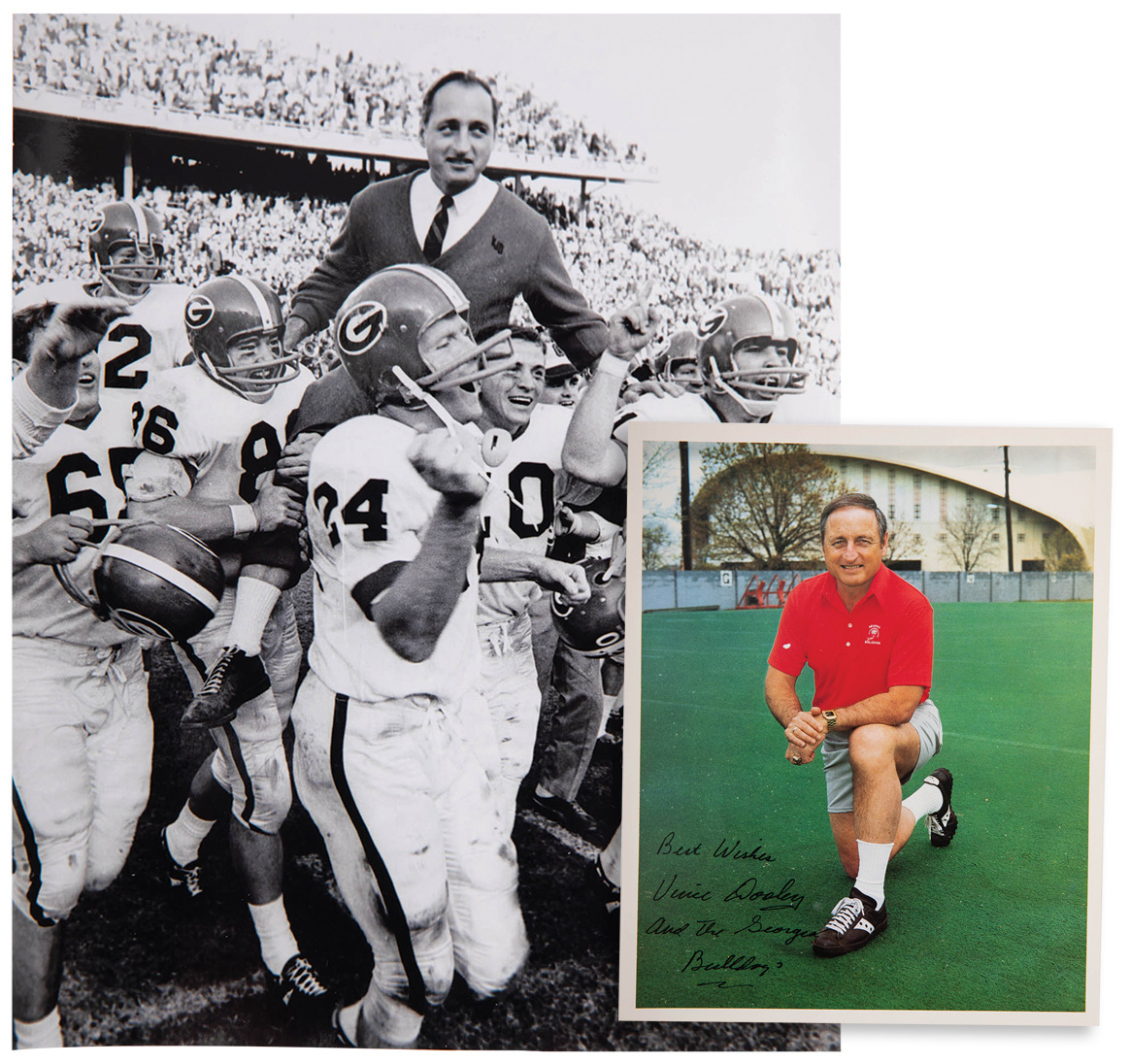
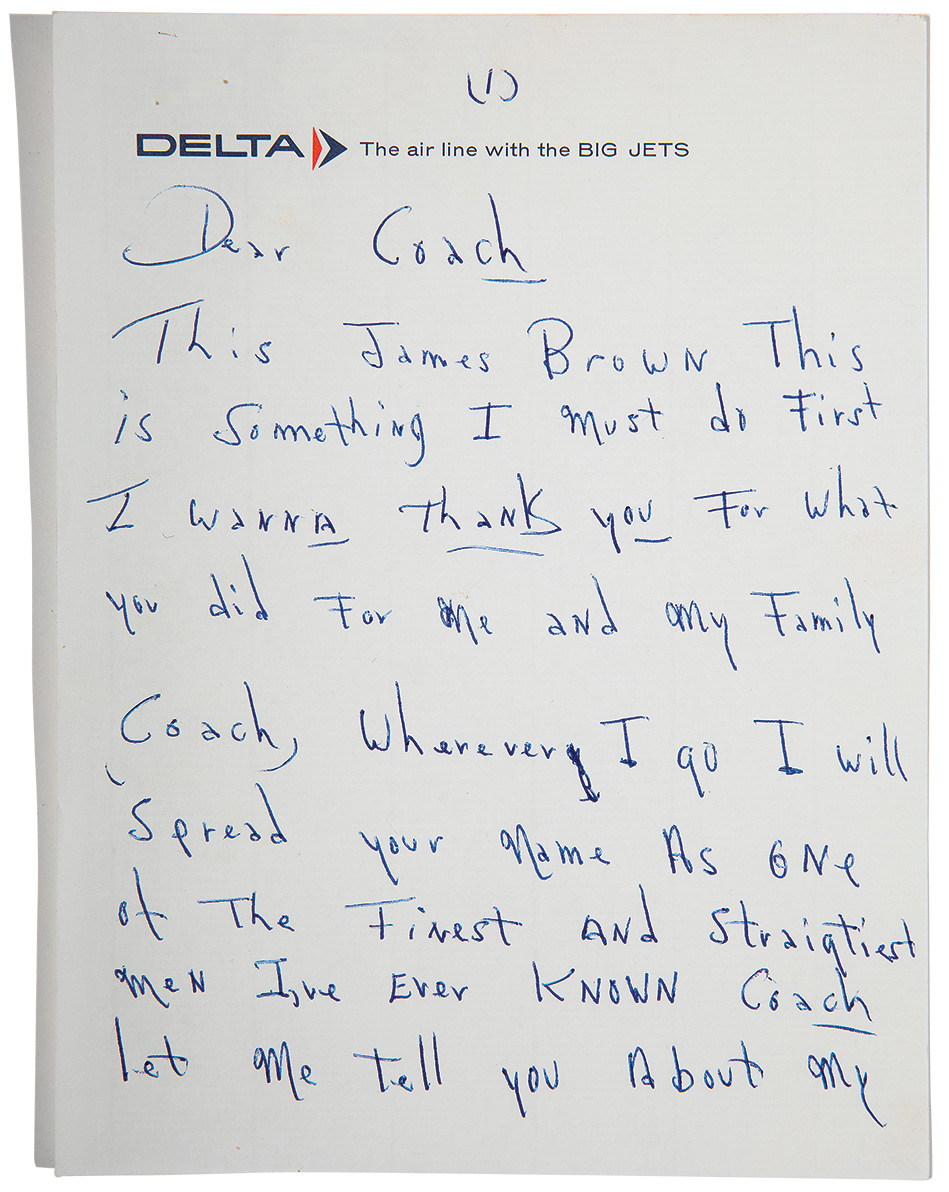
Few Georgians came from as diverse backgrounds as Vince Dooley and James Brown, but they became friends and Georgia legends. Dooley was born in Mobile, Alabama, in 1932 and in a long and storied career became the living embodiment of Georgia's flagship university. He became the University of Georgia's head football coach in 1963, at age 32, and led the Bulldogs to 201 victories over a 25-year career, including six SEC championships, 20 bowl games, and the 1980 national championship. James Brown was born into severe poverty in South Carolina in 1933 and grew up in segregated Augusta, where he developed an interest in music and sang in local talent shows. He rose to become one of the most influential musicians of the last half of the twentieth century, a tireless showman known as the "Godfather of Soul" who inspired an entire generation of younger musicians. Despite their different backgrounds and occupations, their paths often crossed, most famously when Brown recorded the song "Dooley's Junkyard Dawgs" about Dooley's 1975 Georgia team. The less famous part of their relationship is reflected in this heartfelt letter that Brown wrote to Dooley ca. 1976 about racism in America-on Delta Airlines stationery. Brown lamented his lack of a "decent education," the hardships faced by Black musicians, and pleaded that "being black is hell but I love America." Dooley was inducted into both the College Football Hall of Fame and the Georgia Sports Hall of Fame, while Brown was inducted into the Rock and Roll Hall of Fame and the Georgia Music Hall of Fame.

A photograph of University of Georgia football coach Vince Dooley posing in the UGA football stadium and a photograph of Coach Dooley being carried on the shoulders of UGA football players.
A handwritten letter on Delta Air Lines stationery from singer James Brown to Coach Vince Dooley. From the collection of the Georgia Historical Society.

Vince Dooley Photographs, Vince Dooley Papers, James Brown to Vince Dooley, c. 1976-1977, GHS 2363.

Georgians on the National Stage

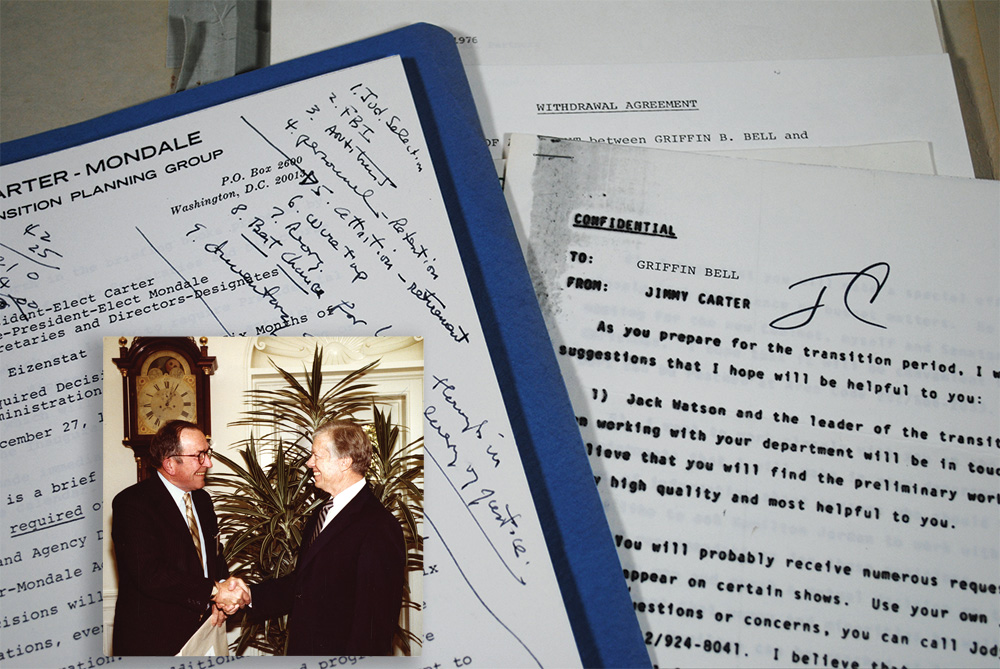
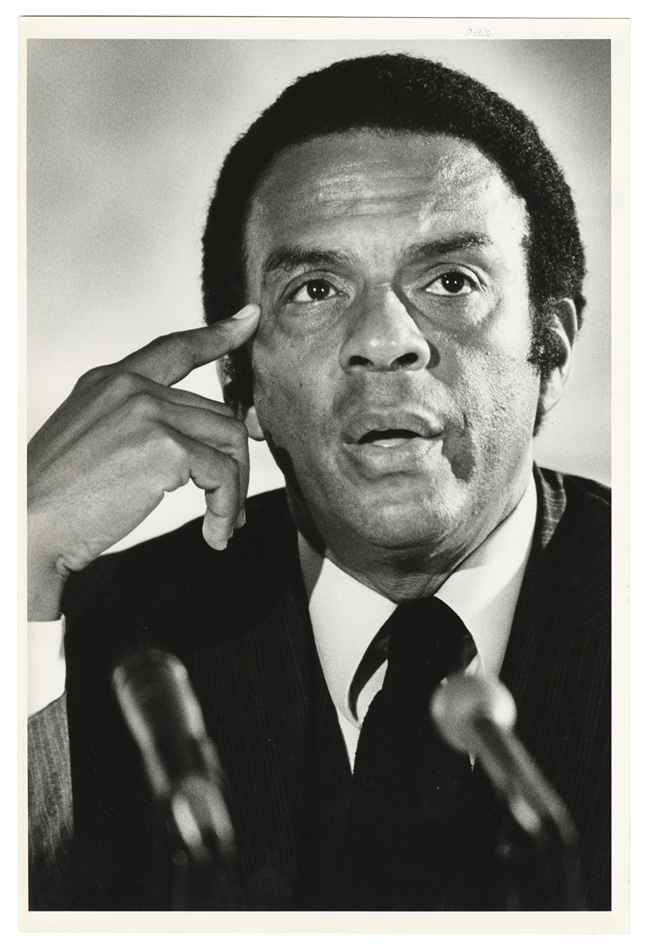
There have been three United States attorneys general from the state of Georgia and GHS holds the papers of two of them. Born in Sumter County in 1918, Griffin Bell went to law school at Mercer University. Bell moderated Georgia's response to the civil rights movement and facilitated desegregation. President Kennedy appointed Bell to the 5th Circuit Court of Appeals, where he acted as a voice of moderation while implementing desegregation across the South. Bell was already a legal legend when he agreed to serve as President Jimmy Carter's attorney general in 1977 (a sampling of transition team papers is shown here). As Attorney General, Bell restored public confidence in the Department of Justice after Watergate. He died as the dean of Georgia lawyers and one of the most respected legal minds in the country. Andrew Young served as MLK's trusted lieutenant during the Civil Rights Movement and in 1972 became the first African American since Reconstruction to be elected to Congress from Georgia. President Carter appointed Young as ambassador to the United Nations in 1977. He returned to Georgia and was instrumental in the development of Atlanta's reputation as an international city. He served as the city's mayor from 1981 to 1989 and played a key role in helping Atlanta secure the 1996 Olympic Games. Young was appointed as a Georgia Trustee in 2012.

A collage featuring a photograph of President Jimmy Carter shaking hands with Attorney General Griffin Bell, and typed presidential transition documents with margin notes from Griffin Bell. From the collection of the Georgia Historical Society.
Photograph of Andrew Young in front of microphones.

United States Attorney General Transition Files, Photograph of Griffin B. Bell with Jimmy Carter, Oval Office, undated, Griffin B. Bell Papers, GHS 2305. Atlanta Mayor Andrew Young, GHS 1361-PH-44-04-03.

Georgia's Iconic Companies

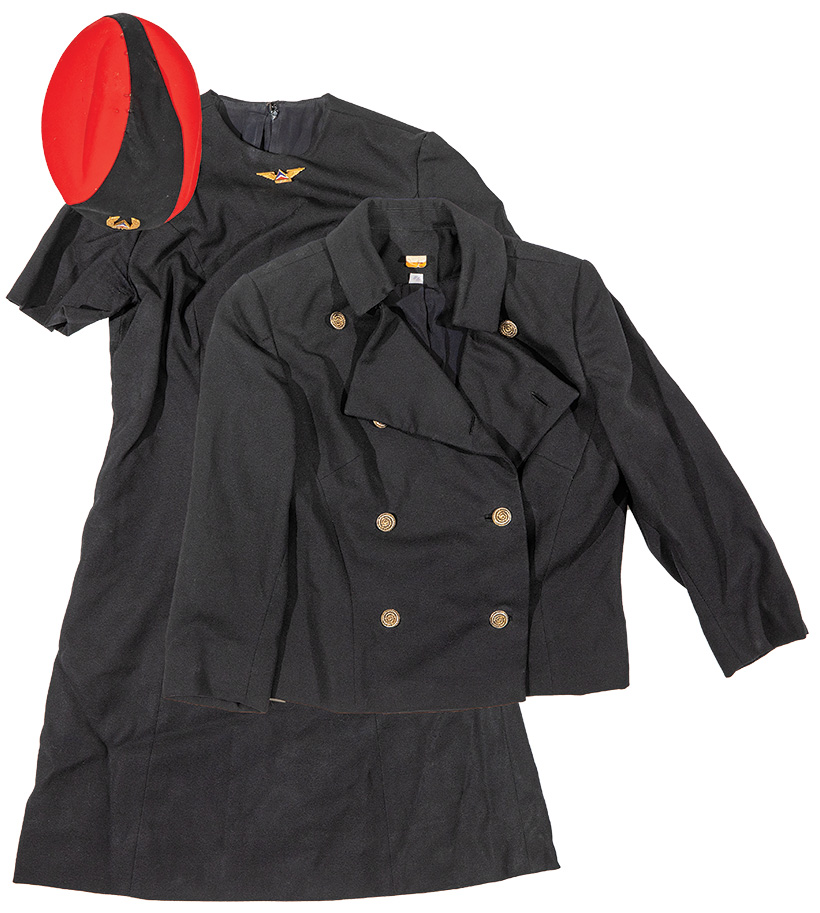
Coca Cola, Delta, and Home Depot are three of the most important global economic engines that powered Atlanta's rise in the late twentieth century. Coca-Cola traces its origins to Jacobs' Pharmacy in Atlanta in 1886, and the company grew under the ownership first of Asa Candler and then the Woodruff family to become one of the most recognizable global brands in the twentieth century. Delta Airlines was born in 1928 when C.E. Woolman led a group of investors in Louisiana to buy a crop-dusting company. Delta-named after the Mississippi Delta region where the company was then based-began offering passenger service in 1929 and moved its headquarters to Atlanta in 1941. Delta has grown to become the largest passenger carrier in the world, with global operations-symbolized here by a complete Delta Air Lines stewardess uniform "fashioned for Delta by Gilbert of Lady Simpson," ca. 1968. Home Depot's iconic orange apron became a symbol of the home improvement store and the two men who made it happen-Arthur Blank and Bernie Marcus, whose personal Home Depot apron is pictured here. The first two Home Depots opened in Atlanta in 1979. Those original stores have grown to more than 2,200. These three iconic companies helped transform Atlanta and Georgia into an economic powerhouse with influence far beyond the state.

A Coca-Cola advertisement showing an illustration of a police officer drinking a bottle of Coca-Cola. From the collection of the Georgia Historical Society.
A Delta Air Lines stewardess uniform, including black dress, black jacket, and red hat.
An orange emplyee apron from The Home Depot, that says "Hi, I'm Bernie." From the collection of the Georgia Historical Society.

"Drink Coca-Cola," GHS 2018-PH-01-14-01; Delta Air Lines Stewardess Uniform, 1968-1970, GHS 2703; Home Depot Apron, undated, Bernard Marcus Papers, GHS 2456.

The Turn of the 21st Century, and Beyond

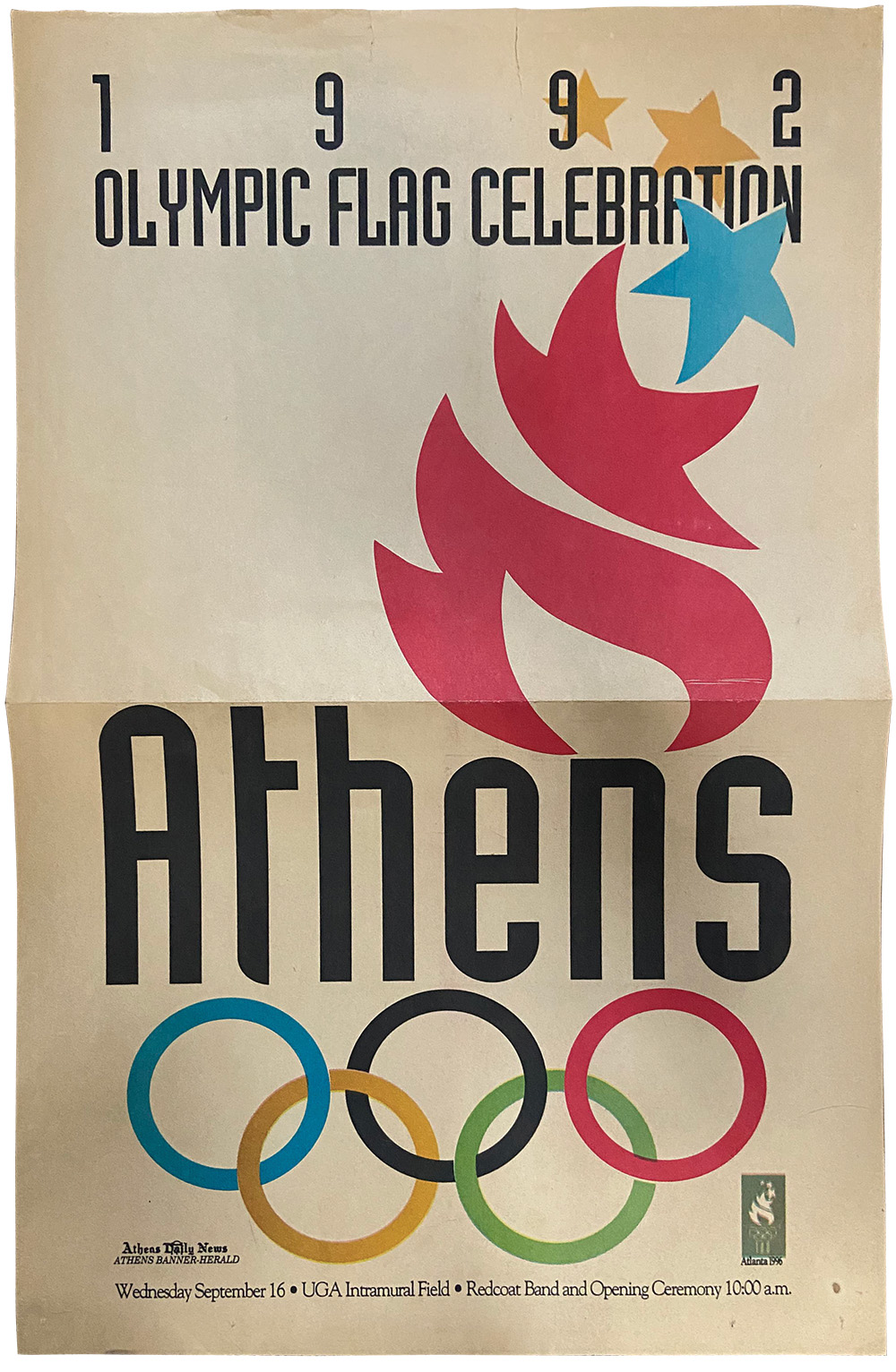
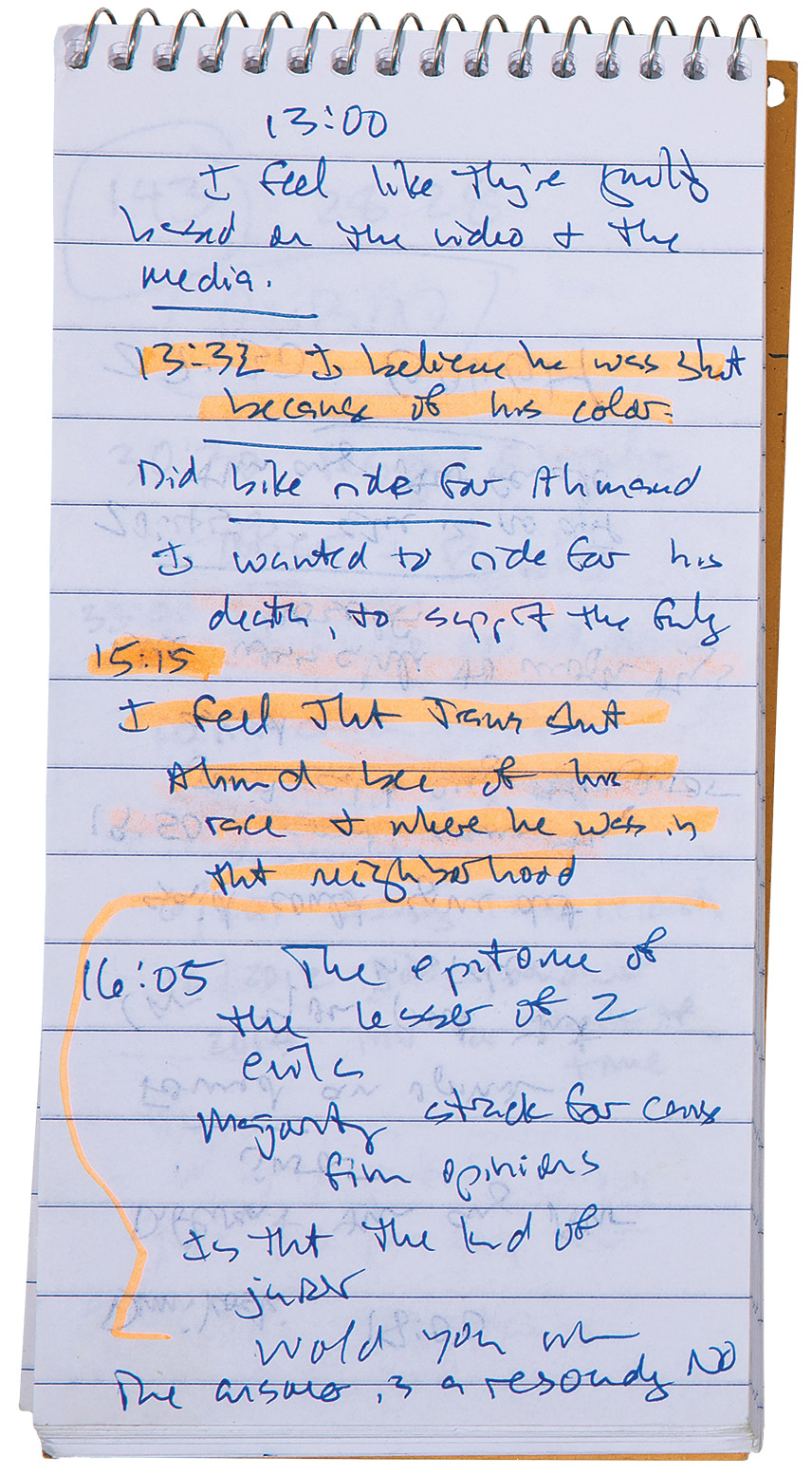
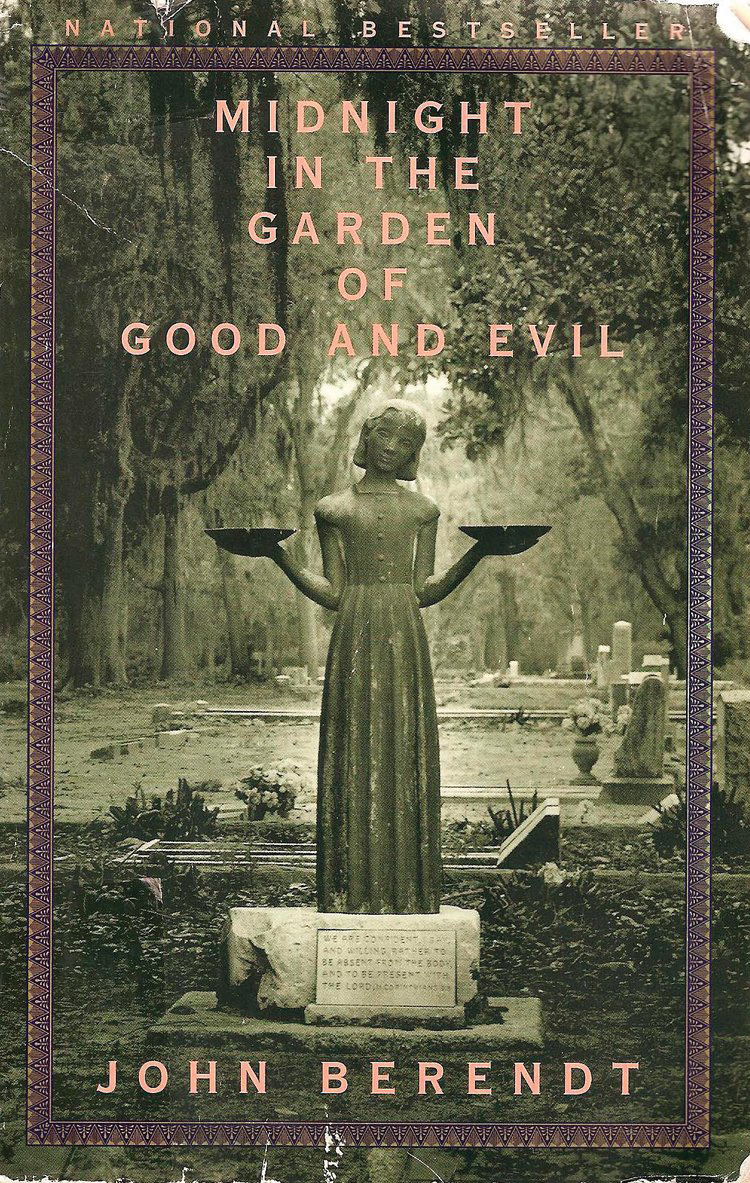
As the 21st century dawned Atlanta hosted the 1996 Centennial Olympic Summer Games, further raising the state's profile. More than 2 million people visited Atlanta for the games, and an estimated 3.5 billion watched worldwide. Another cultural phenomenon, author John Berendt's 1994 book about a Savannah murder, Midnight in the Garden of Good and Evil, boosted Savannah's tourism industry at the turn of the century into a $1 billion annual business that transformed the city. The book spent a record 216 weeks on the New York Times bestseller list and spawned a 1997 movie. Other cultural and social movements re-shaped the state in profoundly different ways. Though Atlanta avoided the ugly confrontations that shook other cities during the Civil Rights Movement, in 2020 the racially-motivated murder of Brunswick native Ahmaud Arbery placed the town at the center of a global protest movement. Arbery, a 25-year-old Black man, was killed as he jogged through a suburban neighborhood on February 23, 2020. Suspecting Arbery of burglary, three White men pursued Arbery in pickup trucks and shot him after a brief struggle. Video of Arbery's murder spread on social media. His name soon became linked to other victims of racial violence through the Black Lives Matter protests in the United States and around the world, and his trial in Brunswick was followed closely by global media. Pictured here are Atlanta Journal-Constitution reporter Bill Rankin's notebooks that he kept while covering the trial. Simultaneously with Arbery's murder and protests, the COVID-19 pandemic struck, transforming the way that Georgians and all Americans went about their lives. Georgia children submitted artwork to the Atlanta Journal-Constitution for the Art from the Heart Campaign, which called for children's artwork that showed appreciation to COVID-19 front line workers during the pandemic.
A poster from the 1992 Olympics that features the Olympic rings, a torch symbol, and says, "1992 Olympic Flag Celebration - Athens." From the collection of the Georgia Historical Society.
Two pieces of artwork by students, thanking medical and transportation workers for their service during the COVID-19 pandemic.
A small spiral notebook with notes and highlighting, used by a reporter during the Ahmaud Arbery Trial. From the collection of the Georgia Historical Society.
Cover of the book "Midnight in the Garden of Good and Evil." From the collection of the Georgia Historical Society.

1992 Athens Poster for Olympic Flag Celebration, Edwin L. Jackson Collection, GHS 2746; Atlanta Journal-Constitution Art From the Heart Collection, GHS 2824; Ahmaud Arbery Trial Notes, GHS 2828; Dr. John Duncan Collection of Midnight in the Garden of Good and Evil Books and Materials, GHS 2843.

Commemorating America at 250

In commemoration of the 250th anniversary of the founding of the United States, the Georgia Historical Society is pleased to share a new publication, a history of Georgia using more than 50 objects and documents from its collection as a window into our shared past.

Use the following links to view the publication and to learn more about the work of GHS and other statewide partners to recognize the semiquincentennial of the United States.

Georgia at the
US250 Publication
GHS Commemorates
America at 250

Explore the GHS Collection

More than 5 million items document over 300 years of Georgia and American history, from the colonial period through the 21st century, plus 100,000 photographs, 30,000 architectural drawings, 20,000 rare and non-rare books, and thousands of maps, portraits, and artifacts.

Search

Georgia Uncovered: Investigating Our State’s Legends – De Soto

September 10, 2025 by

Georgia Uncovered:

Investigating Our State’s Legends

Hernando De Soto

A presentation of

Teaching Challenging Histories logo
journal

Detective's Journal

Are you ready to uncover the secrets of Georgia’s past? Legends, like those surrounding conquistador Hernando de Soto’s expedition in southeastern North America, have been passed down for generations. But are these stories fact, fiction, or a little bit of both? It’s time to investigate the subject and explore our past like historians. With primary sources, videos, and activities, you’ll research the history behind these legends.

To guide you through this journey, you will download a Detective’s Journal. This tool will assist you in reflecting on your journey through the mysteries of Georgia’s past. This interactive PDF is designed to help you think critically, ask questions, and document your findings. Each section of the exhibit corresponds to a part of the journal, with prompts to reflect on what you’ve learned, analyze primary sources, and connect the legends to Georgia’s statewide impact.

Download your journal, and let’s get started!

Row wavy Shape Decorative svg added to top

Objectives

By the end of Georgia Uncovered: Investigating Our State’s Legends, you will learn:

  1. Legends are interesting but need to be investigated.
  2. Primary sources help us separate fact from fiction.
  3. The role of exploration in shaping Albany’s past.

Detective's Journal

  • Why is it important to know the facts?
  • What might happen if people believe in a legend without checking the facts?

What Are Legends?

Legends are a mix of history and imagination. They are stories based on a real person or event from the past that have been passed down for generations. Legends usually have cultural significance with exaggerated elements. They are fun to tell, but the truth can get lost along the way. Your job as a historian is to figure out what is real and what is made up. As you investigate the legends of Georgia, it is imperative that you understand the importance of utilizing tools to help you along your journey.
Detective's Journal

  • Why do you think people exaggerate stories?
  • How might learning the real facts about a legend change the way people see Georgia’s history?
master-pnp-cph-3c00000-3c04000-3c04300-3c04378u

Here are a few key terms to help as you investigate Georgia’s legends:

  • Albany: founded in 1836 and located in southwest Georgia, the city of Albany is the county seat of Dougherty County.
  • Historian: like a detective of the past, someone who researches in primary and secondary sources and constructs a narrative about things that happened long ago, such as wars, famous people, and how people lived.
  • History: The study of the past, which can change based on the available evidence such as primary sources and the archaeological record.
  • Legend: a story, often passed down through generations, that is believed to be based on real events or people, which may include fictional or exaggerated elements.
  • Fact: something that is true and can be proven.
  • Fiction: a made-up story, though sometimes based on real things.
  • Past: Events, places, or people that occurred or existed before today. The past does not change.
  • Primary Sources: original documents or accounts created at the time of the event or person being studied
  • Secondary Sources: stories or articles about those original accounts written by someone who was not there.
  • Tall Tale: a story, sometimes based in fact, with exaggerated, made-up elements that are often told for entertainment.
Row wavy Shape Decorative svg added to top
Row wavy Shape Decorative svg added to bottom

Legend has it that...

“Sarasota, Florida, was named for Sara de Soto, Hernado’s fictional daughter.”

“De Soto’s men secretly weighed and buried his body in the Mississippi River.”

“Albany, Georgia, was the site of de Soto’s 1540 encampment.”

Common Legends of De Soto

From beginning to end, Hernando de Soto’s expedition is shrouded in mystery as over half of his men died on their quest, including de Soto himself, leaving the events and the exact path of his expedition unknown.

Here are a few legends surrounding de Soto:

  1. Sarasota, Florida, was named for Sara de Soto, Hernado’s fictional daughter, whose tragic romance with a Seminole man is believed to protect the city from hurricanes.
  2. De Soto’s men secretly weighed and buried his body in the Mississippi River in 1542 to convince Native Americans he was a god.
  3. Members of the expedition spread the story that de Soto himself was a divine figure who could unleash his wrath on anyone who opposed them.
  4. Albany, Georgia, was the site of de Soto’s 1540 encampment, through historians continue to debate this claim.

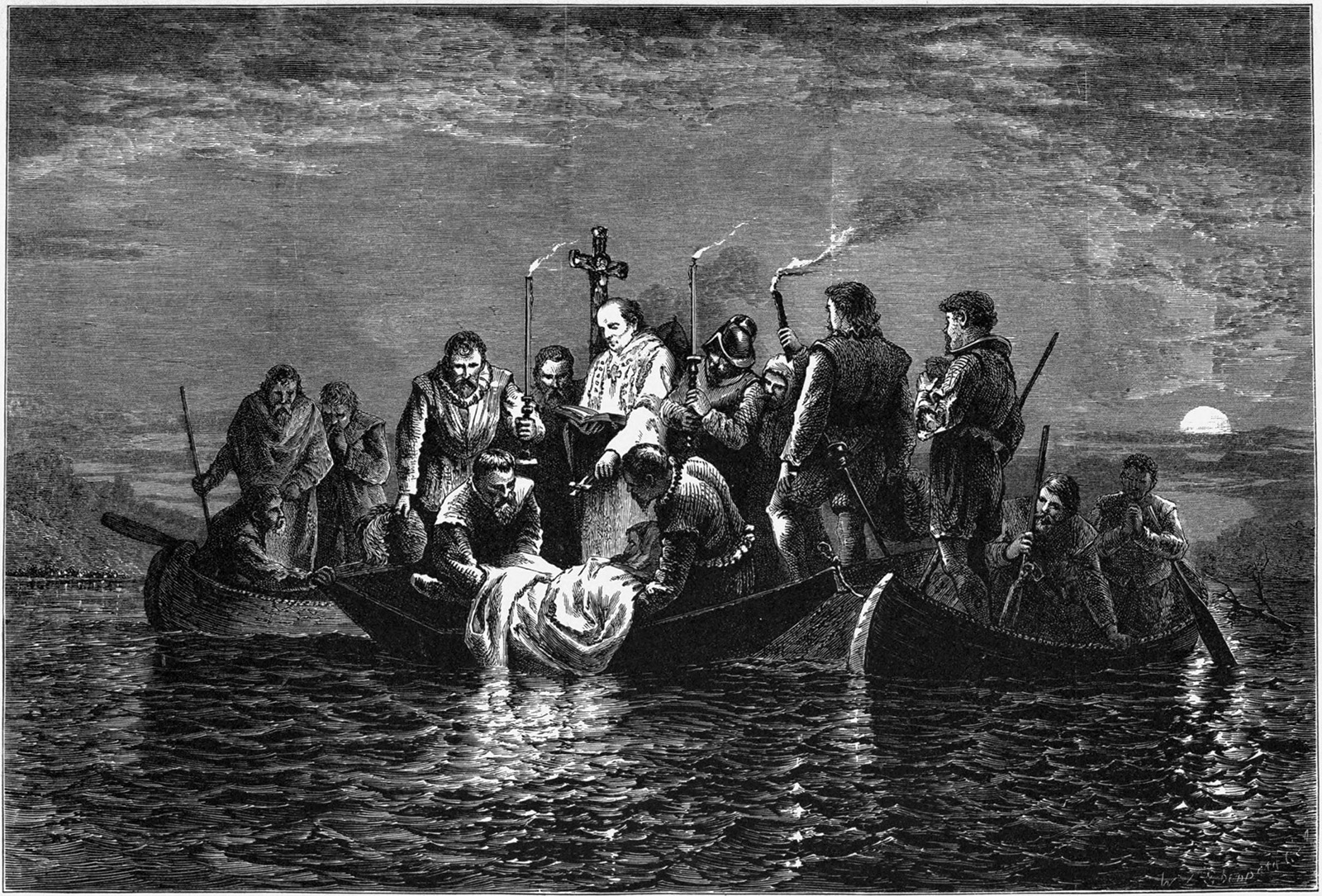
Depending on who you ask in Sarasota, Florida, some might say the city was named for the fictional Sara de Soto, the daughter of Hernando whose tragic love story with a Seminole man now protects the city from hurricanes. Legends or tall tales about de Soto began even before the end of his expedition. At de Soto’s death in 1542, it is believed that his men weighed his body and buried it in the Mississippi River to hide it from the Native Americans. By covering up his death, the expedition could continue their ruse that de Soto was a god, and they could threaten his wrath on those who stood in their way as they traveled toward Mexico.
What is known today about the events of their journey comes from journals kept by members of the expedition, historical records, and modern-day archaeological investigations. For decades, historians relied on the journals and historical records to make their arguments. However, unlike the past, history—the study of the past--changes as information is uncovered. Modern-day archeological discoveries have provided evidence left behind by people of the past, adding to the available sources and changing our present-day understanding of de Soto’s expedition.
Just like historians, we are going to examine legends surrounding de Soto using the correct tools and resources to make an informed decision. Understanding the past and connecting the past to its impact on the present will guide us through each section of the exhibit. Signs of a great historian include:

  • Using both primary and secondary sources to reconstruct the past.
  • Critically evaluating sources, identifying biases, and drawing logical conclusions based on evidence.

Detective's Journal

  • Do any of the stories here sound like tall tales?
  • What kinds of evidence would you look for to confirm or disprove the legends about de Soto?
Depiction of the burial of Hernando de Soto. By William A. Crafts (1876). Wikipedia.

The Life of de Soto

Hernando de Soto was a Spanish explorer and conquistador born around 1500. Raised in a society with a distinct class of warriors called conquistadors, de Soto was inspired by Christopher Columbus’s discoveries. During the 1500s, conquistadors were Spanish or Portuguese military leaders who explored, conquered, and colonized vast territories in the Americas and Asia. As a young man, de Soto participated in the conquests of Panama, Nicaragua, and Peru.

In 1537, King Charles V supported de Soto in his expedition of La Florida, part of which is now the state of Florida. His goal was to explore, settle, and govern the area. De Soto also hoped to find riches like those he had discovered in past conquests. De Soto and the Spanish believed that there was as much gold in southeastern North America as they had found in South America.

De Soto sailed for Cuba in April 1538 with 600 men, and in May 1539, he landed in present-day Tampa Bay. From there, he moved northward. His journeys took him through Tallahassee, in the territory of the chiefdom of Apalachee. By 1540, de Soto made it to the southern border of present-day Georgia and is believed to be the first European to explore the interior of the state. As de Soto and European men moved through Georgia, they brought disease, danger, and death for Native American tribes living in the area. His exploration is often cited as the beginning of the negative relationship between Native American tribes in the southeast and European settlers. After years of travel, de Soto died in 1542 from a fever.

Detective's Journal

  • How did de Soto’s upbringing and culture affect his expedition?
  • What clues from de Soto’s actions and decisions might help us separate historical facts from legends about his expedition?
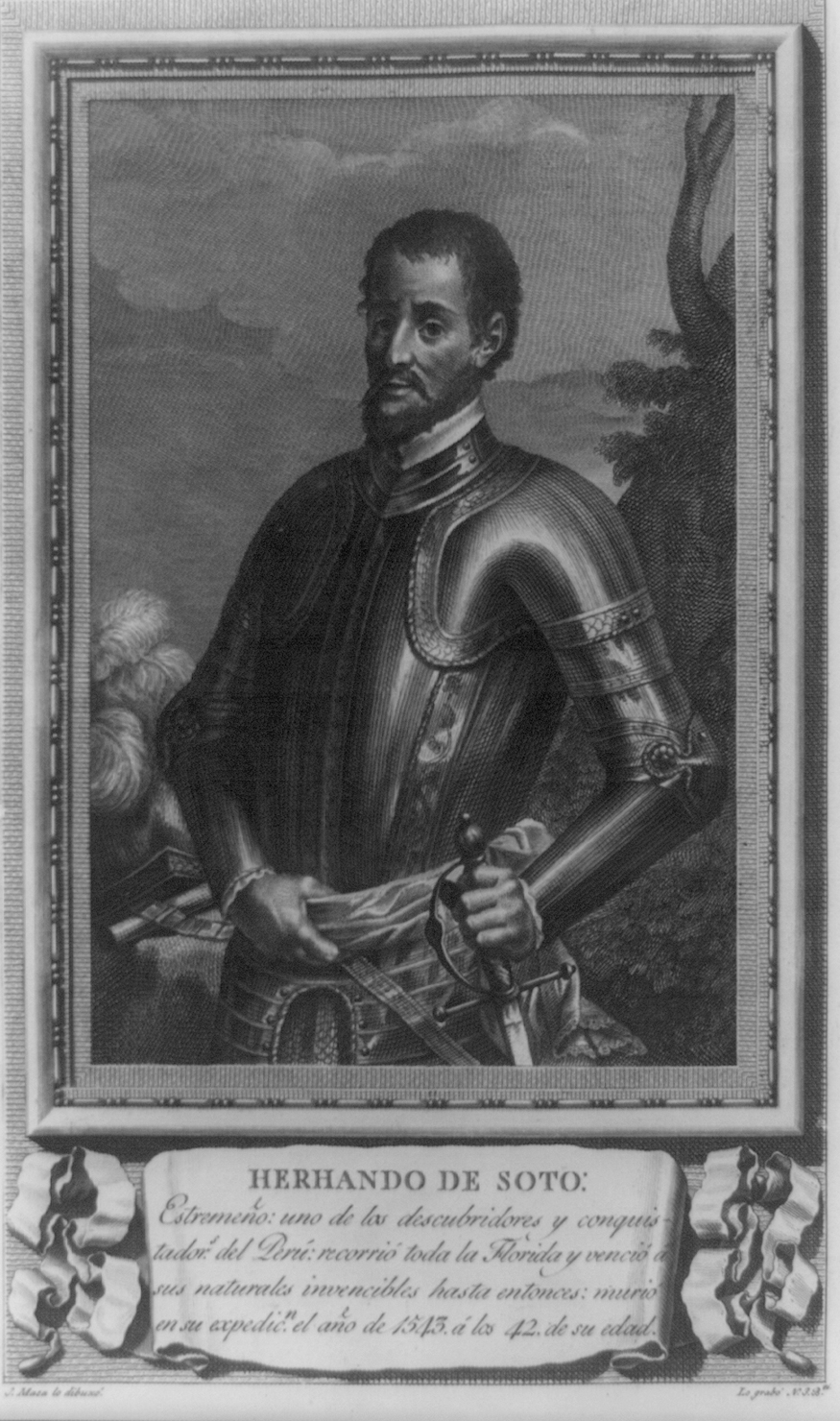
Hernando De Soto. Engraving by J. Maca. Library of Congress.

The Significance of Albany

Albany, the county seat of Dougherty County, is believed to be the site of de Soto’s encampment from March 5 until March 10, 1540. The founding of Albany, Georgia, is new compared to the events of de Soto’s expedition. The city was founded in 1836 by speculator and merchant Nelson Tift and named for Albany, New York. Nearly 300 years separate the two events.
The land where Albany now sits was historically inhabited by Muscogee Indians. Near the navigational head of the Flint River, the Muscogee lived along its banks. In March 1540, de Soto and his men encountered the Flint River. They built a boat to ferry across and continue their expedition.

After the state of Georgia acquired the land through Native American cessions, Albany became a market hub for cotton farmers who flooded southwest Georgia, as Nelson Tift intended.

Today, Albany is home to several significant cultural institutions, including the Albany Museum of Art, which houses one of the largest collections of African art in the southeastern U.S., Thronateska Heritage Center, and the Civil Rights Institute, which commemorates the efforts of those who fought for civil and human rights in the Albany Movement. The Georgia Historical Society has erected several markers that share more about the Civil Rights Movement in the area.

Detective's Journal

  • How does Albany’s story connect to De Soto’s expedition?
  • What evidence would you look for to determine if de Soto really camped in the area that is now Albany?
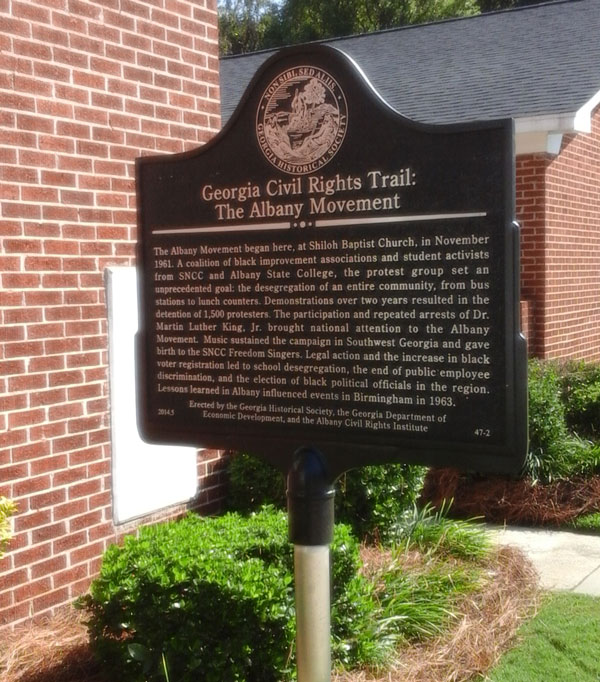
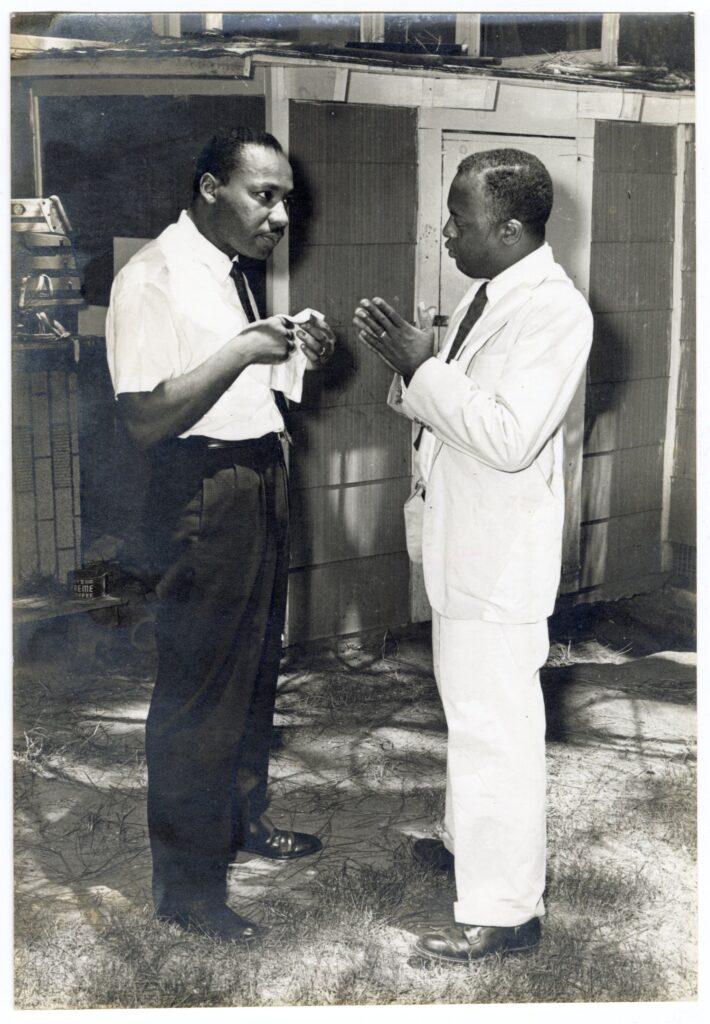
Georgia Civil Rights Trail: The Albany Movement historical marker
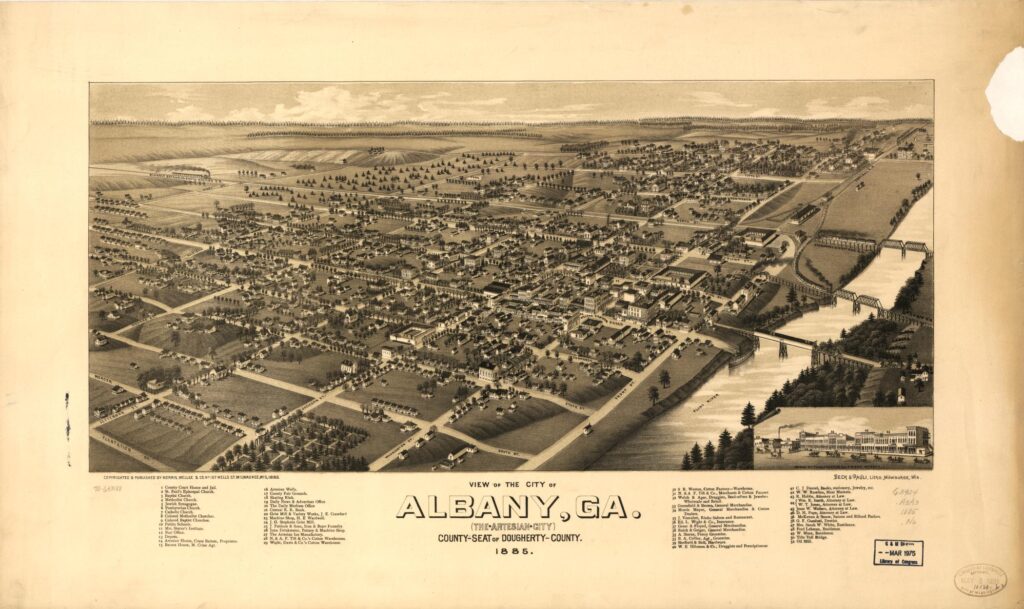
View of the city of Albany, Ga. (the Artesian City) county-seat of Dougherty-County. 1885. | Library of Congress.
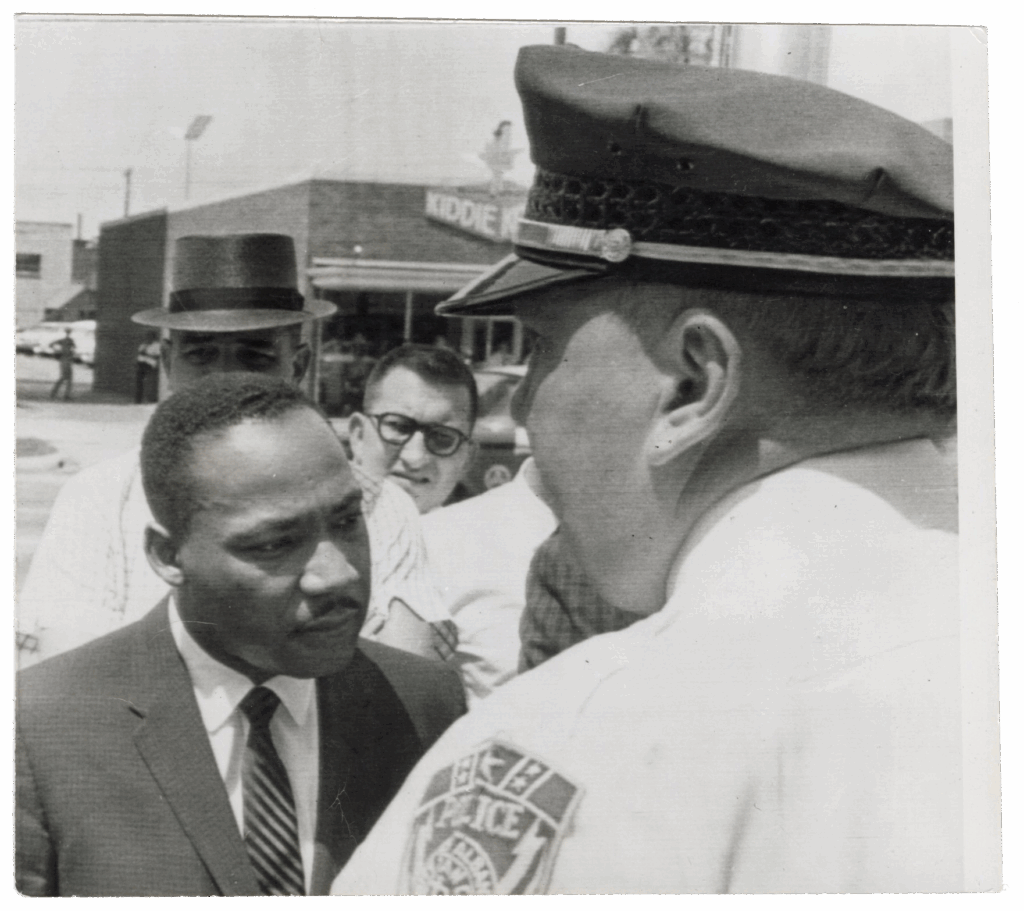
Photo: "July 1962 Albany Ga MLK Arrested."
"Real, unpublished photo of MLK at the Albany Movement."

The Facts of De Soto

Historians continue to debate the events of de Soto’s expedition and its exact route, and history continues to change as more information is uncovered. Archaeologists may continue to find evidence about de Soto’s expedition through Albany.

De Soto’s expedition permanently changed North America’s people and environment. De Soto and his men brought supplies with them that did not exist in North America before, including tools, weaponry, and non-native horses, dogs, and pigs. The explorers exposed Native Americans to diseases that proved fatal, including influenza and smallpox.

Having learned how to lead expeditions from other conquistadors, de Soto adopted their tendency toward violence. At times when he did not find the riches for which he was looking, he believed that the Native Americans were deceiving him. De Soto used many tactics, including trade, holding important tribal members hostage, attacking tribal communities, enslaving natives, and more. His expedition also raided Indian settlements, leaving them without necessary food and supplies.

As a result, Native-American cultures changed. Powerful chiefdoms began to collapse. Survivors joined or formed new societies such as the Cherokee and Muscogee in what is now Georgia. De Soto’s actions also contributed to creating lasting hostile relationships between Native American tribes and Europeans.

Later explorers saw firsthand the effects of de Soto’s expedition. Using the information gleaned from de Soto’s trip, the Spanish launched more expeditions to the southeast, eventually creating permanent colonies and missions, such as St. Augustine (founded 1565), Florida. In competition with Spain, France and Britain dispatched expeditions to North America. Later, the British created thirteen colonies along the Atlantic coast, the last being Georgia.

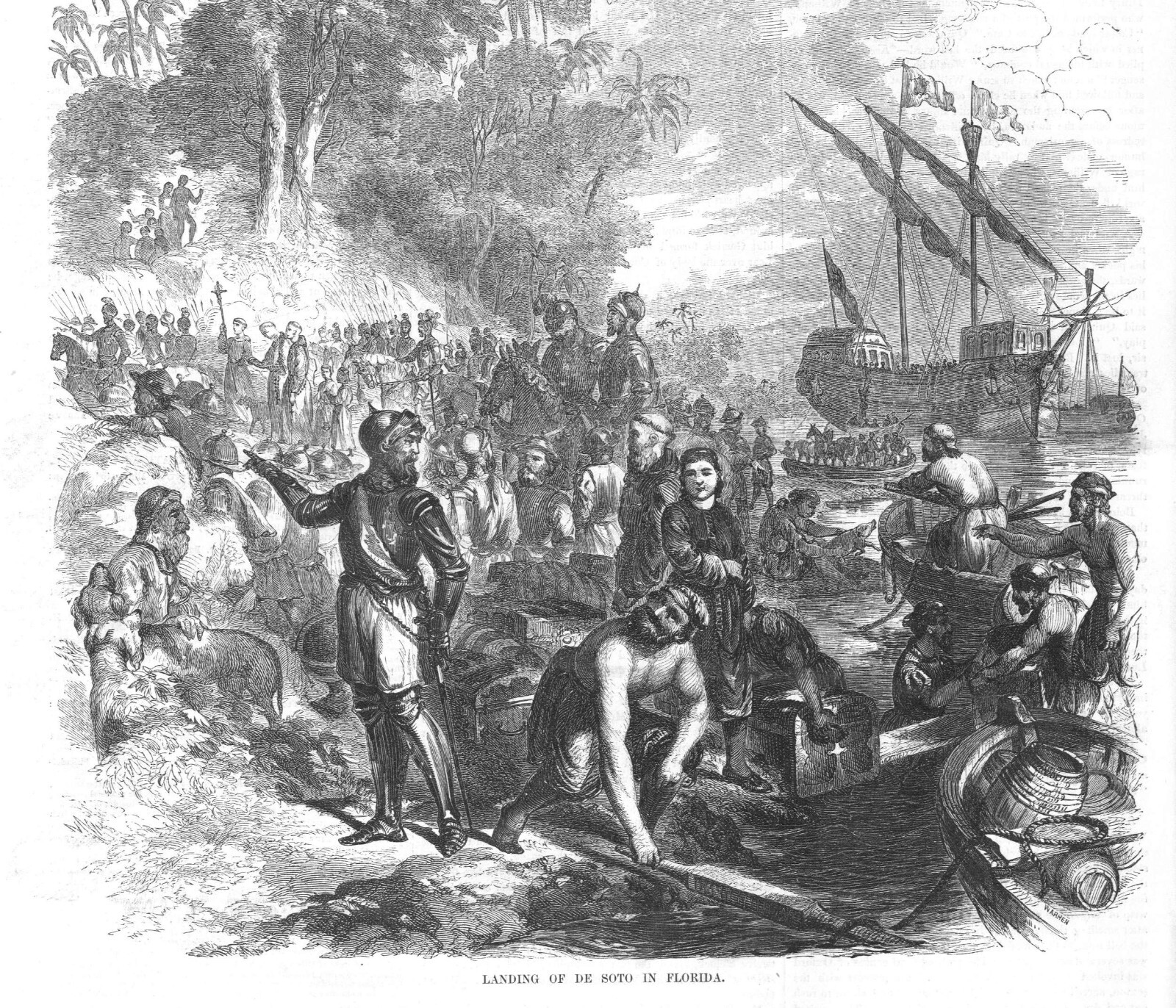
Landing of De Soto in Florida / Warren. Florida: 1855. From the Library of Congress Print and Photography Division.

Detective's Journal

  • How did de Soto’s expedition affect North America? Can we see those effects today?
  • What kind of evidence would help historians understand the true impact of de Soto’s expedition on Native American communities?

Tools for Exploration

Legend has it that Hernando de Soto’s life and expedition inspired many stories that blend fact and fiction. From the fictional tale of his daughter Sara in Sarasota, Florida, to the secret burial of his body in the Mississippi River, people have long imagined de Soto as a powerful, almost divine figure. The uncertainty of his expedition route has fueled speculation. These legends show how stories about de Soto have grown over time, mixing history with imagination. Let’s look a little deeper using tools that will aid in connecting the past to the present. Just like a historian, remember to:

  • Explore primary and secondary sources.
  • Challenge your own assumptions.
  • Use evidence to support your arguments.

Be sure to keep the Detective’s Journal near as you further analyze resources, reflect on what you’ve learned, and form your own conclusions. Good luck with your investigation!

Start with:

  • De Soto in Georgia Interactive Storymap

And keep scrolling for these resources:

  • Off the Deaton Path Video: Tracking Hernando De Soto Through Georgia
  • Elementary Activity Sheet (pdf)
  • Secondary Activity Sheet (pdf)
  • History Snapshot (pdf)

And then:

  • Test Your Knowledge! (Quiz)
DeSoto-Marker-High-res-David-Seibert

Dispatches from Off the Deaton Path

Elementary Activity: Hernando De Soto

Download Activity

Secondary Activity: Hernando De Soto

Download Activity

History Snapshot: Hernando De Soto

Download Activity

Test Your Knowledge

Dive into the quiz below and discover what you have learned about Native American and Georgia history. See how many you can get right and what you can learn more about!

Start the Quiz
True or False: Historians use only documents and first-hand accounts to study the past.
Select the option that incorrectly finishes the sentence: History is...
True or False: Historians know the exact route De Soto took in the 1500s when he explored what we know today as the southeastern United States.
Legends sometimes have fictional or exaggerated elements, but tall tales are always true stories with exaggerated, made-up elements. Select the option that has a tall tale.
Why are the written documents from De Soto’s journey important to the study of Native Americans?
How did you do? While we know that history is made up of stories of fact and/or legend, it can take some investigation to determine where our information comes from. As we learned by uncovering the histories behind De Soto, stories can become tall tales. And, unlike the past, history changes. Our best tools are often considering new evidence, reflecting on what we thought we knew with fresh eyes, asking good questions, and thinking critically.

24a_Colonist-Clearing-on-Hutchinson-Island

Mapping Activity

Tall tales are stories, sometimes based on truth, that have been embellished or exaggerated. Some famous tall tales include ones about Paul Bunyan and Johnny Appleseed. Can you think of any tall tales in your hometown? Add your story to the map and include a primary source of the person, place, or event from the GHS archive or another repository like the Library of Congress to support your tale! If you know the "truth" behind the tall tale, you can add that too.

Add Your Story

Bonus Resources

Picture Books Expand

Daly, Catherine. What Was the Age of Exploration? https://a.co/d/fOy2KhA

Books Expand

Smith, Marvin T. Coosa: The Rise and Fall of a Southeastern Mississippian Chiefdom (Gainesville: University Press of Florida, 2000).

Jones, Charles C, Georgia Historical Society, and John Boyd Thacher Collection. Hernando de Soto: the adventures encountered and the route pursued by the adelantado during his march through the territory embraced within the present geographical limits of the state of Georgia. [Savannah, Ga.: Printed for the author by J.H. Estill, 1880] Pdf. https://www.loc.gov/item/02022163/.


Articles Expand

Andrews, Daniel Marshall. De Soto's route from Cofitachequi, in Georgia, to Cosa, in Alabama. Lancaster, Pa., The New era printing company, 1917. Pdf. https://www.loc.gov/item/17021144/.

Burrison, John. "Storytelling Traditions." New Georgia Encyclopedia, last modified Apr 8, 2019. https://www.georgiaencyclopedia.org/articles/arts-culture/storytelling-traditions/

Harris, Joel Chandler. Stories of Georgia. [New York, Chicago etc. American book company, 1896] Pdf. https://www.loc.gov/item/01011989/.

“Hernando de Soto and the Impact of Spanish Exploration in Georgia.” Georgia Historical Society. https://www.georgiahistory.com/resource/hernando-de-soto-and-the-impact-of-spanish-exploration-in-georgia/.

“Hernando de Soto.” Ocmulgee Mounds: National Historical Park, last modified July 26, 2023. https://www.nps.gov/ocmu/learn/historyculture/hernando-de-soto.htm

“Marker Monday: Hernando de Soto in Georgia.” Georgia Historical Society. https://www.georgiahistory.com/marker-monday-hernando-de-soto-in-georgia/.

Sineath, Sophia. “Unexpected Discoveries: Hernando De Soto in Georgia.” Georgia History Today, Vol 8, No. 3 & 4. 2014. https://www.georgiahistory.com/wp-content/uploads/2015/01/ght-fall-winter-2014.pdf

http://www.georgiaencyclopedia.org/articles/history-archaeology/hernando-de-soto-georgia.html.

Worth, John. "Spanish Exploration." New Georgia Encyclopedia, last modified Sep 29, 2020. https://www.georgiaencyclopedia.org/articles/history-archaeology/spanish-exploration/.

De Soto National Memorial, National Parks Service, https://www.nps.gov/articles/desoto.htm.

“De Soto Expedition - 1539 - 1542 CE.” National Park Service. https://www.nps.gov/liri/learn/historyculture/de-soto-expedition-1539-1542.htm.

“1492: An Ongoing Voyage.” Library of Congress. https://www.loc.gov/exhibits/1492/eurocla.html.

Smith, Marvin. "Late Prehistoric/Early Historic Chiefdoms." New Georgia Encyclopedia, last modified Sep 9, 2019. https://www.georgiaencyclopedia.org/articles/history-archaeology/late-prehistoric-early-historic-chiefdoms-ca-a-d-1300-1850/.

King, Adam. "Mississippian Period." New Georgia Encyclopedia, last modified Jan 6, 2021. https://www.georgiaencyclopedia.org/articles/history-archaeology/mississippian-period-overview/.

“Southeast Native American Groups.” National Geographic. https://education.nationalgeographic.org/resource/southeast-native-american-groups/.

Nystrom, Elsa. "Hernando de Soto in Georgia." New Georgia Encyclopedia, last modified Jan 3, 2019. https://www.georgiaencyclopedia.org/articles/history-archaeology/hernando-de-soto-in-georgia/

Sepulvado, John. “The Conquistador Stopped at a Georgia Swamp.” Georgia Public Broadcasting, last modified July 16, 2020. https://www.gpb.org/news/2009/11/05/the-conquistador-stopped-at-georgia-swamp

Smith, Janet. “Redrawing Soto’s map?” James Madison University, last modified April 22, 2024. https://www.jmu.edu/news/2016/03/29-soto-redrawing-map.shtml

Videos Expand

Blanton, Dennis. “Tracking the Legacy of Hernando de Soto Through the Indigenous Southeast,” Blue Ridge Archaeology Guild. https://www.youtube.com/watch?v=3WHByFAh-mo.

First Encounter. https://www.chickasawfilms.com/Projects/Documentaries/First-Encounter.aspx.

Interactions Between AMERICAN INDIANS and EUROPEANS [APUSH Review Unit 2 Topic 5] 2.5. https://www.youtube.com/watch?v=Fd20x--zvvA.

Detective's Journal

  • How did the tools help you explore Georgia’s legends?
1361-PC-04-0259

Sponsored in part by

coca-cola-company-e1678388514671

Georgia Uncovered: Investigating Our State’s Legends – Tomochichi

May 6, 2025 by

Georgia Uncovered:

Investigating Our State’s Legends

Tomochichi

A presentation of

Teaching Challenging Histories logo
journal

Detective's Journal

Are you ready to uncover the secrets of Georgia’s past? Legends, like those surrounding Tomochichi’s grave, have been passed down for generations. But are these stories fact, fiction, or a little bit of both? It’s time to investigate the truth and explore our past like historians. With primary sources, videos, and activities, you’ll uncover the truth behind these legends.

To guide you through this journey, you will download a Detective’s Journal. This tool will assist you in reflecting on your journey through the mysteries of Georgia’s past. This interactive PDF is designed to help you think critically, ask questions, and document your findings. Each section of the exhibit corresponds to a part of the journal, with prompts to reflect on what you’ve learned, analyze primary sources, and connect the legends to Georgia’s statewide impact.

Download your journal, and let’s get started!

Row wavy Shape Decorative svg added to top

Objectives

By the end of Georgia Uncovered: Investigating Our State’s Legends, you will learn:

  1. Legends are interesting but need to be investigated.
  2. Primary sources help us separate fact from fiction.
  3. The role of Native American history in shaping Savannah’s past.

Detective's Journal

  • Why is it important to question if a legend is fact or fiction?
  • What do you hope to uncover about the role of primary sources in understanding history?

What Are Legends?

Legends are like a mix of history and imagination. They are stories based on a real person or event from the past that have been passed down for generations. Legends usually have cultural significance with exaggerated elements. They are fun to tell, but the truth can get lost along the way. Your job as a historian is to figure out what is real and what is made up. As you investigate the legends of Georgia, it is imperative that you understand the importance of utilizing tools to help you along your journey.

Detective's Journal

  • How might the truth behind a legend change over time?
  • Why do people sometimes believe legends instead of facts?
James Edward Oglethorpe meeting with the Creek Indians Re-scan, undated. From the Edwin L.Jackson collection. GHS 2746.

Here are a few key terms to help as you investigate Georgia’s legends:

  • Historian: like a detective of the past, someone who studies and tells stories about things that happened long ago, such as wars, famous people, and how people lived.
  • Legend: a story, often passed down through generations, that is believed to be based on real events or people, which may include fictional or exaggerated elements.
  • Fact: something that is true and can be proven.
  • Fiction: a made-up story, though sometimes based on real things.
  • Primary Sources: original, first-hand accounts of something.
  • Secondary Sources: stories or articles about those original accounts written by someone who was not there.
  • Savannah: the oldest city in the state of Georgia.
Primary Versus Secondary Sources Expand

Historians are truth seekers and use primary and secondary sources to guide them. Let’s review the differences.

Row wavy Shape Decorative svg added to top
Row wavy Shape Decorative svg added to bottom

Legend has it that...

“The spirits of the Yamacraw guard Wright Square, protecting Tomochichi’s memory after his grave was disturbed.”

“Sacred Yamacraw treasures were buried with Tomochichi and hidden beneath Wright Square.”

“Tomochichi’s grave was originally marked with a pyramid of stones placed by both settlers and Yamacraw people, out of honor and respect.”

“Tomochichi’s remains were secretly moved to another location to preserve his legacy, leaving his final resting place unknown.”

“Tomochichi’s grave was deliberately forgotten about over to time to erase Native American history.”

Common Legends of Tomochichi

Our investigation starts with a prominent figure in Georgia history, Tomochichi. Crucial to the founding of Savannah and the Georgia colony, Tomochichi’s past is riddled with legends that have been passed on for generations, particularly dealing with his burial. Here are a few legends surrounding Tomochichi:

Legend has it that…

  1. “The spirits of the Yamacraw guard Wright Square, protecting Tomochichi’s memory after his grave was disturbed.”
  2. “Sacred Yamacraw treasures were buried with Tomochichi and hidden beneath Wright Square.”
  3. “Tomochichi’s grave was originally marked with a pyramid of stones placed by both settlers and Yamacraw people, out of honor and respect.”
  4. “Tomochichi’s remains were secretly moved to another location to preserve his legacy, leaving his final resting place unknown.”
  5. “Tomochichi’s grave was deliberately forgotten about over to time to erase Native American history.”

Just like historians, we are going to examine legends surrounding Tomochichi using the correct tools and resources to make an informed decision. Understanding the past and connecting the past to its impact on the present will guide us through each section of the exhibit. Signs of a great historian include:

  • Using both primary and secondary sources to reconstruct the past.
  • Critically evaluating sources, identifying biases, and drawing logical conclusions based on evidence.

Detective's Journal

  • What surprised you the most about the different legends of Tomochichi?
  • What could these legends teach us about the people who created them?
Detail from Tomochichi and Toonahowi, undated. From the Cordray-Foltz Photography Studio Photographs, GHS 1360-PH-25-16-13.
Monument DAR

Tomochichi, Leader of the Yamacraw Indians

The Yamacraw were a Native American tribe within the Creek Confederacy. Their homeland was in the coastal regions of present-day Georgia, particularly around the Savannah River. The Yamacraw, like other Creek tribes, spoke Muskogean, and were deeply connected to the land and waterways that sustained them. During the seventeenth and eighteenth centuries, the Yamacraw, along with other Native tribes, faced increasing pressure from European settlers, traders, and explorers. As European expanded in the Southeast, Native Americans had to navigate shifting alliances, trade opportunities, and territorial conflicts. During this time, Tomochichi became the leader of the Yamacraw. His diplomatic skills and leadership were instrumental in maintaining a relationship with the European settlers while also navigating tension with other tribes.

Additional information about Tomochichi can be found here:

  • Biography
  • Timeline
  • Travels to Great Britain

Detective's Journal

  • Based on Tomochichi’s story, what qualities of leadership do you think are important?
  • How does the primary source contribute to our understanding of history?
Tomochichi and Toonahowi, undated. From the Cordray-Foltz Photography Studio Photographs, GHS 1360-PH-25-16-13.

The Significance of Savannah

Savannah is Georgia’s oldest city, full of mystery and history. Our journey begins with a partnership between Tomochichi, the leader of the Yamacraw tribe, and James Oglethorpe, the leader of English settlers. This unique relationship was built on the choice to foster peaceful settlements for both parties as they strived to understand each other. Mary Musgrove, a local trader of Creek and English descent, spoke both Muskogean and English, and served as Oglethorpe’s main interpreter. Musgrove was a key player in helping Tomochichi and Oglethorpe develop their relationship. The Yamacraw tribe settled near the banks of Savannah River under Tomochichi’s guidance to be closer to their ancestors.  Tomochichi offered the English settlers land to establish a trading post. James Oglethorpe had a vision similar to Tomochichi’s. Oglethorpe strived to create a new way of life for the people, leaving home and traveling with a group of new colonists to the new world. Before settling in Savannah, Oglethorpe had to establish being a military leader while building connections to gain support for his new colony. To make the city easier to defend against attack, he laid out the city around a series of squares and laid out the streets in a grid pattern. Oglethorpe wanted to prevent issues between the English and Indians that had taken place in other colonies, and Oglethorpe and Tomochichi managed to build a diplomatic relationship and maintain peace.

Detective's Journal

  • Why do you think Savannah’s location is significant to Georgia’s history?
  • How does Savannah’s history connect to the larger story of Georgia?
1361MP-215-detail

The Facts of Tomochichi’s Grave

Tomochichi was a leader who helped the English settlers develop Savannah. His grave in Wright Square has been moved and changed over time. What’s the real story?

In recognition of Tomochichi’s role in the founding of the colony of Georgia, he was given a British military funeral following his death in 1739. The grave’s location in Savannah’s Wright Square was marked with a large pyramid of stacked stones, serving as a monument to the Yamacraw Chief. The pyramid stood for only a few decades before disappearing. Its last mention in public record occurred in 1759, and the exact location of the grave was soon lost.

A garden mound, raised in the square in 1871, stood near the site until its removal in 1882 to make room for the William Gordon monument. This mound has been confused with the older monument, leading to the idea that the grave was destroyed to build the Gordon monument. In reality, the mound was one of several garden mounds placed around Savannah and was not meant as a monument to Tomochichi while it stood.

In 1899, a large granite boulder from Stone Mountain in DeKalb County marked with a bronze plate was placed in the square as a monument to Tomochichi and remains there today. The historical marker placed in Wright square in 1952 tells visitors about Tomochichi’s role in the history of Georgia and marks the site believed to be the location of the original grave.

35-VM02-14-30

Detective's Journal

  • What are some of the reasons why people might have created stories about Tomochichi’s grave?
  • How does the truth about Tomochichi’s grave shape our understanding of his legacy?

Tools for Exploration

Great work investigating the life and legends of Tomochichi! Let’s look a little deeper using tools that will aid in connecting the past to the present. Just like a historian, remember to:

  • Explore primary and secondary sources.
  • Challenge your own assumptions.
  • Use evidence to support your arguments.

Be sure to keep the Detective’s Journal near as you further analyze resources, reflect on what you’ve learned, and form your own conclusions. Good luck with your investigation!

Start with:

  • Tomochichi’s Grave Interactive Storymap

And keep scrolling for these resources:

  • Dispatches from Off the Deaton Path Video: Tomochichi’s Grave
  • Elementary Activity Sheet (pdf): Tomochichi’s Grave
  • Secondary Activity Sheet (pdf): Tomochichi & Trahlyta: Fact vs. Legend

And then:

  • Test Your Knowledge! (Quiz)

Detective's Journal

  • How did the tools help you explore Georgia’s legends?
  • How has your understanding of Tomochichi and Georgia’s history changed after this exhibit?
Tomo-Chi-Chis-Grave

Dispatches from Off the Deaton Path

Elementary Activity: Tomochichi’s Grave

Download Activity

Secondary Activity: Tomochichi & Trahlyta: Fact vs. Legend

Download Activity

Test Your Knowledge

Dive into the quiz below and discover what you have learned about Native American and Georgia history. See how many you can get right and what you can learn more about!

Start the Quiz
True or False: History is made up of stories, some based in fact, some come from legend, and others are combination of the two.
Tomochichi played a pivotal role in the founding of Savannah. Select the example of how he helped found Savannah.
When did the memorial pyramid of stones and memory of Tomochichi’s gravesite disappear?
We know exactly where in Savannah Tomochichi is buried.
From the options below, select the option that is not a sign of a great historian:
How did you do? While we know that history is made up of stories of fact and/or legend, it can take some investigating to determine where our information comes from. As we learned by uncovering the histories behind Tomochichi and Trahlyta, our best tools are often asking good questions, looking at the evidence we have, and thinking critically.

24a_Colonist-Clearing-on-Hutchinson-Island

Share A Legend

Upload Your Own Legend: Know a Georgia legend you’d like to investigate next? Share it with us, and we might feature it in a future exhibit.

Share your Idea

Bonus Resources

Picture Books Expand

Schwartz, Heather E. Tomochichi: Chief and Friend. Huntington Beach, CA: Teacher Created Materials, 2016. https://www.amazon.com/Tomochichi-Friend-Social-Studies-Readers/dp/1493825569

Books Expand

Sweet, Julie Anne. Negotiating for Georgia: British-Creek Relations in the Trustee Era, 1733-1752 Athens: University of Georgia Press, 2005.

Articles Expand

Sweet, Julie. "Tomochichi." New Georgia Encyclopedia, last modified Mar 15, 2022. https://www.georgiaencyclopedia.org/articles/history-archaeology/tomochichi-ca-1644-1739/.

“Oglethorpe and Tomochichi.” Georgia Historical Society. https://www.georgiahistory.com/resource/james-edward-oglethorpe/oglethorpe-and-tomochichi/.

“Biographical Resource: Tomochichi.” Georgia Historical Society. https://www.georgiahistory.com/resource/tomochichi/.

“Oglethorpe’s Treaty with the Lower Creek Indians.” Georgia Historical Quarterly 4, no. 1 (1920): 3–16. http://www.jstor.org/stable/40575623.

  • The Joseph Vallence Bevan Papers, MS 0071, located at the Georgia Historical Society, include copies of several important documents related to Oglethorpe’s relationship with Tomochichi and the Lower Creek Indians. The proceedings from Oglethorpe’s meeting with the Lower Creek Indians was published in the Georgia Historical Quarterly.

Sweet, Julie Anne. “Bearing Feathers of the Eagle: Tomochichi’s Trip to England.” Georgia Historical Quarterly Vol. 86, No. 3 (Fall 2002), pp. 339-371.  Georgia Historical Society. http://www.jstor.org/stable/40584568.

Ray, Dani. “The Legacy of Tomochichi: Chief, Friend, and Ally.” Savannah.com. https://www.savannah.com/the-legacy-of-tomochichi-chief-friend-and-ally/

Great American Treasures. “Tomochichi Monument.” https://www.greatamericantreasures.org/destinations/tomochichi-monument/

Videos Expand

“Tomochichi.” Today in Georgia History. https://www.todayingeorgiahistory.org/tih-georgia-day/tomochichi/.

“Georgia Indians in England.” Today in Georgia History. https://www.todayingeorgiahistory.org/tih-georgia-day/georgia-indians-in-england/.

“Dispatches from Off the Deaton Path: Tomochichi.” https://www.youtube.com/watch?v=Q0NzJ2u2OT0&t=22s.

Julin, Dale. “Good Question: Tomochichi’s Grave.” WJCL. August 13, 2021. https://www.wjcl.com/article/good-question-tomochichi-s-grave/37306456

Standards Expand
  • SS2H1 Describe the lives and contributions of historical figures in Georgia history. a. James Oglethorpe, Tomochichi, and Mary Musgrove (founding of Georgia)
  • SS8H2 Analyze the colonial period of Georgia’s history. b. Analyze the relationship between James Oglethorpe, Tomochichi, and Mary Musgrove in establishing the city of Savannah at Yamacraw Bluff.
  • L9-10RHSS2: Determine the central ideas or information of a primary or secondary source; provide an accurate summary of how key events or ideas develop over the course of the text.
  • L11-12RHSS2: Determine the central ideas or information of a primary or secondary source; provide an accurate summary that makes clear the relationships among the key details and ideas.

Detective's Journal

  • How did the tools help you explore Georgia’s legends?
  • How has your understanding of Tomochichi and Georgia’s history changed after this exhibit?
10051106

Sponsored in part by

coca-cola-company-e1678388514671
georgia history footer logo
Facebook Twitter Instagram Youtube LinkedIn
Charity Navigator

The Georgia Historical Society has been awarded its twelfth consecutive 4-Star Rating from Charity Navigator, the largest charity evaluator in America, for sound fiscal management and commitment to accountability and transparency, a distinction that places The Society among an elite 1% of non-profit organizations in America.

2024 Annual Report
Privacy Policy
Financial Statements
Accessibility Statement

Give
Contact us
Staff
Board of Curators
About us
Shop

Newsletter

Want to keep up with the latest news from The Georgia Historical Society? Sign up to receive our newsletter!

Jepson House Education Center*

104 W. Gaston Street
Savannah, GA 31401

912-651-2125

Open: Monday–Friday
9:00 a.m. - 5:30 p.m.
*BY APPOINTMENT ONLY

Research Center

501 Whitaker Street
Savannah, GA 31401

912-651-2128

Open: Wednesday – Friday: 12:00 p.m. to 5:00 p.m.

First and third Saturdays: 10:00 a.m. to 5:00 p.m.

Learn more

Atlanta office*

One Baltimore Place NW
Suite G300
Atlanta, GA 30308

404-382-5410

Open: Monday–Friday
9:00 a.m. - 5:30 p.m.
*BY APPOINTMENT ONLY

georgia history footer logo
Facebook Twitter Instagram Youtube LinkedIn

Give
Contact us
Staff
Board of Curators
About us

Newsletter

Want to keep up with the latest news from The Georgia Historical Society? Sign up to receive our newsletter!

Jepson House Education Center*

104 W. Gaston Street
Savannah, GA 31401
912-651-2125

Open: Monday–Friday
9:00 a.m. - 5:30 p.m.
*BY APPOINTMENT ONLY

Research Center

501 Whitaker Street
Savannah, GA 31401
912-651-2128

Open: Wednesday–Friday
12:00 p.m. - 5:00 p.m.
First and third Saturdays
10:00 a.m. - 5:00 p.m.

Atlanta office*

One Baltimore Place NW, Suite G300
Atlanta, GA 30308
404-382-5410

Open: Monday–Friday
9:00 a.m. - 5:30 p.m.
*BY APPOINTMENT ONLY

Charity Navigator

The Georgia Historical Society has been awarded its eleventh consecutive 4-Star Rating from Charity Navigator, the largest charity evaluator in America, for sound fiscal management and commitment to accountability and transparency, a distinction that places The Society among an elite 1% of non-profit organizations in America.

Privacy Policy
Financial Statements

  • About
    • Mission
    • Board of Curators
    • Office of the President
      • Past Presidents
      • Back
    • Staff
    • History
      • GHS Research Center
      • Jepson House Education Center
      • Back
    • Annual Reports
    • GHS Awards and Honors
    • Jobs/Internships
    • Preferred Vendors
    • News/Media
    • Contact
    • Back
  • Research
    • Search Our Collection
    • Plan Your Visit
    • Reference and Research Services
    • Image Reproduction Services
    • Research Resources
    • Collection Highlights
    • Back
  • Teachers + Students
    • Resources for Teachers
      • Search All Education Resources
      • Teaching with Primary Resources
      • Biographical Resources
      • Economic History Resources
      • Eighth-Grade WebQuest
      • Women’s History Resources
      • Online Exhibits
      • Field Trips and In-School Programs
      • Professional Development
      • Back
    • Resources for Students
    • Today in Georgia History
    • Off the Deaton Path
    • Georgia Historical Society Education Newsletter
    • Back
  • Learn + Explore
    • Programs and Initiatives
    • Community Archives Initiative
    • Georgia Commemorates America at 250
    • Historical Markers
      • Explore Georgia Historical Markers
      • Applying for a New Historical Marker
      • Maintaining Historical Markers
      • FAQs
      • Report a Missing or Damaged Marker
      • Civil War Historical Marker Initiative
      • Georgia Civil Rights Trail
      • Back
    • Georgia History Festival
    • Georgia Trustees
    • Trustees Gala
    • Vincent J. Dooley Distinguished Fellows Program
      • Distinguished Teaching Fellows
      • Distinguished Research Fellows
      • Back
    • Recognizing an Imperfect Past
    • Georgia’s Business History
    • Affiliate Chapter Program
    • Publications
      • Georgia History Today
      • Georgia Historical Quarterly
      • Bell and Inscoe Awards
      • Back
    • Online Exhibits
    • Upcoming Events
    • Back
  • Support
    • Give
    • Become a Member
    • Endowment
    • Donate Collections/Papers
    • Our Supporters
    • Shop
    • Back