
By Stan Deaton
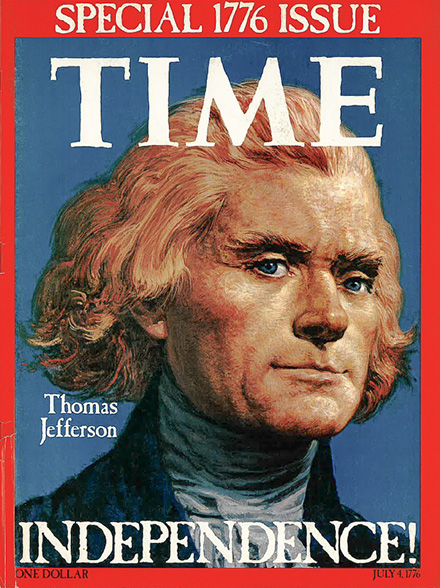 Fifty years ago, as the United States celebrated its bicentennial, the group known collectively as “the Founding Fathers” still held a place of preeminence in American cultural and historical life. Indeed, the currency of the Founders had in many respects never been higher, just two years removed from the Watergate scandal, the first resignation of a president (Richard Nixon), and the accession of Vice President Gerald Ford, who had not been elected but appointed in the aftermath of VP Spiro Agnew’s own scandal and resignation. The Declension Theory of the American Presidency—from Washington to Nixon to Gerald Ford—seemed confirmed beyond argument.
Where are the Founders now? What place do they still hold in our collective psyche, if at all? And ultimately, why do we still care about a group of people who have been dead for two centuries?
The Founding Fathers hold a revered place in American culture and in our history that perhaps no other group does. We don’t call them the Greatest Generation, though I think we could. As Ralph Waldo Emerson put it, they were the generation who “beheld God and nature face to face.” Perhaps more than anything else, we wonder why we don’t have leaders like them anymore. There are many reasons for that, but one of the biggest reasons we don’t is that they were disciples of the Enlightenment and the Age of Reason. It was a unique time and place, and they were a unique group.
The chief disciple of the American Enlightenment was Thomas Jefferson, though he is certainly not the only founder who was a product of the Enlightenment. Most of them were, chiefly Benjamin Franklin, John Adams, and Benjamin Rush. But it was Jefferson who tried hardest of all—and who succeeded on many fronts—to make the ideals of the American Enlightenment into a reality. As his greatest biographer wrote, “Intellectually he exemplified more conspicuously than any of his fellows the liberal and humane spirit, the incessant scientific curiosity and zeal for universal knowledge, and the fundamental belief in the powers of human intelligence which characterized what historians call the Enlightenment.”
The three things for which Jefferson wanted to be remembered, which are on his tombstone, might in fact be considered the foundation stones of the Enlightenment in America: overthrowing the tyranny of kings, the tyranny of religion, and the tyranny of ignorance. Jefferson and the other founders claimed for themselves—and for all Americans eventually—complete intellectual and religious freedom. The human mind must be free to inquire, to go anyplace, to roam fearlessly in every field, and to do so, mankind must surmount every barrier placed against it by governments, kings, religion, and by those who would hold others in ignorance. “Your own reason is the only oracle given to you by heaven,” Jefferson said. That, to the Founders, was the very essence of the American Revolution, and of the American Enlightenment upon which the philosophy of Revolution was based.
The fact that we Americans care about the Founders at all is in some ways the most remarkable aspect of all of this because it's unique. Do Germans have discussions about what Frederick the Great or Bismarck would think about their contemporary society? Do the British agonize over what Pitt and Walpole would think about Keir Starmer, or the immigrant crisis, or what William the Conqueror might think about Prince Harry moving to California?
As historian Gordon Wood has pointed out, if other nations have founders at all, they are usually mythical characters, like King Arthur, obscured in the mists of a distant past. Our founders are authentic historical figures about whom there exists a remarkable amount of historical evidence. We have not only almost everything that the revolutionary leaders published but also an incredible amount of their private correspondence and their most intimate thoughts, made available, as one scholar said, with a degree of editorial completeness and expertness rarely achieved in the Western world’s recovery of its documentary past. With the power of the Internet, it’s available at your fingertips, fully digitized and searchable.
We write and buy books about them, argue about them on social media, visit their homes and gravesites, hold parades and observe holidays in their honor, debate taking down their monuments or putting up more of them, or taking their names off schools and their likeness off the $10 bill. We care very much about what they thought, what they believed, and what they would think about us now.
They seem larger than life, possessing political and intellectual capacities beyond the leaders of our own time. When most Americans talk or write about them, they do it with one eye on the present. In our fascination with the Founders, we feel a sense of loss. Unlike other nations, Americans continue to look to their Founders for guidance to all kinds of questions: Where did the Founders stand on religion and its role in American civic life? What would Benjamin Franklin think about the Trump foreign policy or America’s continued involvement in foreign wars? What would John Marshall think about presidential immunity? And so on.
Through all the hagiography, there are plenty of naysayers, of course. No one can argue that the Founders still hold the same uncontested place in our collective consciousness, particularly when it comes to the issues of race and gender. Even setting aside those large issues, there are those who would ask, why does it still matter what they might think? The United States and its government have evolved and been so transformed and grown so colossally over the last 250 years, it would be unrecognizable to them. It has, in short, far outgrown their narrow worldview that didn’t even foresee the railroad, much less space travel and AI.
If that’s the case, what is it about them, with all their faults, that still draws us to them so irresistibly? Most Americans believe that the Founders constituted an incomparable generation who had a powerful and permanent impact on America’s subsequent history. And they’re right. I would argue that it was not what they failed to achieve—the end of slavery, most glaringly—but the remarkable achievement of creating the world’s most enduring self-governing republic that continues to make them endlessly fascinating.
The Founders, with all of their contradictions, remind us that our government and our nation will only ever be as good as we are. As students of the Enlightenment, they believed that people had the capacity to do remarkable good, and that a government could be created to tap into that impulse. Yes, they were deeply flawed, and there’s no getting away from that, and there shouldn’t be.
The Founders remain both popular and controversial because they represent the tensions and contradictions in our country and in each of us between what we have always aspired to be and who we actually are. One need only turn on the news or look at your phone to know that who we are isn’t always pretty. The Founders will remain a focus of American life because of what they have to teach us about ourselves and all the messiness of the contradictions within the human spirit.
They will always serve as a reminder that even the most flawed of us is still capable of doing remarkable things that endure.