
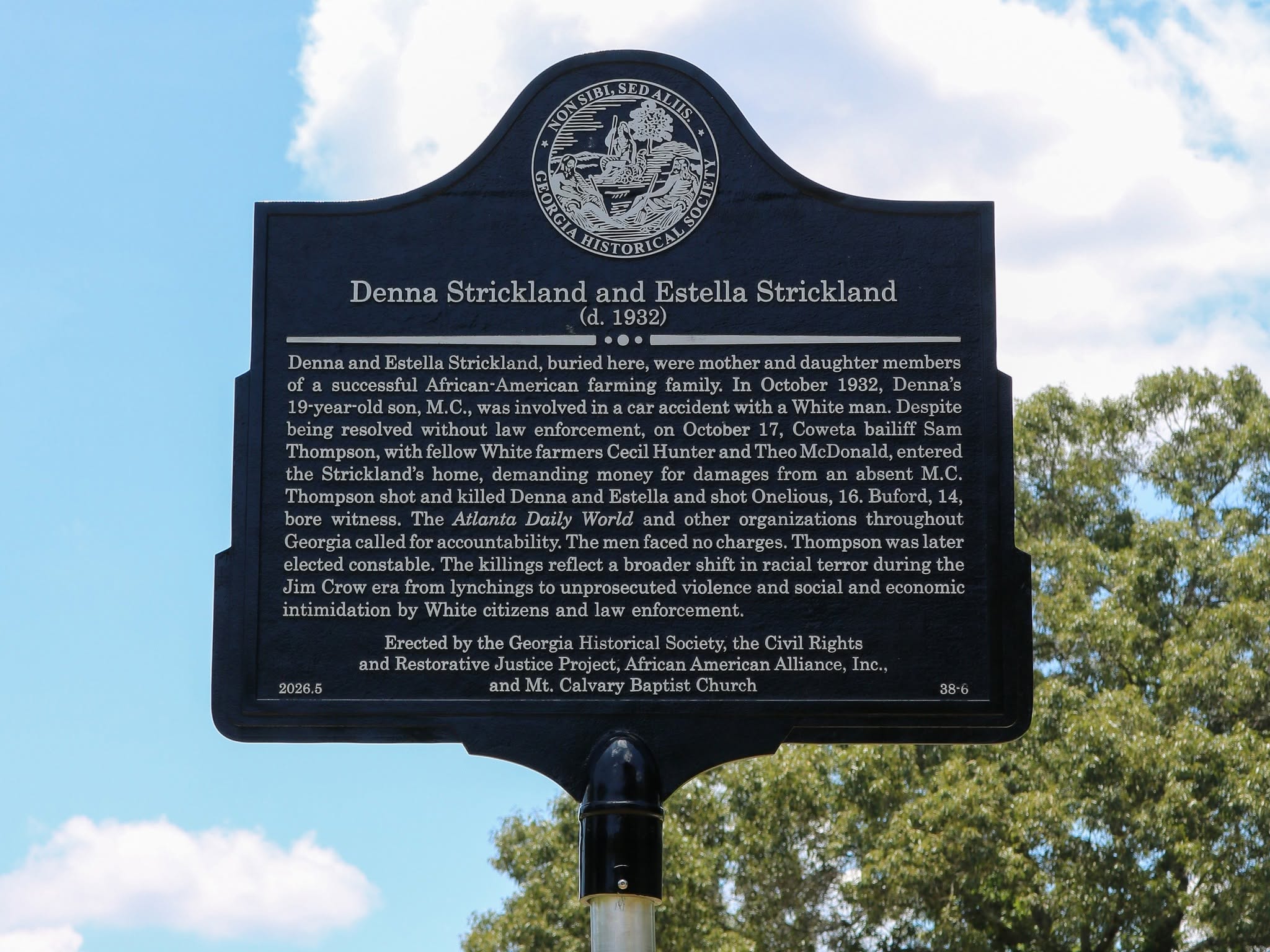
Moreland, GA, June 15, 2026 – The Georgia Historical Society (GHS), in partnership with the Civil Rights and Restorative Justice Project, African American Alliance, Inc., and Mt. Calvary Baptist Church, dedicated a new historical marker on June 13, in Moreland, Georgia, recognizing Denna Strickland and Estella Strickland (d. 1932), members of a successful African-American farming family in Coweta County whose deaths in 1932 reflected a broader history of racial violence and intimidation during the Jim Crow era.
The dedication was held at Mt. Calvary Baptist Church Cemetery, where Denna and Estella Strickland are buried.
"The Georgia Historical Society is pleased to work with the community sponsors and descendants of the Strickland family," said Breana James, Program Manager, Georgia Historical Society. "Marking stories like this one offers an opportunity to remember and reflect on America's complex racial history."
The new historical marker tells the story of the Strickland family of Coweta County and the events that took place in October 1932. Coweta bailiff Sam Thompson, along with fellow White farmers Cecil Hunter and Theo McDonald, entered the Strickland home demanding money for damages from a car accident involving Denna's 19-year-old son, M.C.—a matter that had been resolved without law enforcement. With M.C. not at home, Thompson shot and killed Denna and her daughter Estella, and shot her son Onelious, 16. Her youngest son, Buford, 14, bore witness.
The Atlanta Daily World and other organizations throughout Georgia were vocal about Denna’s and Estella’s violent deaths and called for accountability. Despite their efforts, the men faced no charges, and Thompson was later elected constable.
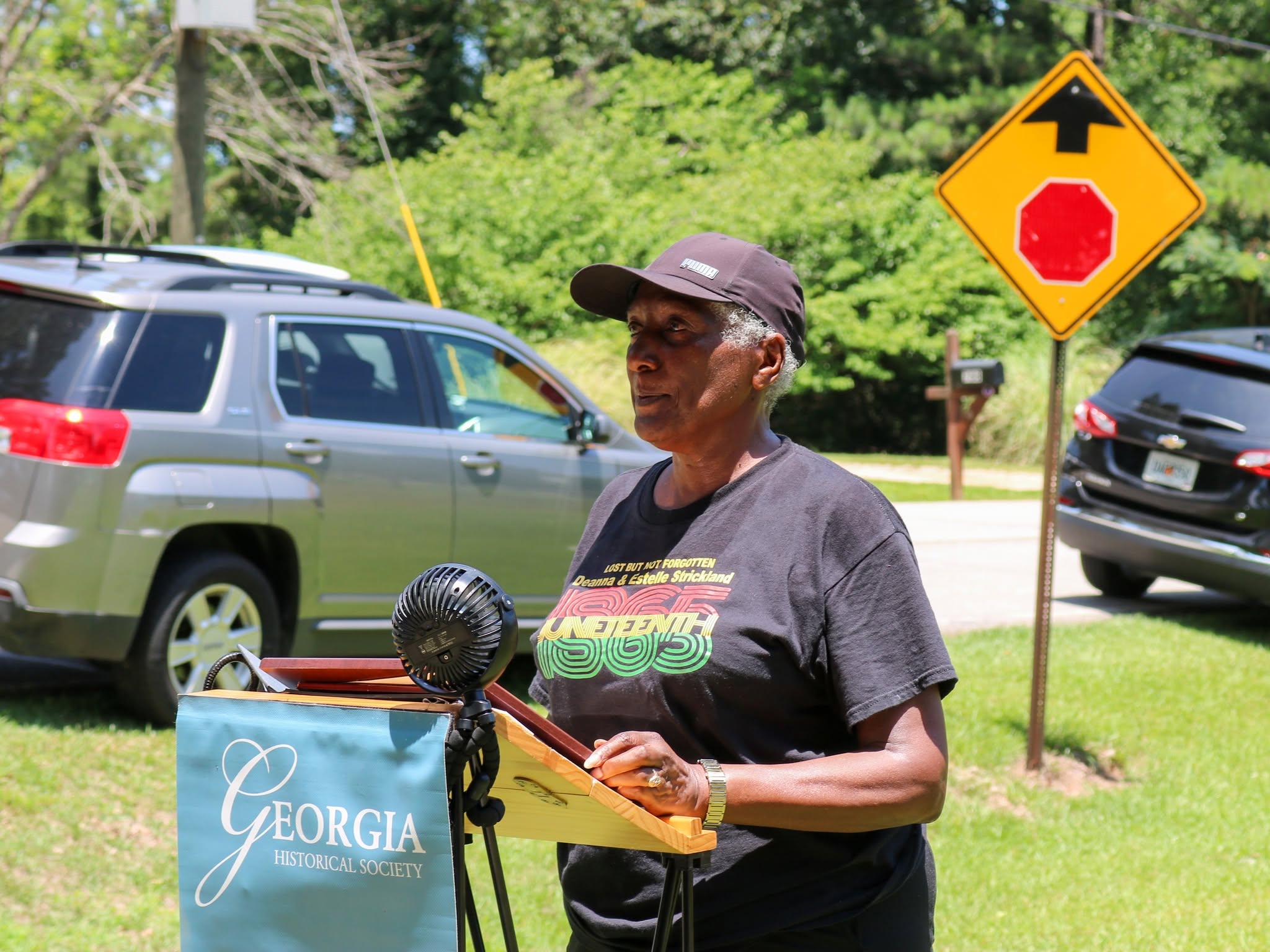
“Today, we remember Denna Strickland and her daughter Estella Strickland for the lives they led, the families they cared for, and the legacy they left,” said Margaret Burnham, Director of the Civil Rights and Restorative Justice Project.
"Though I never met my grandmother, Denna Strickland, or my aunt, Estella Strickland, I carry their legacy in my blood," said Josie Strickland Bailey, granddaughter of Denna Strickland and niece of Estella Strickland. "I am grateful to the Civil Rights and Restorative Justice Project for this experience. The unveiling of this marker ensures their lives, and our family’s story, are remembered by generations to come.”
In recognizing the lives of Denna and Estella Strickland, the historical marker adds their story to the documented history of the Jim Crow era in Georgia.
Through the Georgia Historical Marker Program, GHS works with local communities and partners to share stories from Georgia’s past where they happened and connect them to the larger history of the state and nation. As part of Georgia’s commemoration of the 250th anniversary of the founding of the United States, GHS also offers a statewide marker trail exploring Georgia’s role in the American Revolution and the founding of the nation.
Speakers included Breana James, Program Manager, Georgia Historical Society; Rev. Ayquavious Tucker, Pastor, Mt. Calvary Baptist Church; Lydia Beal, Civil Rights and Restorative Justice Project; Raymond Wilkes, Civil Rights and Restorative Justice Project; and Josie Strickland Bailey, Strickland family descendant.
The historical marker reads:
Denna Strickland and Estella Strickland (d. 1932)
Denna and Estella Strickland, buried here, were mother and daughter members of a successful African-American farming family. In October 1932, Denna’s 19-year-old son, M.C., was involved in a car accident with a White man. Despite being resolved without law enforcement, on October 17, Coweta bailiff Sam Thompson, with fellow White farmers Cecil Hunter and Theo McDonald, entered the Strickland’s home, demanding money for damages from an absent M.C. Thompson shot and killed Denna and Estella and shot Onelious, 16. Buford, 14, bore witness. The Atlanta Daily World and other organizations throughout Georgia called for accountability. The men faced no charges. Thompson was later elected constable. The killings reflect a broader shift in racial terror during the Jim Crow era from lynchings to unprosecuted violence and social and economic intimidation by White citizens and law enforcement.
Erected by the Georgia Historical Society, the Civil Rights and Restorative Justice Project, African American Alliance, Inc., and Mt. Calvary Baptist Church
For additional details about the Georgia Historical Society, please contact Keith Strigaro, Director of Public Relations and Communications, at 912.651.2125, ext. 153 or by email at kstrigaro@georgiahistory.com.
###
ABOUT THE GEORGIA HISTORICAL SOCIETY
The Georgia Historical Society (GHS) is the premier independent statewide institution responsible for collecting, examining, and teaching Georgia and American history. GHS houses the oldest and most distinguished collection of materials related exclusively to Georgia history in the nation.
To learn more visit georgiahistory.com.
As part of Georgia’s commemoration of the 250th anniversary of the founding of the United States, GHS offers additional programs, resources, publications, and a statewide historical marker trail exploring Georgia’s role in the founding of the nation. Start exploring at georgiahistory.com/america250.
ABOUT THE GEORGIA HISTORICAL MARKER PROGRAM
The Georgia Historical Marker Program is an important part of the Georgia Historical Society’s (GHS) statewide educational mission. Through a public-private partnership with the State of Georgia, GHS is responsible for erecting new historical markers and maintaining more than 2,000 markers installed by the State prior to the program’s privatization in 1998. Online mapping tools allow users to explore themed marker trails and design custom driving routes. Visit georgiahistory.com for more ways to use Georgia’s historical markers and experience history where it happened.