
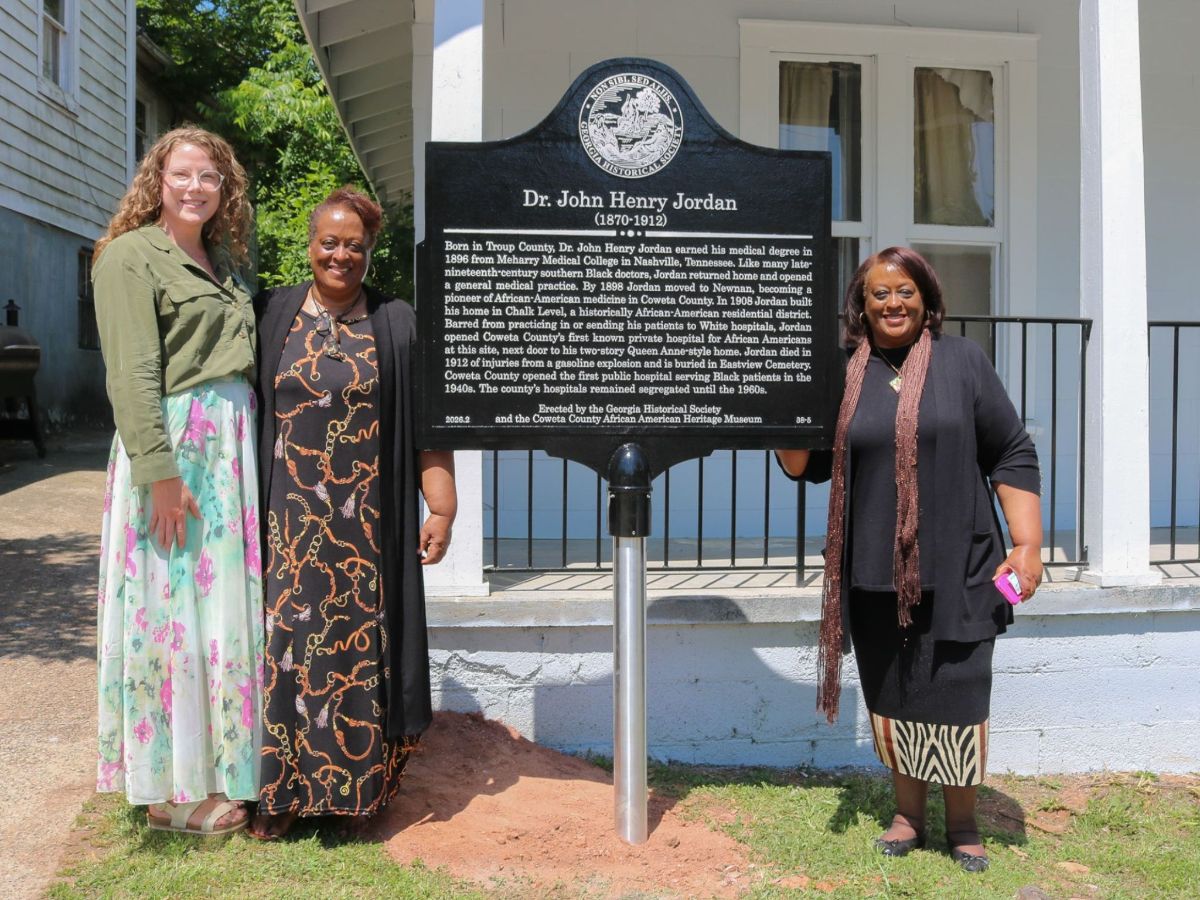
Left to right, Breana James, Program Manager, Georgia Historical Society; Velma L. Alexander and
Rev. Dr. Valerie J. Alexander, owners of the former hospital property.
Newnan, GA, May 18, 2026 – The Georgia Historical Society (GHS), in partnership with the Coweta County African American Heritage Museum, dedicated a new historical marker on May 16, 2026, in Newnan, Georgia, commemorating Dr. John Henry Jordan (1870–1912), a pioneering African-American physician and community leader in Coweta County.
The marker was unveiled at the site of Dr. Jordan’s hospital on Pinson Street, where he established Coweta County’s first-known private hospital for African Americans in the early twentieth century.
Born in Troup County, Jordan earned his medical degree in 1896 from Meharry Medical College in Nashville, Tennessee. He later moved to Newnan, where he built a general medical practice and became a leading figure in African-American healthcare. In response to segregation-era restrictions that barred Black physicians from practicing in or admitting patients to White hospitals, Jordan opened a private hospital at this site to serve the local community.
“The Georgia Historical Society is pleased to tell Dr. Jordan's story through the historical marker program, ensuring that anyone can learn about his legacy near the site where he lived and practiced medicine,” said Breana James, Program Manager, Georgia Historical Society. “To address the lack of professional healthcare services for African Americans during the Jim Crow era, many southern Black physicians returned to their home states after getting their medical degrees. In doing that, Dr. Jordan became the first-known Black doctor in Coweta County, providing healthcare that improved the lives of the people in his community.”
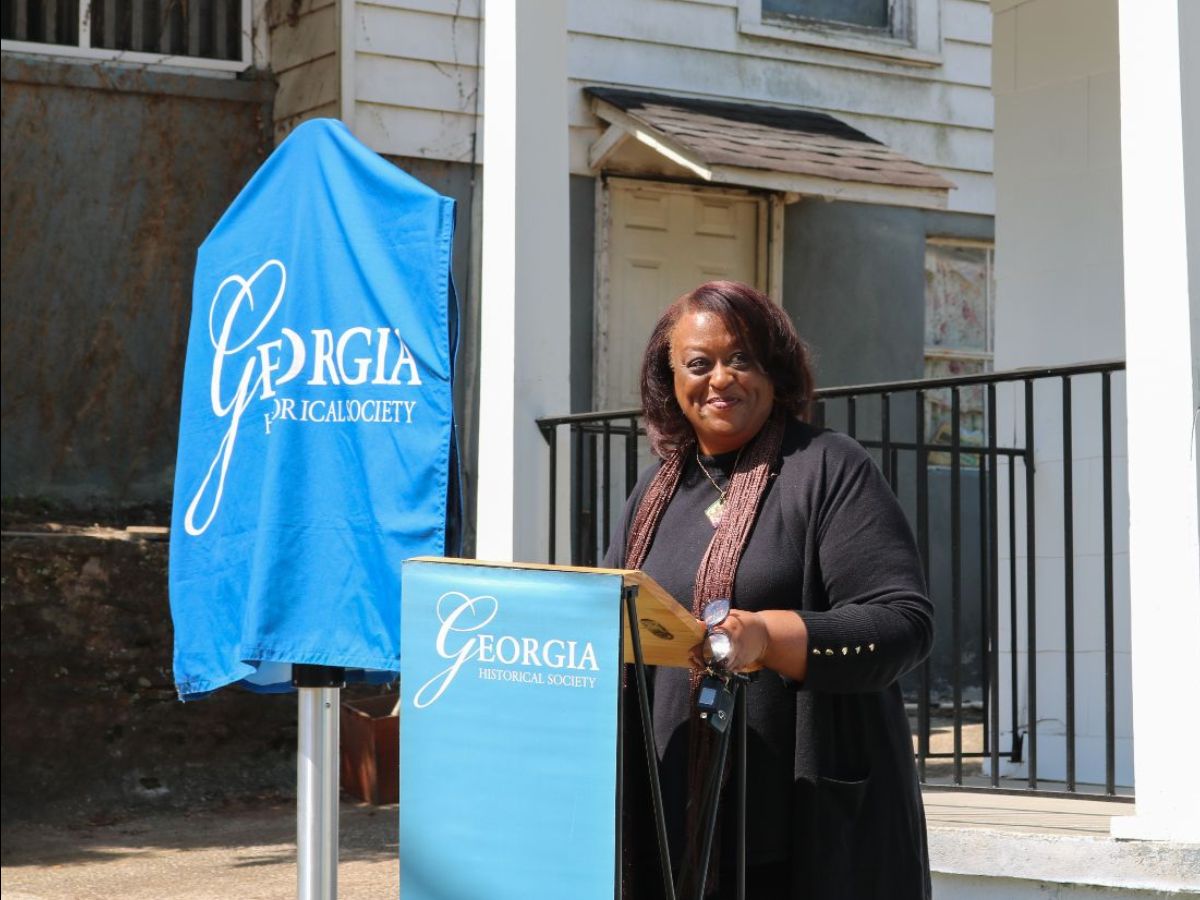
Rev. Dr. Valerie J. Alexander delivering remarks before the unveiling of the new historical marker.
In Newnan’s Chalk Level community, a historically African-American neighborhood, residents have long remembered Dr. Jordan’s presence and the significance of his work.
“Dr. Jordan’s story is not just a Newnan story,” said Rev. Dr. Valerie J. Alexander and Velma L. Alexander, owners of the former hospital property. “His legacy is part of the tapestry of post-slavery America—one of many similar stories taking place in the field of medicine. People in the Chalk Level community know of Dr. Jordan and his residence, but not everyone knows the history of the house next door. Through the Georgia Historical Society's marker program, we are proud to tell the story and preserve this history for the city of Newnan and for the Chalk Level community.”
“On behalf of the Coweta County African-American Heritage Museum, we are honored to recognize this history-making moment with the Georgia Historical Society,” said Shannon Pearson, President, Coweta County African-American Heritage Museum. “The Jordan marker stands as a lasting tribute to Dr. John Henry Jordan's legacy and his impact on our community. This marker ensures that his story will continue to educate and inspire future generations. We are proud to support this important recognition.”
Dr. John Henry Jordan died in 1912 from injuries sustained in a gasoline explosion and is buried in Eastview Cemetery. Public hospital facilities serving Black patients would not be established in Coweta County until the 1940s, and hospital segregation continued into the 1960s.
The marker now stands as an educational resource for the community at the site of his former hospital. It was erected as part of the Georgia Historical Marker Program, which offers the public an opportunity to learn about the state’s history in the places where it happened.
Speakers included Rev. Dr. Valerie J. Alexander, Owner, “Hospital” Property; Breana James, Program Manager, Georgia Historical Society; Cynthia Jenkins, City Councilwoman; and Velma L. Alexander, Owner, “Hospital” property.
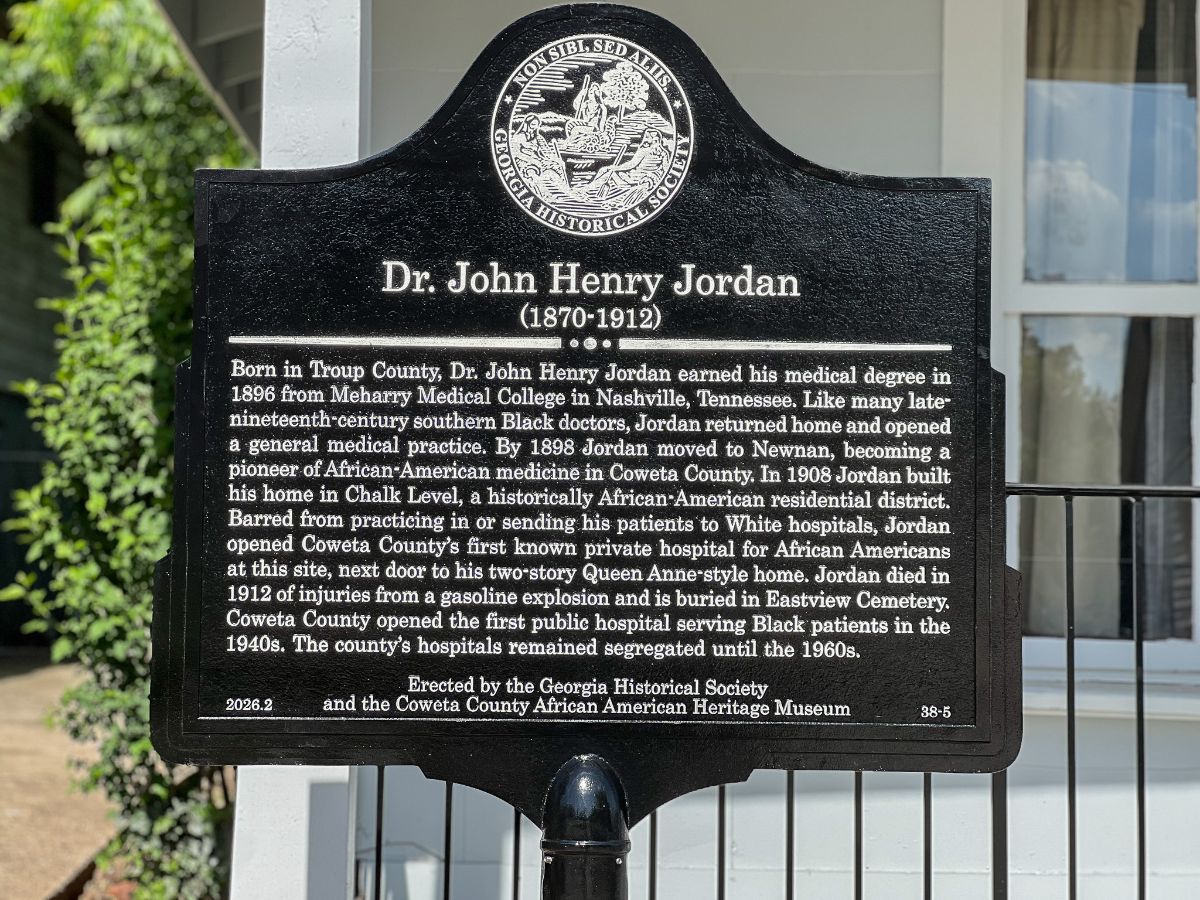
The historical marker reads:
Dr. John Henry Jordan (1870-1912)
Born in Troup County, Dr. John Henry Jordan earned his medical degree in 1896 from Meharry Medical College in Nashville, Tennessee. Like many late-nineteenth-century southern Black doctors, Jordan returned home and opened a general medical practice. By 1898 Jordan moved to Newnan, becoming a pioneer of African-American medicine in Coweta County. In 1908 Jordan built his home in Chalk Level, a historically African-American residential district. Barred from practicing in or sending his patients to White hospitals, Jordan opened Coweta County’s first known private hospital for African Americans at this site, next door to his two-story Queen Anne-style home. Jordan died in 1912 of injuries from a gasoline explosion and is buried in Eastview Cemetery. Coweta County opened the first public hospital serving Black patients in the 1940s. The county’s hospitals remained segregated until the 1960s.
Erected by the Georgia Historical Society and the Coweta County African American Heritage Museum
For additional details about the Georgia Historical Society, please contact Keith Strigaro, Director of Public Relations and Communications, at 912.651.2125, ext. 153, or by email at kstrigaro@georgiahistory.com.
###
ABOUT THE GEORGIA HISTORICAL SOCIETY
The Georgia Historical Society (GHS) is the premier independent statewide institution responsible for collecting, examining, and teaching Georgia and American history. GHS houses the oldest and most distinguished collection of materials related exclusively to Georgia history in the nation.
To learn more visit georgiahistory.com.
As part of Georgia’s commemoration of the 250th anniversary of the founding of the United States, GHS offers additional programs, resources, publications, and a statewide historical marker trail exploring Georgia’s role in the founding of the nation. Start exploring at georgiahistory.com/america250.
ABOUT THE GEORGIA HISTORICAL MARKER PROGRAM
The Georgia Historical Marker Program is an important part of the Georgia Historical Society’s (GHS) statewide educational mission. Through a public-private partnership with the State of Georgia, GHS is responsible for erecting new historical markers and maintaining more than 2,000 markers installed by the State prior to the program’s privatization in 1998. Online mapping tools allow users to explore themed marker trails and design custom driving routes. Visit georgiahistory.com for more ways to use Georgia’s historical markers and experience history where it happened.