
Hidden Histories, Historical Marker Resource
Washington’s Southern Tour I
This Hidden History was created by SCAD student Tamra Gould as part of her SCAD art history department coursework, with guidance from art history professor Holly Goldstein, Ph.D., in 2019.
The Washington's Southern Tour I historical marker was dedicated in 1999. View the Washington's Southern Tour I historical marker listing.
Gallery
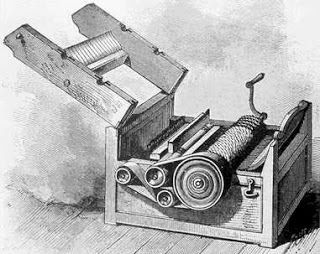
(Fig 1) The Cotton Gin, 1793, Copyright © 2004–2019 Florida Center for Instructional Technology
(Fig 2) Georgia Map, Copyright 1998-2016 Owl and Mouse
(Fig 3) Washington’s Southern Tour I Historical Marker, Tamra Gould, 2019
(Fig 4) Mulberry Grove in 1974, Copyright 2019 Awesome Stories
(Fig 5) Drawing of Eli Whitney, © 2019 A&E Television Networks, LLC.
(Fig 6) Catharine Littlefield Greene Miller, James Frothingham, 1809, Telfair Museums
(Fig 7) Eli Whitney's Patent for the Cotton Gin, March 14, 1794; Records of the Patent and Trademark Office; Record Group 241, National Archives.
(Fig 8) African American slaves using the first cotton-gin, 1790-1800, drawn by William L. Sheppard. Illustration in Harper's Weekly, 1869 Dec. 18, p. 813.
(Fig 9) Raw cotton, containing seeds and trash, https://www.charlesparsonsinteriors.com/blog/cottongin/
(Fig 10) Mulberry Grove in the year 1819, John R Tebeau, 1887, Georgia Historical Quarterly Vol 20.
(Fig 11) A high-powered modern gin, https://www.charlesparsonsinteriors.com/blog/cottongin/
(Fig 12) Collaborative 5th grade project, Tamra Gould, 2019, Photograph by Holly Goldstein
(Fig 13) Cotton Gin-inspired Jacket, Tamra Gould, 2019, Photograph by Tamra Gould
As a fashion design major at the Savannah College of Art and Design, I was very interested to learn that Savannah is the birthplace of the cotton gin, one of the most significant inventions in textile history (see fig 1). Even over two centuries later, cotton is still one of the most important and popular fibers used in the fashion industry. With cotton being such a large part of my future occupation, I wanted to explore not only how it revolutionized textile production, but also to learn about the effects of the cotton gin, socially and economically, on a local as well as global scale.
In response to my research on the invention of the cotton gin, I decided to create a jacket that would tie the cotton gin’s origins with its contemporary relevance. I chose to create my jacket out of denim to connect the importance of the cotton gin in revolutionizing the most-used textile in the world. I combined a classic tailored jacket silhouette with more contemporary characteristics such as a tie waistband and loose-fitting bodice and sleeves. For the textile treatment, I chose to unevenly bleach the fabric in order to give a slightly rustic feel (see fig 13).
Beckert, Sven. "Emancipation and Empire: Reconstructing the Worldwide Web of Cotton Production in the Age of the American Civil War." The American Historical Review 109, no. 5 (2004): 1405-438. doi:10.1086/530931.
"Correspondence of Eli Whitney Relative to the Invention of the Cotton Gin." The American Historical Review 3, no. 1 (1897): 90-127. doi:10.2307/1832812.
Editors, History.com. “Cotton Gin and Eli Whitney.” History.com. A&E Television Networks, February 4, 2010. https://www.history.com/topics/inventions/cotton-gin-and-eli-whitney.
Gamble, Thomas. Data Relating to the Invention of Cotton Gin by Eli Whitney. Vol. 1, n.d.
Garrison, Ritchie, and Angela Lakwete. Vol. 71, no. 1, 2005, pp. 142–143. JSTOR, doi: 10.2307/27648657.
Hart, John Fraser. "The Demise of King Cotton." Annals of the Association of American Geographers 67, no. 3 (1977): 307-22.
Kadolph, Sara J., and Sara B. Marcketti. "The Textile Industry." In Berg Encyclopedia of World Dress and Fashion: The United States and Canada, edited by Phyllis G. Tortora, 71–79. Oxford: Bloomsbury Academic, 2010.
Sen, Arnab. “Denim Fabric Manufacturing Process –The Learner's Guide.” Online Clothing Study. https://www.onlineclothingstudy.com/2017/06/denim-fabric-manufacturing-process.html.
Stegeman, John F., and Janet A. Stegeman. Caty: a Biography of Catharine Littlefield Greene. Athens: University of Georgia Press, 1986
Wise, John. “Effects on Slavery.” The Cotton Gin: A Turning Point in History. https://cottonginproject.weebly.com/effects-on-slavery.html.